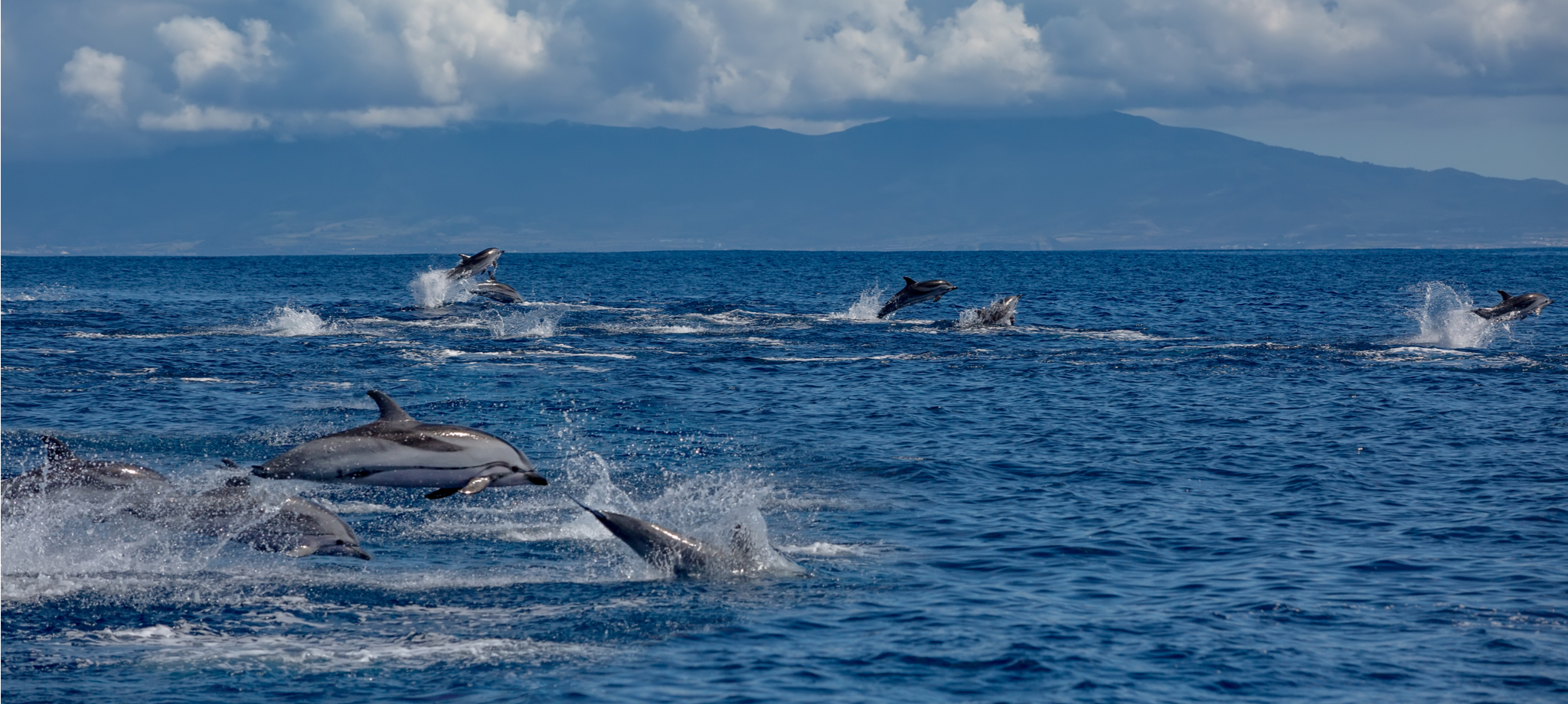
Last reviewed: September 2026. Dolphin watching in the Azores can mean two very different experiences: observing wild dolphins from a licensed boat, or joining a regulated open-ocean swim when the species, sea conditions and animal behavior allow it. Both take place with free-ranging wildlife, so the most important expectation is simple: the dolphins decide whether an encounter happens.
The Azores are especially interesting because several dolphin species can be encountered across the year, while others are more seasonal. São Miguel, Pico, Faial and Terceira all have established marine-tourism operations, but the right island depends on whether you want a general whale-and-dolphin excursion or specifically hope to join a licensed dolphin swim.
Dolphin Watching vs. Swimming with Dolphins in the Azores
Dolphin Watching
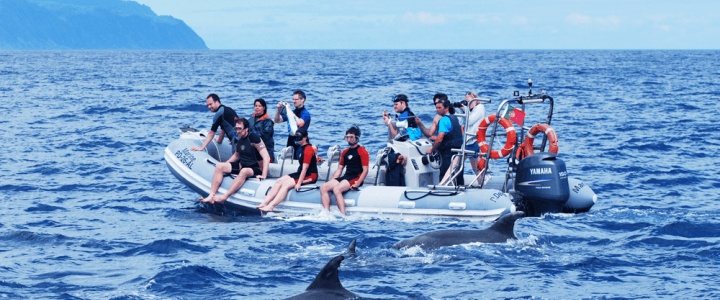
You stay on the boat while the crew locates and approaches cetaceans under regional observation rules. These trips often look for both dolphins and whales, so the exact species vary from day to day.
Best for: families, non-swimmers, photographers and travelers who want the broadest possible marine-wildlife experience.
Swimming with Dolphins
You enter the open Atlantic with basic snorkeling equipment only when the skipper judges that the species, dolphin behavior and sea state make an entry appropriate. The encounter is passive: swimmers do not chase, touch or feed the animals.
Best for: confident swimmers comfortable in deep open water who understand that entering the water is never guaranteed.
Swimming with whales is prohibited in the Azores. The regional tourism authority states that snorkeling-style swimming is authorized with five dolphin species: common dolphin, Atlantic spotted dolphin, striped dolphin, bottlenose dolphin and Risso’s dolphin.
Which Dolphin Species Can You See in the Azores?
More than 20 cetacean species have been recorded in Azorean waters, but a traveler should not treat that historical diversity as a checklist for one outing. The dolphins below are among the most relevant for trip planning.
| Species | When encountered | What to know | Swim authorized? |
|---|---|---|---|
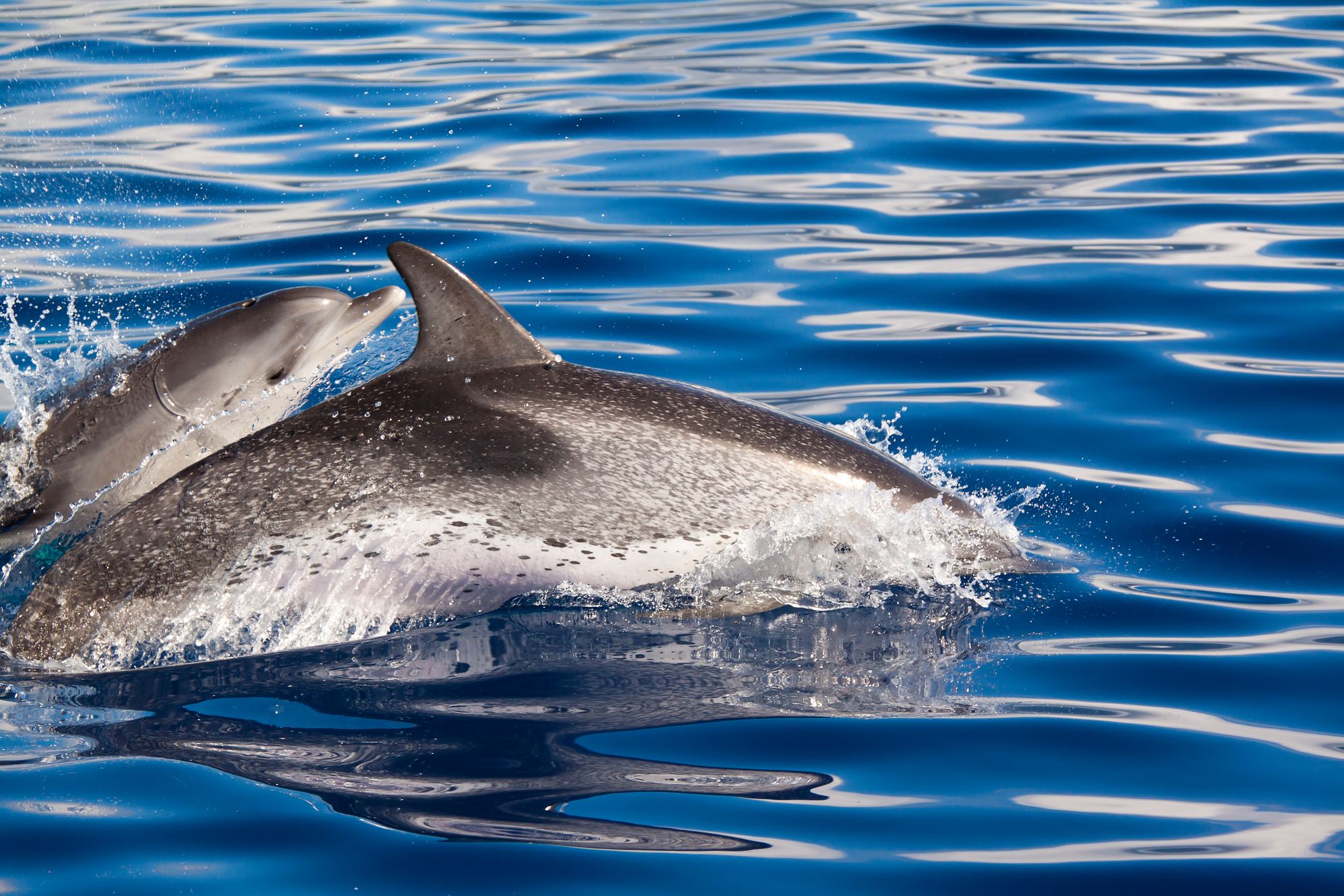
| Common dolphin | Encountered year-round | One of the most frequently encountered dolphins around the islands. | Yes, under regulated conditions |
| Bottlenose dolphin | Seen in different seasons | A regular Azores species and an authorized swim species. | Yes |
| Atlantic spotted dolphin | More associated with warmer months | Summer is an important period for this warm-water species. | Yes |
| Risso’s dolphin | Possible across the year | Recognizable by the pale scarring that accumulates on older animals. | Yes |
| Striped dolphin | Variable | Fast-moving offshore species; sightings depend on where animals are found. | Yes |
Important: “authorized species” does not mean the skipper will put swimmers into the water whenever one is seen. Animal behavior and sea conditions are assessed first.
For the broader cetacean picture—including sperm whales and seasonal baleen whales—see our Whale Watching in the Azores guide.
Best Time for Dolphin Watching in the Azores
Dolphin watching is possible throughout the year because species such as common dolphins are encountered year-round. The more useful distinction is between wildlife seasonality and operating conditions.
Late spring through early fall generally provides warmer weather, warmer water and more days that are comfortable for marine activities. Atlantic spotted dolphins are more strongly associated with the warmer part of the year. Winter can still produce excellent wildlife encounters, but rougher sea states can reduce the number of days when boats operate comfortably.
For broader seasonal planning, use our Azores Weather by Month guide.
Best Islands for Dolphin Watching
Dolphins occur throughout the archipelago, so this is less about a biological “best island” than about practical access, operator availability and how the marine day fits into the rest of your trip. Compare the islands in our guide to all nine Azores islands.
What Are the Rules for Swimming with Dolphins in the Azores?
The Azores regulate cetacean tourism under regional law. For swimmers, the most useful rules are much clearer than the conflicting distance advice often repeated online.
- Swimming with whales is prohibited.
- The skipper decides whether swimmers enter the water after assessing dolphin behavior and sea conditions.
- No more than two swimmers may be in the water at one time.
- Swimmers use basic apnea/snorkeling equipment and remain together at the surface.
- Swimmers must stay within a 50-meter radius of the boat that put them in the water.
- Intentional physical contact with dolphins is prohibited.
- Each vessel is limited to a maximum of three attempts to put swimmers in the water.
- A swimmer session in the water may not exceed 15 minutes.

These rules matter because a wild-dolphin swim is not like entering an aquarium or enclosed lagoon. The boat positions the swimmers, the animals may pass nearby—or may not—and the crew can stop the attempt if the dolphins show disturbance or the sea state changes.
The Regional Directorate for Maritime Policies publishes the legal framework for cetacean-observation activities in the Azores.
Who Is a Dolphin Swim Best Suited For?
A dolphin swim is best for travelers who are comfortable in deep open ocean, can use a mask and snorkel, can enter and exit a small boat efficiently and can follow instructions immediately. The seabed may be far below you and Atlantic movement can feel very different from swimming in a pool or protected bay.
There is no useful universal age rule to publish for every operator. Minimum age, swimming ability, health restrictions, mobility requirements and equipment policies vary by operator. Families should provide each child’s age when booking, and anyone with a medical or mobility concern should ask the operator about participation requirements before confirming the activity.
What Happens on a Dolphin-Swimming Trip?
Although procedures vary, a responsible trip normally begins with a briefing on safety, snorkeling technique, dolphin behavior and the interaction rules. The crew then searches for a suitable dolphin group and observes its behavior before deciding whether an in-water attempt is appropriate.
If the skipper approves the attempt, two swimmers enter quietly, remain at the surface and wait for the dolphins to pass or approach naturally. This can be a very brief encounter. The goal is not to pursue the dolphins or force them to remain nearby.
Weather, Sea Conditions and Cancellations
Marine excursions are highly weather-dependent. A sunny day on land does not guarantee acceptable wind, swell or visibility offshore. The captain and operator make the operational decision, and a swim can be converted, delayed or cancelled when the sea state or dolphin behavior is unsuitable.
If swimming with dolphins is a major reason for your trip, avoid placing it on your final available morning. A backup day gives the operator somewhere to move the activity if conditions do not cooperate.
What to Bring on a Dolphin Tour
- Layered clothing and a wind/water-resistant outer layer for the boat
- Sun protection and sunglasses with a secure strap
- A towel, swimwear and dry clothes if you are joining an in-water activity
- Any personal seasickness remedy you normally use, following the product or medical guidance
- A waterproof case or dry bag for electronics
Ask the operator what it supplies before packing fins, mask, snorkel or wetsuit. Equipment policies differ, and bringing unnecessary gear can make a small-boat excursion less comfortable.
Responsible Dolphin Watching and Photography
The best operator is not the one that promises the closest encounter. Look for clear pre-trip briefings, conservative decisions around animal behavior, licensed operation and a willingness to cancel or stop an interaction when conditions are not right.
Photography should remain secondary to the guide’s instructions. From the boat, use a secure wrist or neck strap and be ready for spray. In the water, use only equipment you can manage without losing awareness of the boat, your buddy and the guide. Never move toward a dolphin solely to get a photograph.
How to Fit Dolphin Watching into an Azores Itinerary
On São Miguel, a marine morning or afternoon can be combined with several land-based days without changing hotels. That makes the island especially convenient for travelers who want wildlife plus Sete Cidades, Lagoa do Fogo, Furnas and Ponta Delgada.
If you are visiting Pico and Faial, marine wildlife can fit naturally into a Central Group stay, but ferry, flight and weather timing should be considered before adding too many fixed activities. Our How Many Days in the Azores and Azores Island Hopping guides can help with the broader trip structure.
Azores Dolphin Watching FAQs
Can you see dolphins in the Azores year-round?
Yes. Several dolphin species are encountered in Azorean waters across the year, including common dolphins. The exact mix of species and the suitability of sea conditions change seasonally.
Can you legally swim with dolphins in the Azores?
Yes, through regulated operations and only under the conditions established by regional law. Swimming with whales is prohibited. Visit Azores identifies five dolphin species for authorized snorkeling-style swims: common, Atlantic spotted, striped, bottlenose and Risso’s dolphins.
How many people can swim with the dolphins at once?
Regional law limits the in-water group to no more than two swimmers at a time. They must remain together at the surface and within 50 meters of their boat.
Can you touch dolphins in the Azores?
No. Voluntary physical contact is prohibited. The encounter is designed around observation, not touching, feeding or pursuing the animals.
What is the best island for dolphin watching?
São Miguel is the most convenient all-around choice for many first-time travelers because it has established marine operators and a wide range of other attractions. Pico, Faial and Terceira are also strong options when they already fit your itinerary.
Is swimming with dolphins suitable for children?
That depends on the child and the operator. Swimming ability, age, confidence in deep open water, health and equipment requirements are operator-specific. Confirm the child’s exact age before booking rather than relying on a universal age limit.
Are dolphin sightings guaranteed?
No. Dolphins are wild animals, and weather can also prevent a boat from operating. Ask the operator what happens if an excursion is cancelled or no appropriate dolphin group is found.
Plan an Azores Vacation with Dolphin Watching or Swimming
Azores.com can build marine activities into a wider island itinerary instead of treating them as isolated day trips. On São Miguel, our Sea and Land Adventures itinerary combines whale and dolphin watching, volcanic sightseeing and a seasonal dolphin-swimming activity.
Want a São Miguel trip that already includes marine wildlife? The 8-day Sea and Land Adventures itinerary includes whale and dolphin watching plus a seasonal dolphin swim for eligible travelers, normally from June 1 through October 15, subject to weather, sea conditions, operator requirements and availability.
View Sea & Land Adventures Plan My Azores Vacation

Eunice Costa has served as Travel Director of Portugal Online Corp., Azores.com (Azores Travel and Tours) since 1996. Born in the Azores and now based in California, she brings more than 30 years of experience promoting the Azorean Islands and creating thoughtfully designed tour packages, especially tailored for the U.S. and Canadian markets, that combine exceptional experiences with great value. Through her contributions to the Azores.com blog, Eunice shares her deep knowledge and passion for all nine Azorean Islands, helping travelers discover the very best of this unique destination.