Azores General Information
Practical Azores travel information
Essential Information for Planning an Azores Vacation
The Azores are an autonomous region of Portugal made up of nine islands in the North Atlantic.
For a broader destination overview before working through practical details, start with our Azores Islands Travel Guide. Travelers use the euro, Portuguese is the official language, and the islands are one hour behind mainland Portugal. This overview brings together the practical basics and the key planning guides for getting to the Azores, island hopping, trip length, getting around, where to stay, weather, travel essentials, safety and accessibility, ferries, island distances, entry requirements, events and public holidays.
Planning and decision guides
Explore Azores General Information
Azores Island Hopping GuideCompare practical island combinations, flights, ferries and realistic 7-, 10- and 14-day multi-island routes.
How Many Days in the Azores?Compare 3-, 5-, 7-, 10- and 14-day trips and decide how many islands fit your available time.
Getting Around the AzoresCompare rental cars, buses, taxis, transfers and guided tours, with transportation advice for all nine islands.
Where to Stay in the AzoresCompare the most practical towns, villages and bases on all nine islands before choosing accommodations.
Azores Weather by MonthCompare temperatures, rain, ocean conditions, microclimates and packing guidance.
Practical reference guides
Travel Logistics & Reference
Safety & AccessibilityPractical guidance on crime, solo travel, LGBTQ+ visitors, wheelchair access, reduced mobility and outdoor safety.
Azores Ferry GuideUnderstand useful routes, seasonal service, tickets, vehicles and weather-related planning.
Azores Island DistancesSee the three island groups, approximate distances, flight times and realistic connections.
Entering PortugalCheck passport, visa, Schengen, border-system and arrival information for an Azores trip.
Azores Events CalendarExplore major religious celebrations, cultural festivals and recurring events by island.
Azores Public HolidaysReview national and regional public holidays, likely closures and calendar-planning advice.
Quick facts
Azores at a Glance
Location
Where Are the Azores?
The archipelago lies in the North Atlantic between mainland Europe and North America. The islands are divided into three geographic groups, and those groups matter when planning flights and ferries.
Eastern Group
São Miguel and Santa Maria. Ponta Delgada Airport on São Miguel is a major gateway, while air services to Santa Maria vary by route and travel date.
Central Group
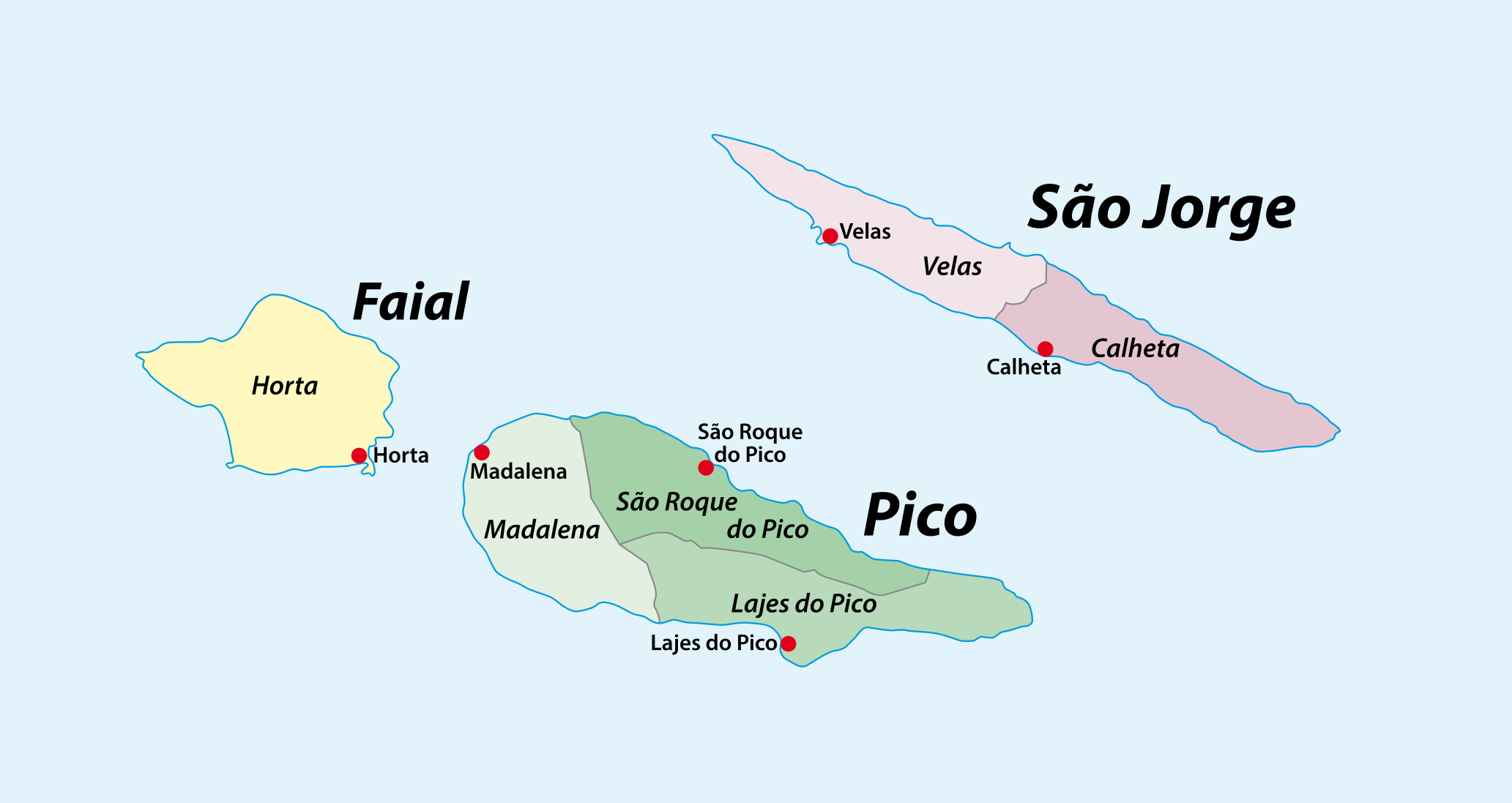
Terceira, Graciosa, São Jorge, Pico and Faial. Selected ferry routes make several neighboring-island combinations practical.
Western Group
Flores and Corvo. These remote islands require careful schedule planning and extra flexibility for Atlantic weather.
Maps and island groups
See How the Islands Relate

Flights and island hopping
Getting to and Between the Azores
Main gateways
Ponta Delgada Airport (PDL) on São Miguel and Lajes Airport (TER) on Terceira are major gateways. Other island airports also handle scheduled services, with routes and frequencies varying by travel date.
Airlines and routes
Azores Airlines and other carriers connect the archipelago with mainland Portugal and selected international cities. Routes and seasonal frequencies change, so use the schedule for the actual travel dates.
Inter-island flights
SATA Air Açores operates the inter-island air network. Multi-island itineraries should be built around the dated schedule rather than distance alone.
Ferries
Atlânticoline publishes passenger-ferry schedules for routes between several islands. Availability varies by route, season and travel date, so check the timetable for the dates you plan to travel.
Connection planning
A short flight or crossing can still require airport or port transfers, check-in time and protection against weather disruption.
Build in a buffer
Avoid placing a weather-sensitive inter-island connection immediately before an international departure whenever possible.
Money and everyday logistics
Currency, Payments, Hours and Connectivity
Money and cards
The euro is the local currency. Major cards are widely accepted in larger towns and tourism businesses, while some cash is useful on smaller islands and in rural areas.
ATMs
ATMs are common in populated areas. Travelers should confirm foreign-transaction and cash-withdrawal charges with their own bank.
Business hours
Opening hours vary by island, season and type of business. Smaller shops and attractions may close for lunch or use reduced weekend hours.
Public holidays
Banks, public offices, shops, attractions and some restaurants may close or shorten hours on national, regional or municipal holidays.
Phones and internet
Mobile coverage and internet access are generally good in populated areas but can be less consistent in remote valleys, high terrain and on smaller islands.
Local confirmation
Verify the opening time before making a special trip, particularly outside summer or on a holiday weekend.
On the road
Driving and Local Transportation
A rental car is often the most flexible way to reach viewpoints, trailheads, thermal areas and rural villages. Taxis, local buses and guided tours are alternatives, but service frequency can be limited outside larger towns.
Road conditions
Roads are generally paved, but volcanic terrain creates steep grades, tight bends, narrow village streets and rapidly changing visibility.
Drive for conditions
Allow more time than a map may suggest and reduce speed in fog, heavy rain, strong wind or on unfamiliar rural roads.
Reserve early
Rental-car supply is finite, especially on smaller islands, during summer and for automatic-transmission vehicles.
Before departure
Entry, Customs, Weather and Travel Documents
The Azores follow Portuguese and Schengen entry rules. Requirements depend on nationality and can change, so travelers should check current official Portuguese or European Union guidance shortly before departure.
Passports and visas
Confirm the document, validity and visa rules that apply to the traveler’s nationality, residence status, purpose and length of stay.
Customs
Portugal follows European Union customs and cash-declaration rules. Review current official guidance for restricted goods or unusually large cash amounts.
Weather planning
The maritime climate is mild, but cloud, wind, rain, swell and visibility can change quickly by island and elevation.
Questions travelers ask
Azores General Information FAQ
What currency is used in the Azores?
The euro (€), the same currency used in mainland Portugal and much of the European Union.
What language is spoken in the Azores?
Portuguese is the official language. English is commonly understood in many hotels, tourism businesses and visitor areas.
What time zone are the Azores in?
The Azores are one hour behind mainland Portugal throughout the year because both regions change between standard time and daylight saving time on corresponding schedules.
Do I need a car in the Azores?
Not always, but a rental car gives the greatest flexibility on most islands. Travelers staying mainly in a town or using guided excursions may not need one every day.
Can I visit several islands in one trip?
Yes. The practical combination depends on dates, trip length and the available flight and ferry schedules. Use our How Many Days in the Azores guide to decide how much fits comfortably, then use the Azores Island Hopping guide to compare practical island combinations and routes.
Where can I find the detailed Azores planning guides?
Use the General Information guides above for getting to the Azores, island hopping, trip length, getting around, where to stay, weather, travel essentials, safety and accessibility, ferries, island distances, entry requirements, events and public holidays. Each guide focuses on one planning decision so you can move from broad trip structure to the practical details.
Ready to plan?
Build the Practical Details Into One Trip
Choose a ready-made package or tell our Azores travel specialists which islands, dates and travel style you have in mind.