Visiting more than one Azores island in a single trip is absolutely practical, but the best itineraries are built around good island combinations rather than the highest possible island count. The archipelago has nine inhabited islands spread across three geographic groups, and the right mix depends on your trip length, interests and the transport links operating on your dates.
For most first-time visitors, the easiest strategy is to choose one primary island—often São Miguel—then add one or more islands that complement it. Flights are best for longer jumps between island groups; ferries are especially useful within the Central Group and between Flores and Corvo.
Key Takeaways
- One week: two islands is usually the most relaxed plan, although a tightly organized three-island Faial–Pico–São Miguel itinerary can work because Faial and Pico are so closely connected.
- Ten days: three to four islands becomes realistic, especially when the route uses the Central Group efficiently.
- Two weeks: four to five islands can work without turning the vacation into a sequence of airport transfers.
- Flights: use inter-island air service for longer distances and travel between island groups.
- Ferries: are most useful for neighboring islands; some routes run year-round while others are seasonal.
- Do not schedule every transfer too tightly: Atlantic weather can affect flights, ferries, hiking and sightseeing.
How to Choose the Right Azores Islands
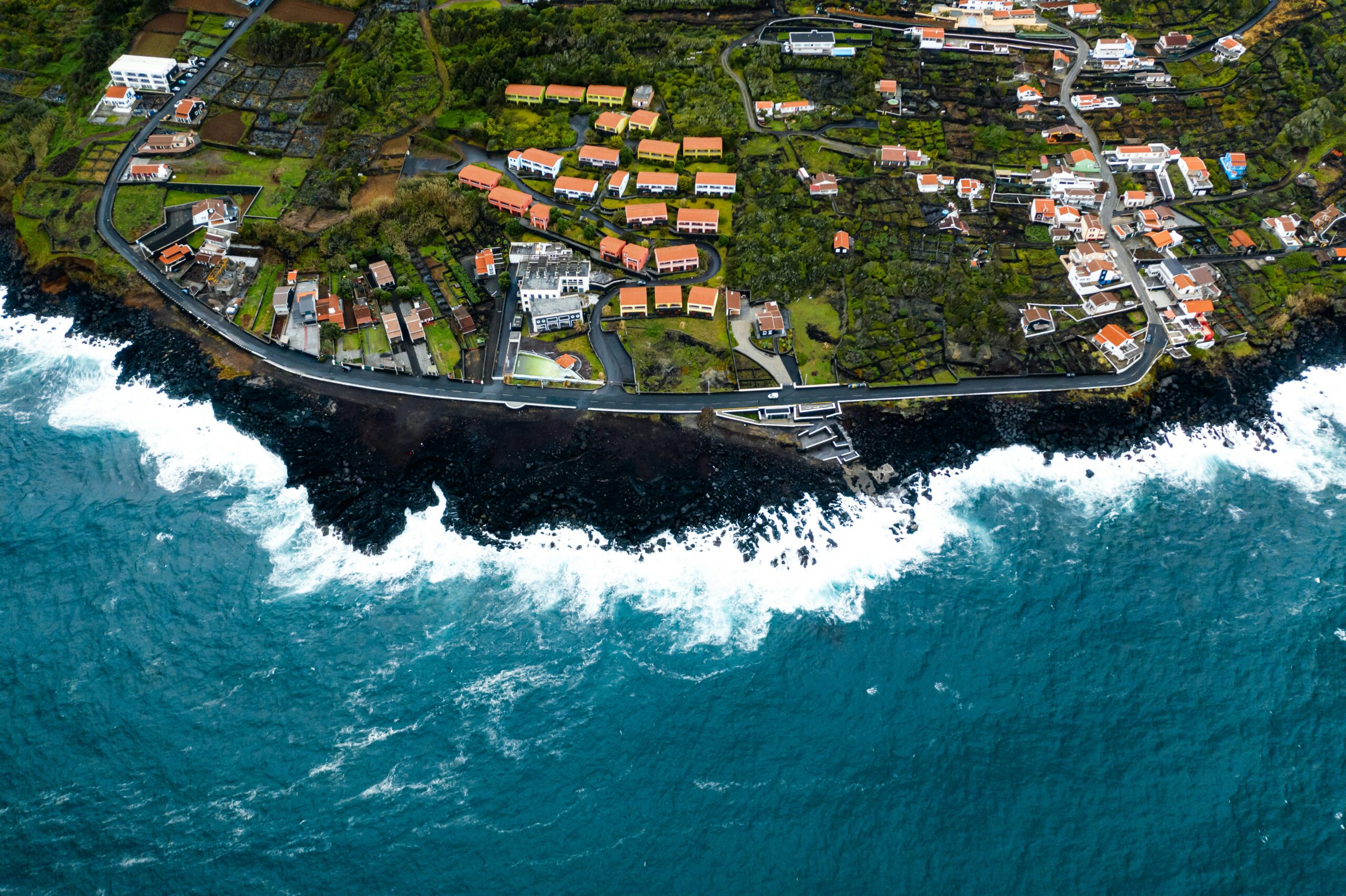
The islands are not interchangeable. São Miguel is the broadest first-time introduction, combining Sete Cidades, Furnas, Lagoa do Fogo, geothermal bathing, tea, pineapple culture and the archipelago’s largest choice of accommodations and services. But adding another island can make the trip feel much more distinctly Azorean.
When São Jorge or Flores Belongs in the Trip
São Jorge for hiking and fajãs

São Jorge works especially well when Faial and Pico are already part of the itinerary. Its long mountainous form, high cliffs and coastal fajãs create a very different landscape from neighboring islands. Hiking and São Jorge cheese are two of the biggest reasons to include it. The key is to give it enough time rather than treating it as a rushed ferry stop.
Flores for western-island scenery

Flores is worth the extra logistics when waterfalls, crater lakes and remote Atlantic scenery are central to the trip. It also pairs naturally with Corvo, but weather can affect transportation in the Western Group, so avoid building an onward international connection immediately after a weather-sensitive transfer.
Six Popular Islands for a Multi-Island Vacation
| Island | Standout experiences | Best for | Planning role |
|---|---|---|---|
| São Miguel | Sete Cidades, Furnas, Lagoa do Fogo, geothermal bathing, whale watching | First-timers, couples, families, travelers wanting variety | Best primary base and international gateway |
| Terceira | Angra do Heroísmo, volcanic interior, Biscoitos, culture and festivals | History, culture, food, easy touring | Strong second island or part of a four-island guided route |
| Pico | Mount Pico, UNESCO vineyard landscape, wine, whale-watching heritage | Hikers, wine lovers, active travelers | Pairs naturally with Faial |
| Faial | Horta, Caldeira, Capelinhos, maritime history | Geology, sailing history, scenic road trips | Excellent gateway to Pico and the Central Group |
| São Jorge | Fajãs, coastal hiking, cheese, dramatic cliffs | Hikers and slower nature-focused travel | Best added when the Central Group already anchors the itinerary |
| Flores | Waterfalls, crater lakes, cliffs, western-island scenery | Photographers, hikers, remote nature | Worth adding when you can give the Western Group enough time |
Can Families Island-Hop in the Azores?
Yes, but families usually benefit from fewer hotel changes. São Miguel is the easiest family base because it offers the widest range of activities and services. Terceira can be an excellent second island for families interested in history, volcanic landscapes and easier road touring. Faial and Pico can also work well together because the short ferry connection reduces the need for another flight.

For a family-specific overview, see our Azores family travel guide. The important point is to avoid promising that every whale-watching departure, hot spring, cave or natural pool will suit every child or every weather condition. Build flexibility into the itinerary.
Choose Islands Around the Experiences You Want
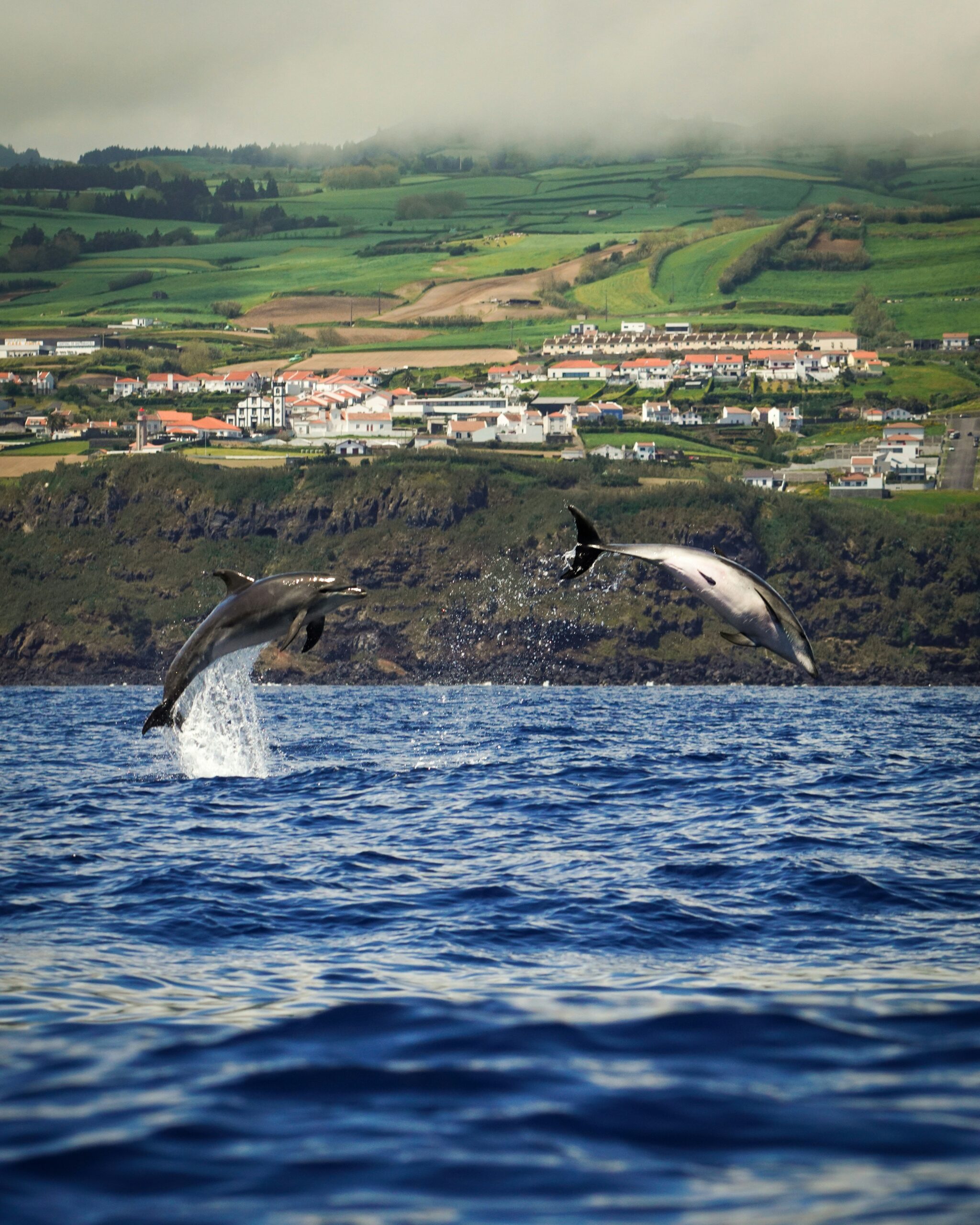
- Crater lakes and geothermal landscapes: prioritize São Miguel.
- History and UNESCO heritage: add Terceira.
- Mountain climbing and volcanic vineyards: add Pico.
- Maritime history and recent volcanic geology: add Faial.
- Fajã hiking: add São Jorge.
- Waterfalls and remote highland scenery: add Flores.
- Beaches and a different eastern-island feel: consider Santa Maria.
How to Get Between the Azores Islands
Inter-island flights
SATA Air Açores provides the inter-island air network and is usually the practical choice for longer jumps, such as São Miguel to Flores or São Miguel to islands in the Central Group. Flight times are short, but schedules vary by route and season, and Atlantic weather can cause operational changes.
Ferries
Atlânticoline operates the inter-island ferry network. Not every route runs year-round. The company’s current 2026 information lists the Blue Line between Faial and Pico, the Green Line linking Faial, Pico and São Jorge, and the Pink Line between Flores and Corvo as regular year-round operations. Additional Central Group routes operate seasonally, generally from May through September.
That makes Faial and Pico one of the easiest ferry combinations in the archipelago, while routes involving Terceira, Graciosa or some São Jorge connections require more attention to the date of travel. Always check the live timetable instead of building an itinerary from an old generic ferry chart.
Getting to the Azores from North America in 2026
North American air service changes by season, so avoid locking the article to a permanent city list. Azores Airlines’ published 2026 summer operation identifies Boston, Toronto, New York and Montreal as key North American markets. Air Canada’s Toronto–Ponta Delgada service operated seasonally from June 11 through September 5, 2026, so it should no longer be described as an upcoming launch.
For U.S. and Canadian visitors traveling for a normal short stay, Portugal remains part of the Schengen Area and visa-exempt travel generally allows stays of up to 90 days in any 180-day period. However, border procedures have changed: the EU Entry/Exit System (EES) became fully operational on April 10, 2026 and records short-stay non-EU travelers electronically, including biometric data. ETIAS is not yet in operation as of this review; the European Commission says it is scheduled for the last quarter of 2026, with the exact start date to be announced.
How Many Islands Can You Visit in 7, 10 or 14 Days?

| Trip length | Sensible island count | Example approach | Azores.com option |
|---|---|---|---|
| 7 days | 2 islands for a relaxed trip; 3 can work when tightly connected | São Miguel + Terceira, or São Miguel + Pico; alternatively Faial + Pico + São Miguel on a structured itinerary | 3-Island Private Guided Tour: Faial, Pico & São Miguel, 7 days / 6 nights |
| 10 days | 3–4 islands | A Central Group combination, or a structured Terceira + Faial + Pico + São Miguel route | 4-Island Private Guided Tour: Terceira, Faial, Pico & São Miguel, 10 days / 9 nights |
| 14–15 days | 4–5 islands | Add Flores or São Jorge only when the routing gives each island enough time | 5-Island Private Guided Tour: Flores, Faial, Pico, Terceira & São Miguel, 15 days / 14 nights |
A 7-day trip
If you are planning independently, two islands is usually the easiest pace. São Miguel plus Terceira gives you nature plus culture; São Miguel plus Pico gives you geothermal landscapes plus mountain-and-vineyard scenery. A three-island week can still work when the route is designed around efficient transfers—for example, the existing Azores.com 3-Island itinerary uses Faial and Pico together before continuing to São Miguel.
A 10-day trip
Ten days is enough for three or four islands when the sequence is coherent. One option is to focus on the Central Group; another is the existing four-island guided route combining Terceira, Faial, Pico and São Miguel. What does not work is recommending one four-island combination and then linking to a package containing a different four islands, which the previous article did.
A two-week trip
With roughly two weeks, four or five islands becomes realistic. This is the point at which adding Flores can make sense, especially when remote nature is a priority. The current 5-Island Private Guided Tour uses Flores, Faial, Pico, Terceira and São Miguel over 15 days / 14 nights.
Five Rules That Make Island Hopping Easier
- Do not maximize island count. Every transfer consumes time even when the flight or ferry itself is short.
- Group neighboring islands. Faial and Pico are the classic example; São Jorge can extend that Central Group route when time allows.
- Protect your international departure. Avoid placing a weather-sensitive island transfer immediately before your flight home.
- Rent cars island by island. Do not assume a rental car can travel with you between islands or that ferry vehicle space will fit the itinerary.
- Keep one flexible element. Weather can alter viewpoints, hikes, whale watching and transport, so a little breathing room improves the whole trip.
When a Prearranged Multi-Island Trip Makes Sense
Independent island hopping is completely possible, but the number of separate bookings rises quickly: hotels, inter-island flights, ferries, rental cars, airport or harbor transfers and sightseeing all need to line up. A prearranged itinerary is most useful when you want several islands without spending your own time coordinating every connection.
Azores.com offers guided and self-drive itineraries that combine accommodations, transportation and selected sightseeing. The important advantage is not that you can simply “show up” with no responsibilities; travelers still need valid travel documents, appropriate insurance, punctual check-ins and flexibility when weather affects operations. The advantage is that the core logistics are coordinated in advance.
Azores Island Hopping FAQs
Which Azores islands should I visit on my first trip?
São Miguel is the easiest first island because it offers the broadest range of scenery, activities and visitor services. From there, add Terceira for culture, Pico for mountain and vineyard scenery, Faial for maritime history and easy access to Pico, São Jorge for hiking, or Flores for remote waterfalls and crater lakes.
Is it easy to travel between Azores islands?
Yes, when the route matches the transport network. Inter-island flights are best for longer distances. Ferries are particularly useful between neighboring islands, but some routes are seasonal. Always check the live schedule for your dates.
How many islands can I visit in one week?
Two islands is the easiest independent pace. Three can work when the itinerary uses closely connected islands and the logistics are organized efficiently, such as Faial and Pico together with São Miguel.
Do ferries connect all nine Azores islands year-round?
No. Atlânticoline operates some routes year-round and others seasonally. In 2026, the regular year-round network includes Faial–Pico, Faial/Pico/São Jorge connections and Flores–Corvo, while additional routes expand in the warmer months.
Do U.S. or Canadian travelers need a visa for the Azores?
For normal short tourist stays, U.S. and Canadian citizens are generally visa-exempt for up to 90 days in any 180-day period in the Schengen Area. The EES is now operational and records short-stay non-EU arrivals and departures electronically. ETIAS is not yet operating as of September 2026, but the EU expects it to begin later in 2026.
How many days should I spend on each island?
São Miguel usually deserves four to five full days on a first visit. Terceira, Pico and Faial often work well with two to three full days each, while São Jorge and Flores deserve enough time to justify the extra transfer. These are planning ranges, not rules; hiking, weather and special interests can easily justify longer stays.
For more detail, see How Many Days Do You Need in the Azores? and our Azores Island Hopping guide.
Want the island sequence and transfers coordinated for you? Compare current Azores multi-island itineraries or tell our travel specialists the islands, pace and experiences you want.
Compare Multi-Island Tours Plan My Azores Vacation
Eunice Costa has served as Travel Director of Portugal Online Corp., Azores.com (Azores Travel and Tours) since 1996. Born in the Azores and now based in California, she brings more than 30 years of experience promoting the Azorean Islands and creating thoughtfully designed tour packages, especially tailored for the U.S. and Canadian markets, that combine exceptional experiences with great value. Through her contributions to the Azores.com blog, Eunice shares her deep knowledge and passion for all nine Azorean Islands, helping travelers discover the very best of this unique destination.