The Azores are full of volcanic swimming pools, sheltered lava-rock coves and ocean bathing areas, but choosing where to swim is about more than finding the prettiest spot. Tide, swell, wind, access, lifeguard cover and current water conditions can turn the same pool from inviting to unsafe within hours.
This guide helps you choose an Azores natural pool that fits your island, swimming confidence and travel style. It also explains how to check live conditions, what makes Ponta da Ferraria different, what families should look for, and what to do if Portuguese man o’ war are present.

What makes an Azores natural pool different from a beach?
Azores natural pools are swimming areas formed or protected by volcanic basalt, sheltered coves or low sea walls. Atlantic water still flows through them, so they are not enclosed swimming pools. Depth, tide, swell, entry points and seasonal supervision vary from place to place.
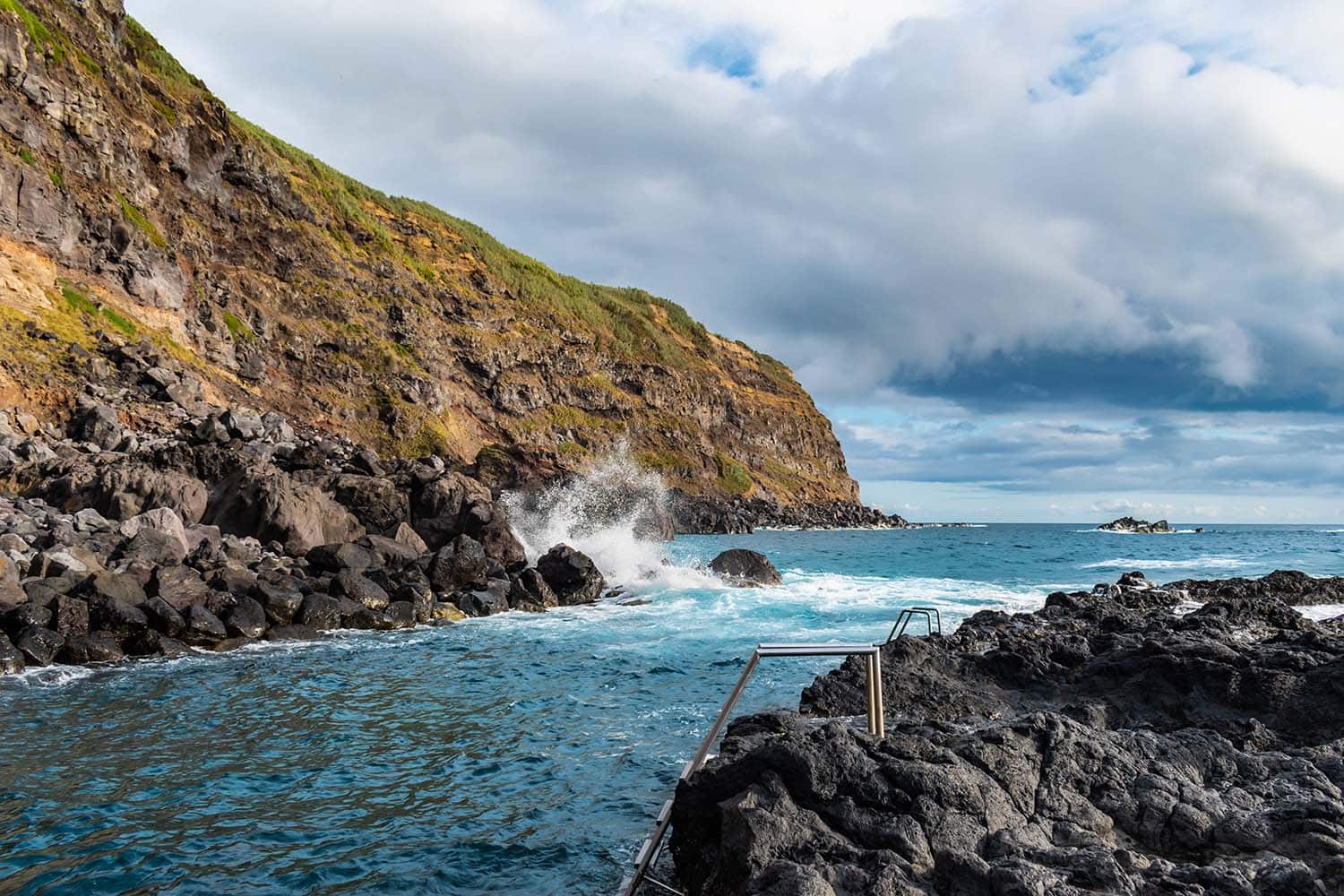
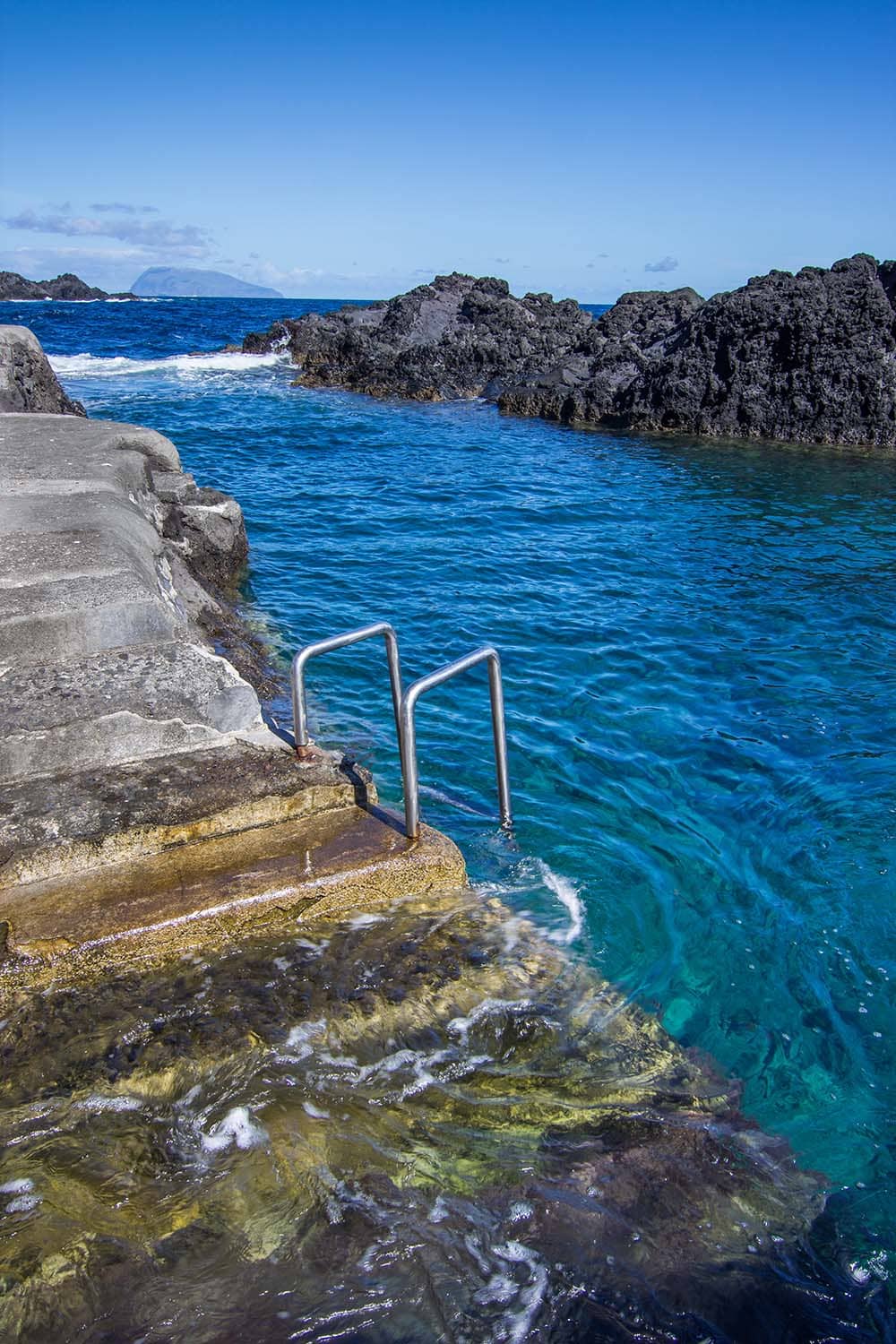
A sandy beach usually offers a more gradual entry. A lava-rock pool may instead have steps or ladders leading directly into deeper water, with hard and sometimes slippery basalt around the edge. That setting can produce beautifully clear water and excellent snorkeling, but it also makes footwear, careful entry and awareness of incoming swell important.
For the 2026 bathing season, the Regional Government identified 88 official coastal bathing waters across the nine islands. These designated areas are especially useful to travelers because official bathing waters are monitored for water quality and many have seasonal supervision or facilities. Exact bathing-season dates vary by location.
Which Azores natural pools are best for your trip?
There is no single “best” natural pool. São Miguel offers variety and the thermal-ocean experience at Ferraria; Terceira is famous for the basalt pools at Biscoitos; Pico has a particularly strong lava-coast swimming culture; Faial offers several established bathing areas; and smaller islands such as Graciosa and Flores combine scenic pools with a quieter setting.
Use these as planning profiles rather than guarantees. Lifeguard coverage, facilities and safe entry depend on the season and conditions on the day.
Ponta da Ferraria · São Miguel
Best for: a unique geothermal experience.
Thermal spring water mixes with the Atlantic. Low tide generally makes the pool warmer; very low tide can make it excessively hot. Rocky access and ocean movement mean this is not the easiest choice for young children or weak swimmers.
Caloura · São Miguel
Best for: a protected lava-rock setting.
A sheltered bay with steps and ladders. It can be calmer than more exposed pools, but sea conditions still matter.
Mosteiros · São Miguel
Best for: volcanic scenery and sunset.
The official tourism portal lists supervision during the bathing season, parking and toilets. The west coast can still receive significant swell.
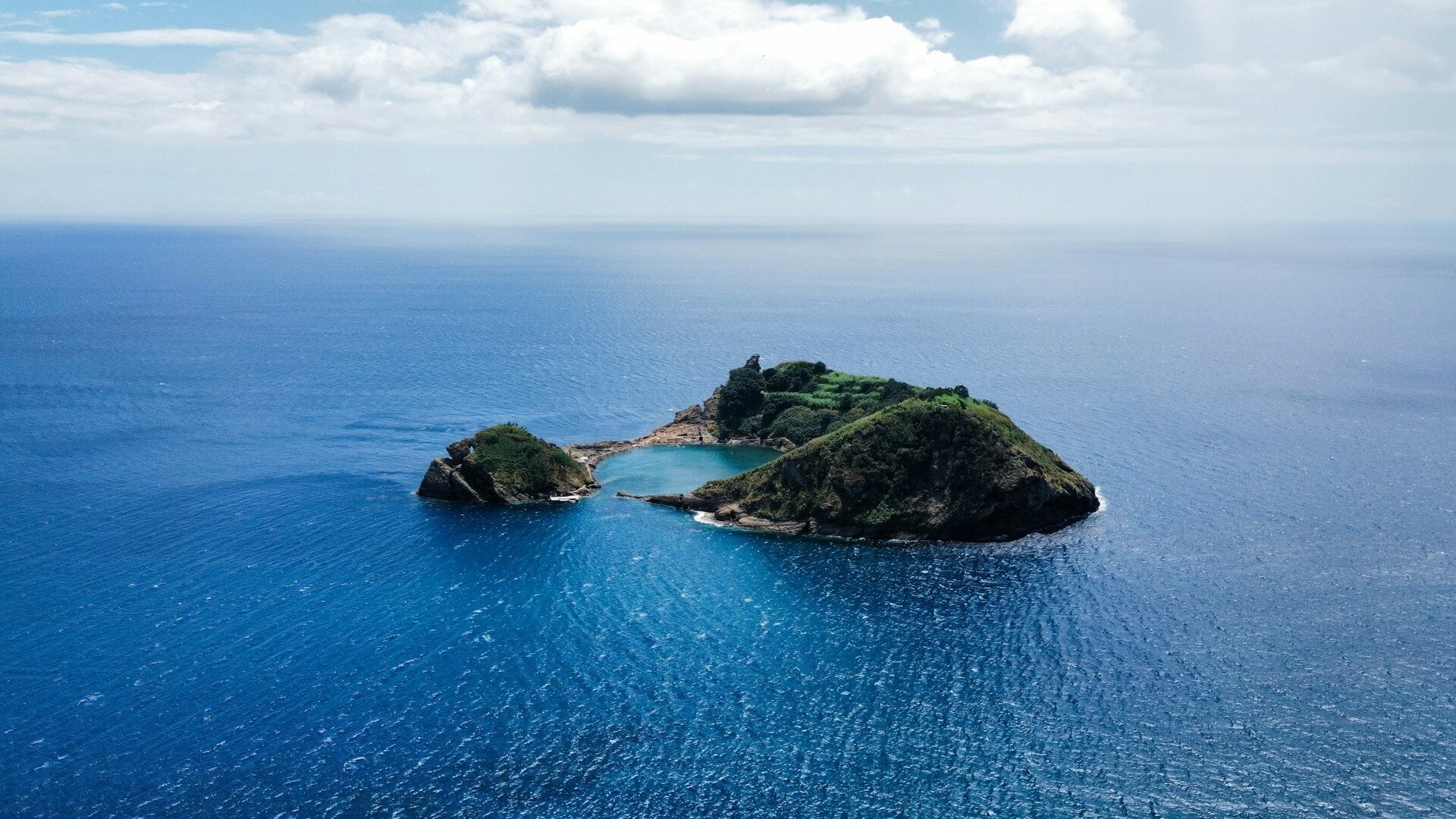
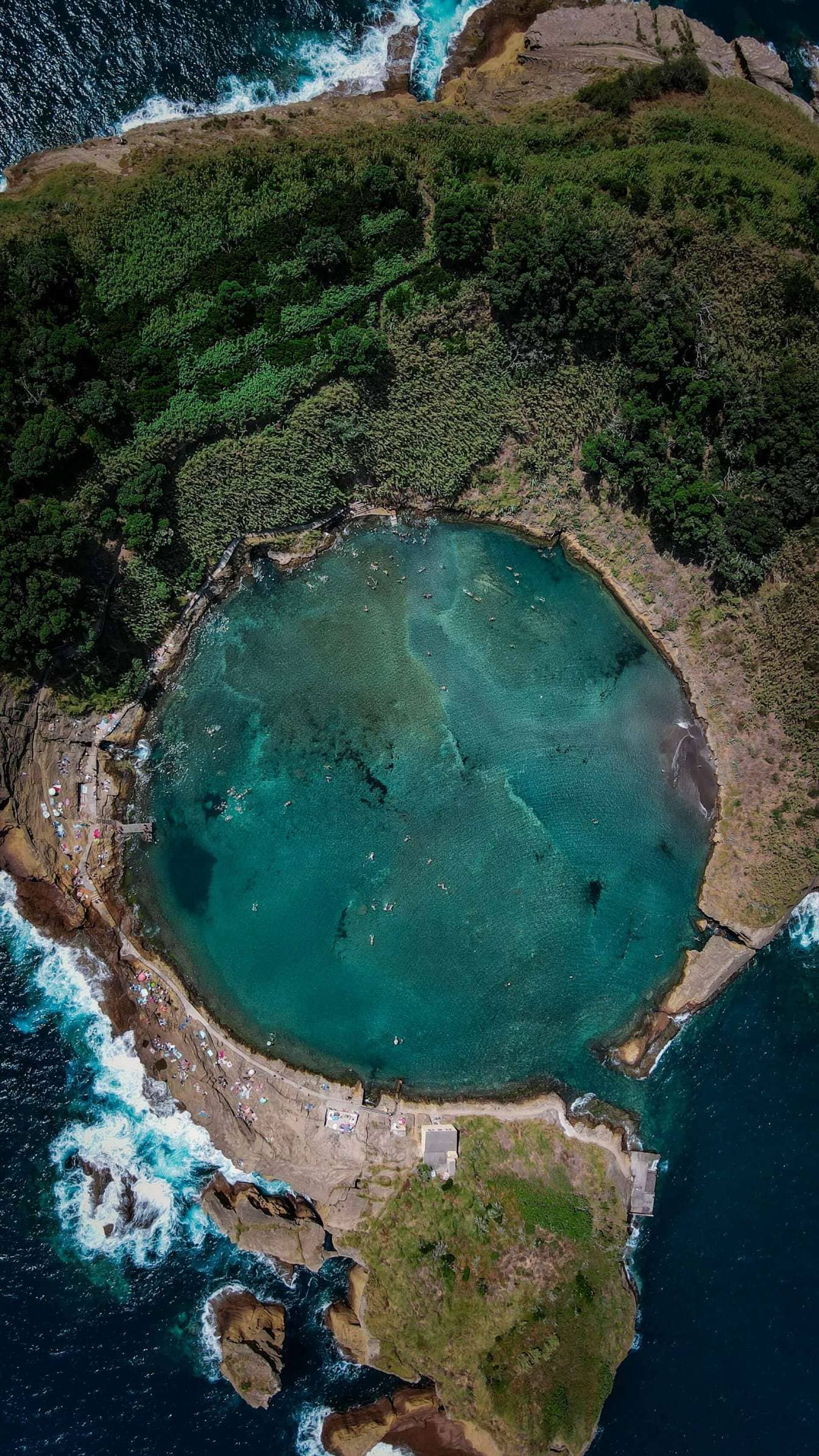
Ilhéu de Vila Franca do Campo · São Miguel
Best for: a distinctive crater-lagoon swim.
Reached by boat with regulated access and limited capacity. It reopened for the 2026 season after its bathing-water classification improved sufficiently for access to resume.
Biscoitos · Terceira
Best for: dramatic lava formations with established visitor facilities.
Walkways, steps and ladders connect several pools. Conditions can become rough on the north coast, so use the monitored areas and obey local warnings.
Cachorro / Poça Branca · Pico
Best for: confident swimmers seeking a more natural setting.
Rocky access and Atlantic exposure make live conditions particularly important. Do not assume an attractive rock pool is suitable simply because other people are in the water.
Varadouro · Faial
Best for: travelers who prefer facilities with their ocean swim.
Semi-natural pools on Faial’s south coast. Confirm current supervision, access and facilities for your dates.
Castelo Branco · Faial
Best for: an established summer bathing stop.
A semi-natural swimming area with built sections. Seasonal services and conditions should be checked before relying on it for a family swim.
Carapacho · Graciosa
Best for: travelers looking for a more protected swimming setup.
Basalt pools and an enclosed section sit near the island’s thermal area. Check seasonal supervision and facilities locally.
Preguiça / Velas · São Jorge
Best for: adding a swim to a day around Velas.
Coastal bathing areas with steps or ladders. Conditions and seasonal services should be confirmed on arrival.
Santa Cruz · Flores
Best for: clear water and dramatic island scenery in settled weather.
The volcanic pools sit conveniently in Santa Cruz, but Flores weather and sea conditions can change quickly.
Praia Formosa · Santa Maria
Best for: travelers who prefer a sandy entry.
This is a beach rather than a natural pool, but it is a useful alternative for families or swimmers who find ladders and volcanic rock difficult.
How do tides, swell and wind affect natural-pool safety?
Tide changes the depth and the way ocean water enters many natural pools. Swell can send waves over protective rocks or walls even when the water inside initially appears calm. Wind adds chop and can make exposed coastlines uncomfortable or unsafe. That is why a pool should be reassessed each time you arrive rather than judged from yesterday’s conditions or a photograph.
Ponta da Ferraria: plan around the tide
Ferraria is the clearest example of tide-dependent swimming. The official Azores Tourism Portal explains that thermal spring water can exceed 30°C before mixing with the sea. A high tide cools the pool, while a very low tide can make the water excessively hot. In practical terms, you want a favorable low-tide window rather than assuming that “low tide” automatically means ideal conditions.
Where can you check water quality and current conditions?
Use different sources for different questions. Water-quality status for designated bathing waters is published through Portugal’s environmental authorities. For wind, waves and sea conditions, use IPMA. Once you arrive, local warning flags, lifeguards and posted notices are the final authority.
- Before the trip: confirm that your preferred pool is an official bathing area and check its bathing-season dates.
- That morning: review the IPMA marine forecast and, where useful, a live webcam.
- At the pool: read the flag and posted warnings before entering.
- When in doubt: choose a monitored, sheltered bathing area or postpone the swim.
What should swimmers know about Portuguese man o’ war?
The Portuguese man o’ war (Physalia physalis) occurs in Azorean waters and is the gelatinous organism that requires the greatest caution in Portugal. It drifts with winds and surface currents and can be recognized by its blue, sometimes pink or purple, gas-filled float. Its long tentacles can cause severe stings.
Never touch one in the water or on shore, even if it appears dead. Stinging cells can remain active after stranding.
Which natural pools are best for children or less-confident swimmers?
For families, the best pool is usually the one with the most predictable setup: seasonal supervision, sheltered water, easy exits, toilets and a clearly separated area away from direct swell. A famous viewpoint or dramatic lava formation is less important than being able to get everyone safely in and out of the water.
Carapacho on Graciosa and established bathing areas such as Caloura, Varadouro and Biscoitos can be useful places to investigate, but do not treat any pool as automatically child-safe. Lifeguard schedules and sea conditions change, and depth can increase abruptly beside volcanic rock.
- Choose a monitored bathing area whenever possible.
- Keep young children within arm’s reach around the water.
- Use water shoes on slippery or sharp basalt.
- Check how swimmers exit before entering; ladders can be difficult in swell.
- Do not enter simply because other swimmers are already in the pool.
- Have a beach or inland activity as a backup when conditions deteriorate.
For more ideas when traveling with younger visitors, see our guide to family-friendly Azores activities. Travelers who want to combine swimming with hiking, snorkeling and other outdoor experiences can also compare our Azores active holidays.
Frequently asked questions about Azores natural pools
Are Azores natural pools free?
Many public natural pools are free to use. Costs can still apply for parking, transportation or related facilities. Ilhéu de Vila Franca do Campo is different because access requires a paid boat trip and is capacity controlled.
Do I need water shoes?
They are a good idea at most lava-rock pools. Basalt can be rough or slippery, and water shoes make walking around wet rock and entering by steps more comfortable.
When is the best time of year to swim?
Summer generally provides the warmest sea temperatures and the broadest availability of seasonal lifeguard services and facilities. Exact official bathing-season dates differ by location, so check the site you plan to use rather than assuming one region-wide opening date.
Do I need a wetsuit?
For casual summer swimming, many visitors do not use one. A wetsuit becomes more useful in cooler months, for longer sessions, or for swimmers who feel the cold. Check current sea temperatures rather than relying only on monthly averages.
Which island has the most official coastal bathing waters?
For 2026, Pico has the largest number of designated coastal bathing waters, followed by São Miguel and Terceira. The count refers to official coastal bathing waters, not only places that would commonly be described as “natural pools.”
Can you swim in natural pools in winter?
Some sites remain physically accessible outside summer, but seasonal lifeguard services may not be operating and Atlantic swell is often more challenging. Treat winter swimming as condition-dependent and never assume summer supervision or facilities will be available.
A simple decision rule before every swim
Choose the island and pool for the experience you want, but let the least-confident swimmer in your group set the safety threshold. Then make the final decision using the conditions that actually exist when you arrive.
- Is the pool appropriate for everyone in the group?
- What is the tide doing?
- Is swell entering or washing over the pool?
- What does the warning flag say?
- Is a lifeguard actually on duty?
- Are there any water-quality or marine-life warnings?
- Can everyone enter and exit safely?
Official sources and live checks
Swimming conditions and seasonal services change. These official resources are the best starting points for checking information close to your travel dates:
- Azores Tourism Portal — Ponta da Ferraria Natural Pools
- Azores Tourism Portal — Mosteiros Natural Pools
- IPMA — Weather and sea information
- IPMA GelAvista — Portuguese man o’ war and other gelatinous species
Last reviewed: September 2026. Always follow local flags, lifeguards and official notices on the day you swim.

Eunice Costa has served as Travel Director of Portugal Online Corp., Azores.com (Azores Travel and Tours) since 1996. Born in the Azores and now based in California, she brings more than 30 years of experience promoting the Azorean Islands and creating thoughtfully designed tour packages, especially tailored for the U.S. and Canadian markets, that combine exceptional experiences with great value. Through her contributions to the Azores.com blog, Eunice shares her deep knowledge and passion for all nine Azorean Islands, helping travelers discover the very best of this unique destination.