Travel Consultants
Is your time too precious to spend long hours searching for the perfect holiday in the Azores? Looking for expert help in organizing your trip? Hire an Azores.com Travel consultant.

Over on the cobblestones of Ponta Delgada, the smell of crushed flower petals usually hits you way before you actually see the Santo Cristo procession. It’s intense. But 2026 isn’t just another year for us – it’s the 50th Anniversary of Autonomy, so the party energy is going to be doubled across every single island. Whether you’re chasing the bullfights in Terceira or just trying to find a bed during the White Ocean party, you’ve got to get your strategy sorted early. Because with this weird early Easter schedule, everything’s shifting fast.
 Angra do Heroísmo in Terceira Island in Azores.
Ever wonder why the 2026 calendar feels so heavy with official events? It’s because the archipelago is hitting the big 5-0. 1976 was the year the Azores secured their political autonomy from Lisbon, establishing their own government and parliament. Consequently, you’re going to see state-sponsored events popping up everywhere, but the epicenter is definitely Terceira. The regional government is treating this Golden Jubilee as a branding exercise for the islands, which means inflated budgets for festivals and a lot of ribbon-cutting ceremonies mixed in with your street food.
It’s about *Açorianidade*-the distinct soul of the islands. For fifty years, the Azores have managed their own destiny, and that pride is going to be the main theme of the Sanjoaninas festivities. You won’t just see generic floats; you’ll see narratives about resilience and isolation. The “Azoreanity” concept is usually subtle, but in 2026, it’s going to be front and center. It is a celebration of survival as much as it is of politics.
So, how does this actually impact the vibe on the cobblestones? You’ll feel it in the programming. The usual lineup of pop concerts is likely to be heavily supplemented by tributes to island history and diaspora connections. Because autonomy isn’t just about the people who stayed; it’s about the ones who left and came back. Expect the “Marchas” (parades) in Angra do Heroísmo to be more emotionally charged than usual, telling specific stories of the struggle for self-determination. It turns a standard summer party into a living history lesson. And honestly? It makes the experience richer because you aren’t just watching a show; you’re witnessing a people celebrate their right to be themselves.
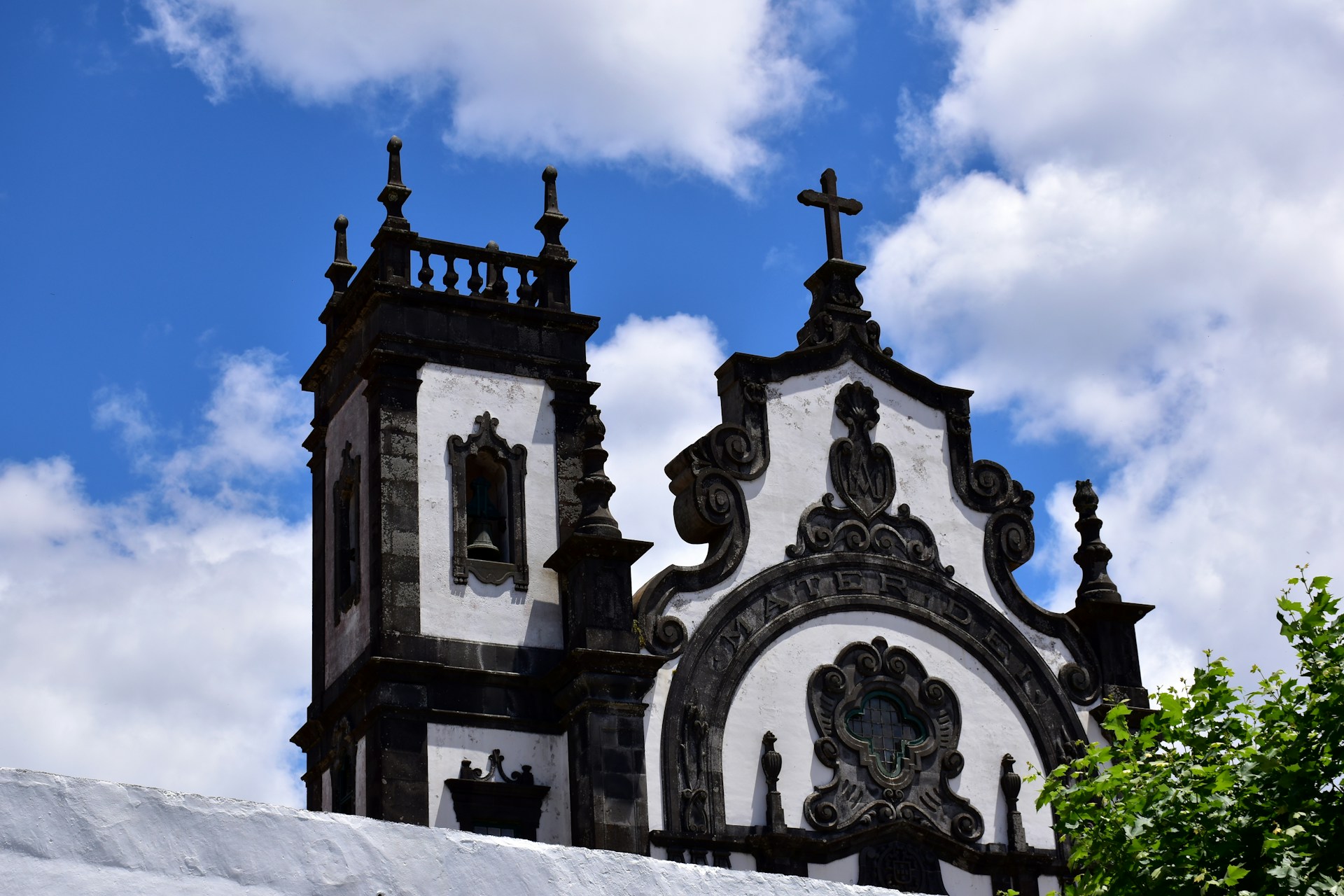 Azorean festivities are deeply rooted in Catholic religious traditions.
You might not expect the phases of the moon to dictate your vacation schedule, but in the Azores – that’s exactly how it works. Because almost every major cultural event in the first half of the year is tethered to the church calendar, the 2026 dates shift significantly compared to previous years. With Easter Sunday landing early on April 5, the entire “Cycle of the Spirit” slides forward by weeks. This means the massive Santo Cristo festival hits Ponta Delgada in early May, and the peak Holy Ghost soups are being served before June even starts.
So what happens when Easter arrives this early? It creates a rare breathing room in the calendar that you can actually use to your advantage. Usually, the big religious festivals bleed right into the summer secular parties, creating a chaotic blur of logistics. But in 2026, you get a distinct gap. Santo Cristo wraps up by mid-May, leaving a solid four-week quiet period before the Sanjoaninas kick off in Terceira. It effectively splits the season in two, separating the solemn vows from the street parties.
This spacing is actually a huge win if you’re trying to dodge the absolute maddest crowds while still catching good weather. Since the Holy Ghost festivities – those authentic, decentralized street parties with the free soup – peak on May 24 and May 31, the first half of June becomes this sort of “golden pocket” for travel. The massive crowds from Santo Cristo have flown home, the diaspora hasn’t arrived for the summer yet, and the weather is usually stabilizing into proper warmth. You could technically hit the biggest religious procession in São Miguel in May, leave, and come back for the biggest street party in Terceira in late June without overlap. It turns late May and early June into a prime time for hikers and nature lovers who want to see the islands green and blooming without fighting for restaurant reservations every single night.
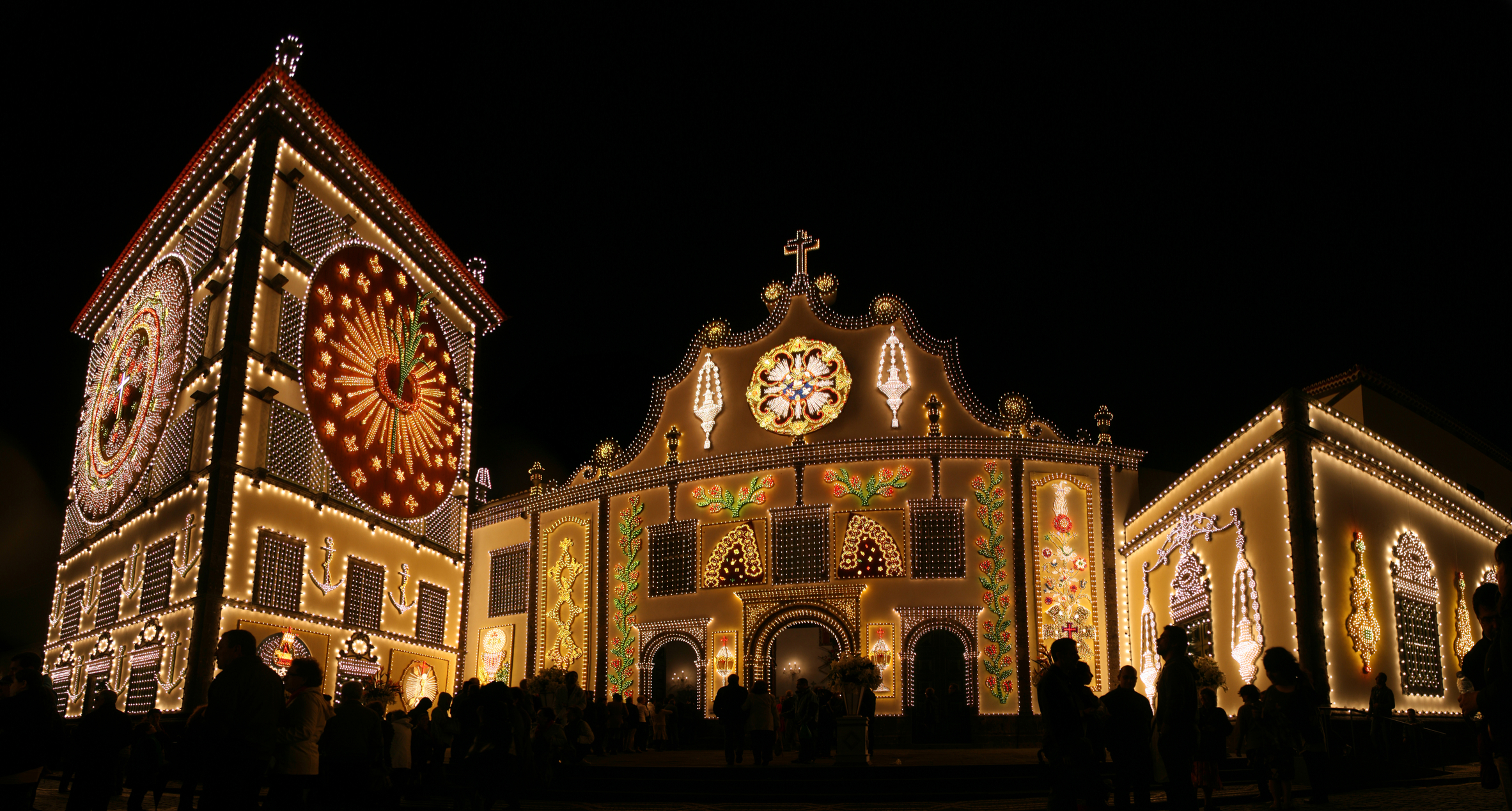 Festivals of the Lord Jesus Christ
Unlike the scattered summer parties, this week in May is the intense spiritual gravity of São Miguel. For 2026, everything pivots around the procession on May 10, where a Renaissance bust of Christ moves through kilometers of intricate flower carpets in Ponta Delgada. The city transforms into a massive open-air cathedral mixed with a street fair, and the energy is suffocating in the best way possible. If you haven’t booked your accommodation a full year out, you’re likely staying in a different town and commuting in, because the city center hits 100% occupancy fast.
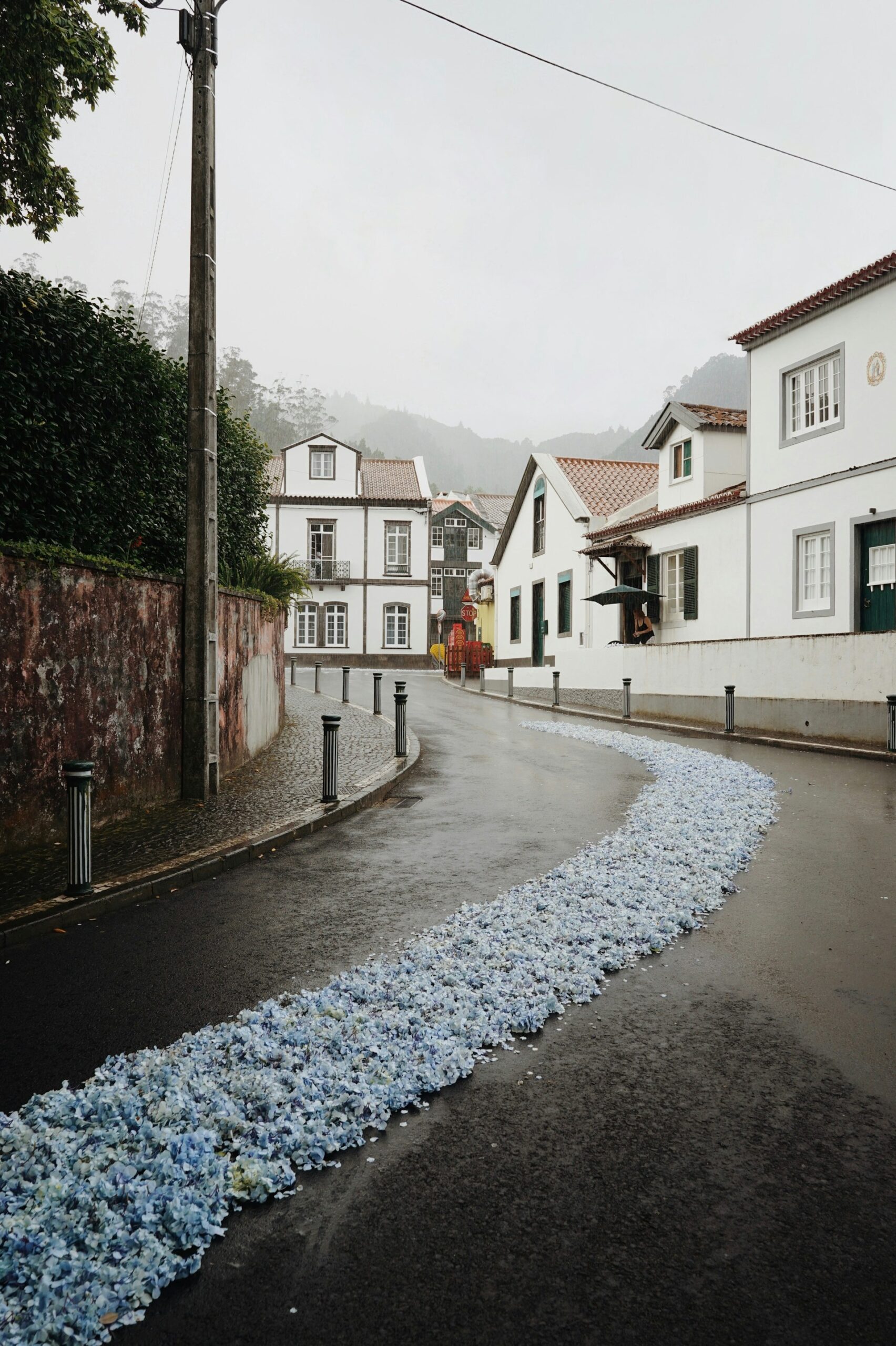 A road covered with hydragenia petals during the religious celebration in Furnas, San Miguel, Azores.
You can forget about buying tickets or standing in security lines for this one. Running from April through September, these are decentralized events where every village paints its colorful Império chapel and throws the doors open to strangers. The cycle peaks around Pentecost on May 24 and Trinity Sunday on May 31. It is a tradition based entirely on charity, meaning you will often see locals handing out bread, wine, and meat to anyone passing by – including confused tourists.
This is where the “Azoreanity” mentioned earlier really lives. On Terceira and São Jorge, these festivities are the absolute social glue of the island, often serving the famous Sopas do Espírito Santo, a mint-infused meat broth poured over bread that you have to try at least once. But on Terceira, the charity comes with adrenaline. The eating usually precedes a rope bullfight on the asphalt, mixing solemn devotion with wild street running. Don’t just watch from the sidelines. If you see a long table set up in the street or a community hall buzzing with noise, ask permission to enter. You’ll likely be fed until you can’t move.
 Cidade da Horta, Faial Island.
While the Holy Ghost festivals provide the spiritual heartbeat of the islands, the secular calendar is where the Azores really lets its hair down. You might think the religious and secular worlds are entirely separate here, but they often bleed into one another, creating a unique hybrid of solemnity and street party. 2026 is shaping up to be particularly intense because the political calendar is aligning with the festive one, turning standard holidays into massive regional showcases.
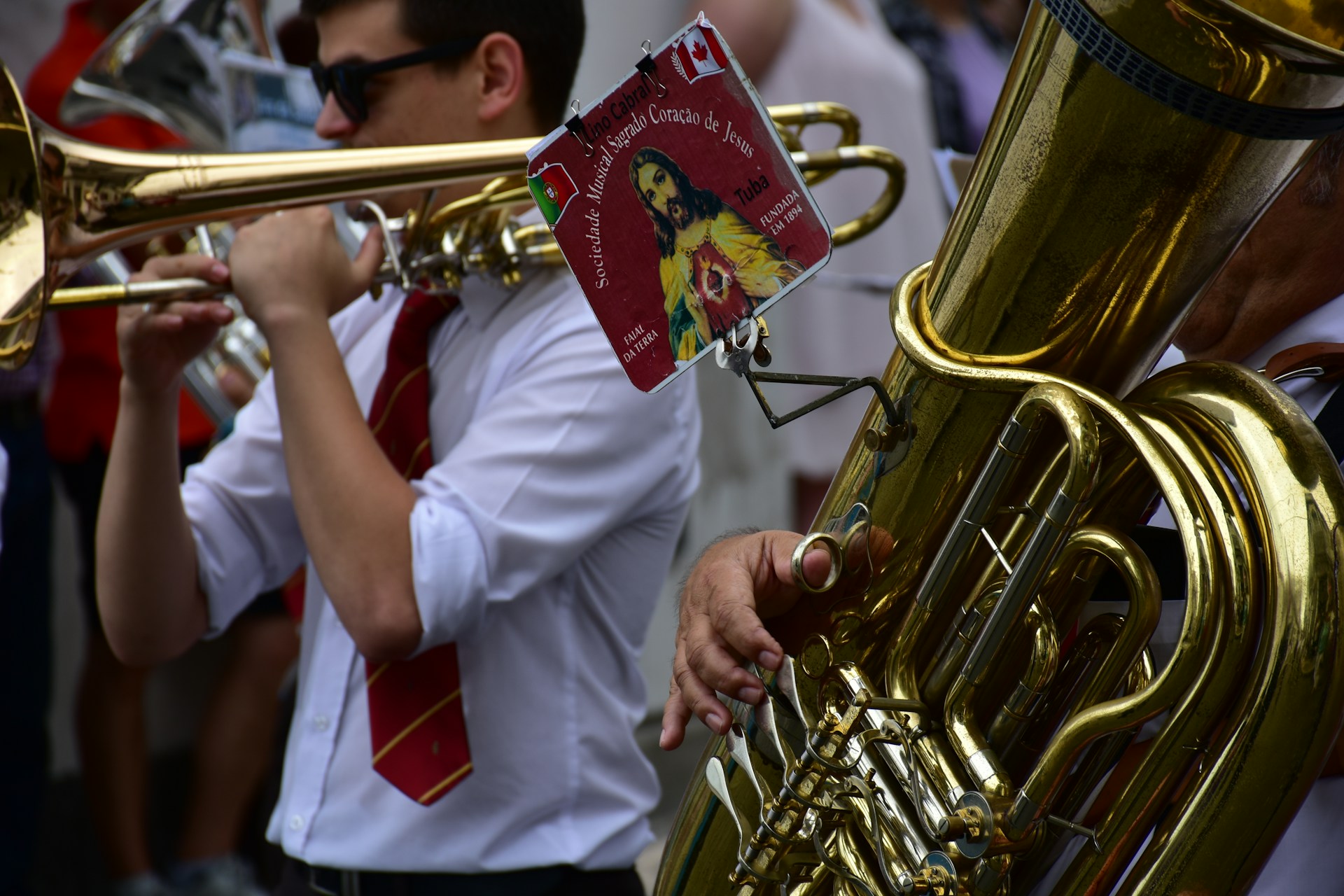 Band Parade in Cidade da Horta in Faial Island.
If there is one event you build your June itinerary around, it’s this one. Confirmed for June 19-28 in Angra do Heroísmo, the 2026 edition is doubling as the central stage for the 50th Anniversary of Regional Autonomy. You aren’t just getting the usual chaos of rope bullfights and the colorful Marchas parades; you’re getting a state-sponsored spectacle with a budget specifically designed to celebrate “Azoreanity.” Because this is the biggest secular party in the archipelago, booking a hotel in Angra’s city center six to nine months out is the only way to avoid a logistical parking nightmare.
 Sanjoaninas Festival in Angra do Heroismo in Azores
 Sanjoaninas Festival in Angra do Heroismo in Azores
 Angra do Heroismo Terceira Island.
Just when you assume the festive season is winding down, the municipality of Povoação on São Miguel throws one last massive celebration in September. It serves as the unofficial closing ceremony of the Azorean summer, blending a deep veneration for the Patron Saint with a secular lineup that often rivals the peak-season events. It’s a slightly more local affair than the international crush of Santo Cristo, giving you a better chance to interact with residents who are celebrating the successful end of the harvest and the tourism high season.
The logistics here are tricky because Povoação is tucked away in the southeastern corner of the island, a fair drive from the main hotel hub in Ponta Delgada. You’ll want to plan your transport carefully because the “Saturday of the Viands” and the major music concerts draw thousands of people into a relatively small valley town. The atmosphere is electric, often featuring top-tier Portuguese rock or pop acts that keep the main square packed until the early hours. Instead of trying to navigate the winding coastal roads back to the capital at 3 AM, try to snag accommodation in the nearby Furnas valley, which puts you just a short taxi ride away from the action.
You might not realize it until you land, but the connection between these islands and North America is incredibly deep. We’re talking about a reality where more Azoreans live in the US and Canada than in the archipelago itself. When you walk through the summer festivals, don’t be surprised if you hear a unique mix of Portuguese and heavy Boston, Fall River, or Toronto accents. This isn’t just tourism. It’s a massive annual homecoming that shapes the economy, the food, and the sheer volume of the summer crowds you’ll be navigating.
These festivals aren’t just put on *for* the locals; they are often funded and energized *by* the returning families. You’ll see this clearly during the Festa do Emigrante in Flores or the Festival de Julho in São Jorge. The “emigrant return” is the heartbeat of the summer season. But it also creates a unique logistical puzzle for you because when these families return, they don’t stay in hotels. They occupy family homes and local rental properties, effectively taking a huge chunk of the housing inventory off the market before you even start searching. It goes deeper than just logistics though. When you attend something like the Santo Cristo procession or a village Holy Ghost feast, you are witnessing an intense release of *saudade* – that famous Portuguese longing. For many standing next to you in the crowd, this is the one week a year they reconnect with their roots, so the emotions run high and the parties go late. Since 2026 marks the 50th Anniversary of Autonomy, expect this energy to be dialed up significantly as the diaspora takes a front-row seat in celebrating their political and cultural identity. You aren’t just a spectator here; you’re stepping into a massive, trans-Atlantic family reunion that welcomes you in with open arms, provided you respect the traditions they’ve traveled thousands of miles to honor.
Unlike mainland Europe where you might snag a last-minute rental, the Azores play by a completely different set of rules during festival season. The “Return of the Diaspora” in July and August effectively wipes a massive chunk of local housing inventory off the market because emigrants are staying in family homes that would otherwise be listed on Airbnb. If you are eyeing the Sanjoaninas in Terceira or the massive Santo Cristo in São Miguel, you need to be locking down your hotel room in January or February.
While getting to the archipelago is easier than ever, moving between islands during a major festa is where your plans can quickly fall apart. The “SATA Bottleneck” is a very real phenomenon where small Dash-8 aircraft simply cannot handle the 500% surge in demand for events like the Festa do Emigrante on Flores. You might think ferries are a solid backup, but outside the Central Group “Triangle,” they are slow and infrequent. And don’t even get me started on rental cars – during peak weeks like Santo Cristo, there are literally none left on the islands.
When you book a ticket for Maré de Agosto on Santa Maria or the Santo Cristo on Graciosa, you are competing for seats on a plane that holds fewer than eighty people. If you wait until spring to book your summer inter-island flights, you will likely find yourself stranded on the wrong island or paying exorbitant rates for the few remaining seats. The smartest move you can make is booking your internal transfer flights the exact same day you book your international arrival, ideally six months out
Our local specialists can assist you in finding the ideal tour package or creating a custom one to match your dates and needs.
You can’t talk about Azorean festivities without addressing the sheer volume of food involved, but eating here requires strategy too. For religious holidays like Easter Sunday, restaurants close or are fully booked by local families weeks in advance, meaning you could end up eating gas station snacks if you don’t have a reservation. Conversely, during the Holy Ghost festivals, the best food – the famous Sopas do Espírito Santo – is often free and served in community halls, but you need to know the etiquette of asking permission to enter and respecting the ritual.
The culinary landscape shifts dramatically depending on which island you are standing on during the party. In Terceira during Sanjoaninas, the streets of Angra smell of Alcatra and bifanas, and the pop-up food stalls are where the real action happens late at night. But for the Santo Cristo in Ponta Delgada, the sheer density of people means downtown dining becomes a contact sport. You should aim to eat on the periphery of the city or commit to the street food vendors selling farturas because getting a table in the center without a reservation made months prior is virtually impossible.
As a reminder, 2026 isn’t just another year on the calendar – it’s a massive celebration of our autonomy that’s going to pack the streets. Why does this matter to you? Because if you’re planning to wing it with flights or think a rental car will magically appear in June, you’re going to be out of luck. Seriously. The islands are small, but the demand is going to be huge. So, lock in those reservations now. You don’t want to miss the party of the decade just because you waited too long to book a seat.
Explore our top Azores tour packages and book early to guarantee your place at the Azorean festivities.
A: This is the single most important thing you need to get right for your 2026 trip planning. Because Easter falls on April 5th – which is super early – the domino effect pushes the massive Senhor Santo Cristo dos Milagres festival to the beginning of May. Specifically May 8th through the 14th.
Usually, people assume this festival happens later in the month, so if you book based on old travel blogs, you’re going to miss the main event entirely. The Sunday procession on May 10th is going to be the absolute peak.
Ponta Delgada transforms into this ocean of people and flowers.
But here is the kicker regarding logistics. Because this happens in early May, there is this weird gap before the summer rush really starts in June. It’s good because it gives you a breather, but it also means flight availability is going to be tight in a shorter window. Hotels in Ponta Delgada are likely to hit 100% occupancy by the end of 2025. So if you want to see the flower carpets and the lights, you need to lock that down now.
A: Oh, it definitely changes things for you, especially if you like a good party. We are celebrating 50 years of Regional Autonomy, and the government is going to pour serious money into the festivities to show off “Azoreanity.”
The epicenter of this is going to be on Terceira island during the Sanjoaninas.
That’s happening June 19th to the 28th. Usually, Sanjoaninas is wild enough with the parades and the street bullfights, but for the 50th anniversary, expect the budget for concerts and cultural events to be way higher. It’s going to be louder, brighter, and much busier.
And you have to understand the geography of Angra do Heroísmo. It’s a compact UNESCO city. When they throw a party this big, the streets get gridlocked. If you plan to be there for the festivities, book a hotel right in the center so you can walk everywhere. Parking is going to be a nightmare you don’t want to deal with.
A: You are exactly the type of person who needs to check out the Tremor Festival on São Miguel. It’s confirmed for March 24th to 28th, 2026. This isn’t your grandmother’s church festival.
It’s this award-winning, avant-garde music and art experience that uses the island itself as a stage.
They do these “secret” concerts. You might hike down a trail to a volcanic crater or inside a thermal pool facility, and suddenly there’s a band playing. It’s super atmospheric and attracts a very international, younger crowd.
But you have to be quick. Tickets usually sell out around September or October of the previous year. And because the locations are secret and scattered around the island, you absolutely need a rental car. You can’t rely on buses to get to a secret concert in the middle of a forest at 11 PM.
A: Tough is an understatement – it’s the “SATA Bottleneck.” See, these islands have small runways and are served by smaller Dash-8 planes that don’t hold many people. When you have a major event like the Festa do Emigrante in Flores (mid-July) or the Santo Cristo in Graciosa (early August), the demand explodes.
We are talking about demand exceeding the number of seats by 500% or more.
The diaspora – our emigrants returning home from the US and Canada – book these flights nearly a year out. If you try to book a flight from São Miguel to Flores two months before the festival, you are going to be out of luck. There is no “last-minute” capacity on these routes.
Also, accommodation on Flores is incredibly scarce. If you don’t have a bed booked by now for July 2026, you might not find one. It’s that tight. So plan your inter-island flights at least 6 months in advance, or stick to the bigger islands.
A: August belongs to the “Triangle” islands – Faial, Pico, and São Jorge. This is when the ocean really comes alive. You have Semana do Mar in Horta (Faial) forecasted for August 2nd to 9th, which is basically the ultimate sailor’s party.
The bay is full of yachts, there are whaling boat regattas, and the energy is fantastic.
Then later in the month, you have the Semana dos Baleeiros in Pico. It’s a bit more nostalgic, focusing on the old whaling history. The cool thing about this time of year is the ferry connectivity.
Because the festivals are so close to each other, the ferries run late schedules – sometimes until 3 AM – to shuttle party-goers between Pico and Faial. It’s the one time you don’t strictly need a car to enjoy the nightlife if you stay near the ports (Horta or Madalena/São Roque). Just be ready for crowds, because everyone in the central group is hopping between these islands all month long.
Is your time too precious to spend long hours searching for the perfect holiday in the Azores? Looking for expert help in organizing your trip? Hire an Azores.com Travel consultant.
Let us find the right itinerary for your Azores group travel needs. From family reunions to team building, we're here to help. From Sao Miguel to Flores, we guarantee the best service!

Have a question about traveling to Azores? Need more info about booking tour packages, day tours, activitis hotels or car in Azores? Click below to contact us.

Read Azores.com reviews on Trustpilot.com.