Travel Consultants
Is your time too precious to spend long hours searching for the perfect holiday in the Azores? Looking for expert help in organizing your trip? Hire an Azores.com Travel consultant.

A guide for North American travelers comparing the Atlantic’s three most popular island archipelagos.
You’re dreaming of a European island escape in the Atlantic, and three names keep coming up: the Azores, Madeira, and the Canary Islands. All three promise volcanic landscapes, dramatic ocean views, and a welcome break from the ordinary. But beneath the surface, they offer vastly different vacation experiences — and choosing the right one is the difference between finding a pristine natural sanctuary and finding yourself in a crowd.
Here’s the truth that most travel guides won’t tell you plainly: while Madeira and the Canary Islands are well-known and well-marketed, they are both grappling with the very real consequences of mass tourism. The Azores, on the other hand, offer the same raw volcanic beauty and even greater diversity across nine unique islands — all with a fraction of the crowds and a logistical advantage that makes them the smartest choice for travelers coming from the United States and Canada.
This guide will walk you through the comparison, category by category, so you can make the most informed decision for your next vacation.

Before diving into specific activities or flight times, it’s worth understanding the fundamental difference in what it feels like to visit each of these destinations. The numbers tell a striking story.
|
Metric |
Azores |
Madeira |
Canary Islands |
|
Annual Tourists (2024) |
~470,000 |
~2.2 Million |
~18 Million |
|
Tourist-to-Resident Ratio |
~2:1 |
~9:1 |
~8:1 |
|
Overtourism Protests? |
No |
Growing local concerns |
Yes — major protests in 2024 and 2025 [1] |
Let those numbers sink in for a moment. The Canary Islands — a group of seven main islands with a resident population of around 2.2 million — received approximately 18 million tourists in 2024. That is more than eight times its own population. The consequences have been severe and highly visible: in May 2025, thousands of residents took to the streets across the islands in organized protests against the soaring housing costs, environmental degradation, and the strain on public services caused by mass tourism.
Madeira, while smaller in scale, is facing its own version of the same problem. The island’s famous levada walks — hiking trails that follow historic irrigation channels through lush mountain scenery — have become so congested that the regional government introduced a tourist fee on some of its most popular trails starting in early 2026 [2]. What was once a serene walk through a laurel forest can now feel more like a queue.
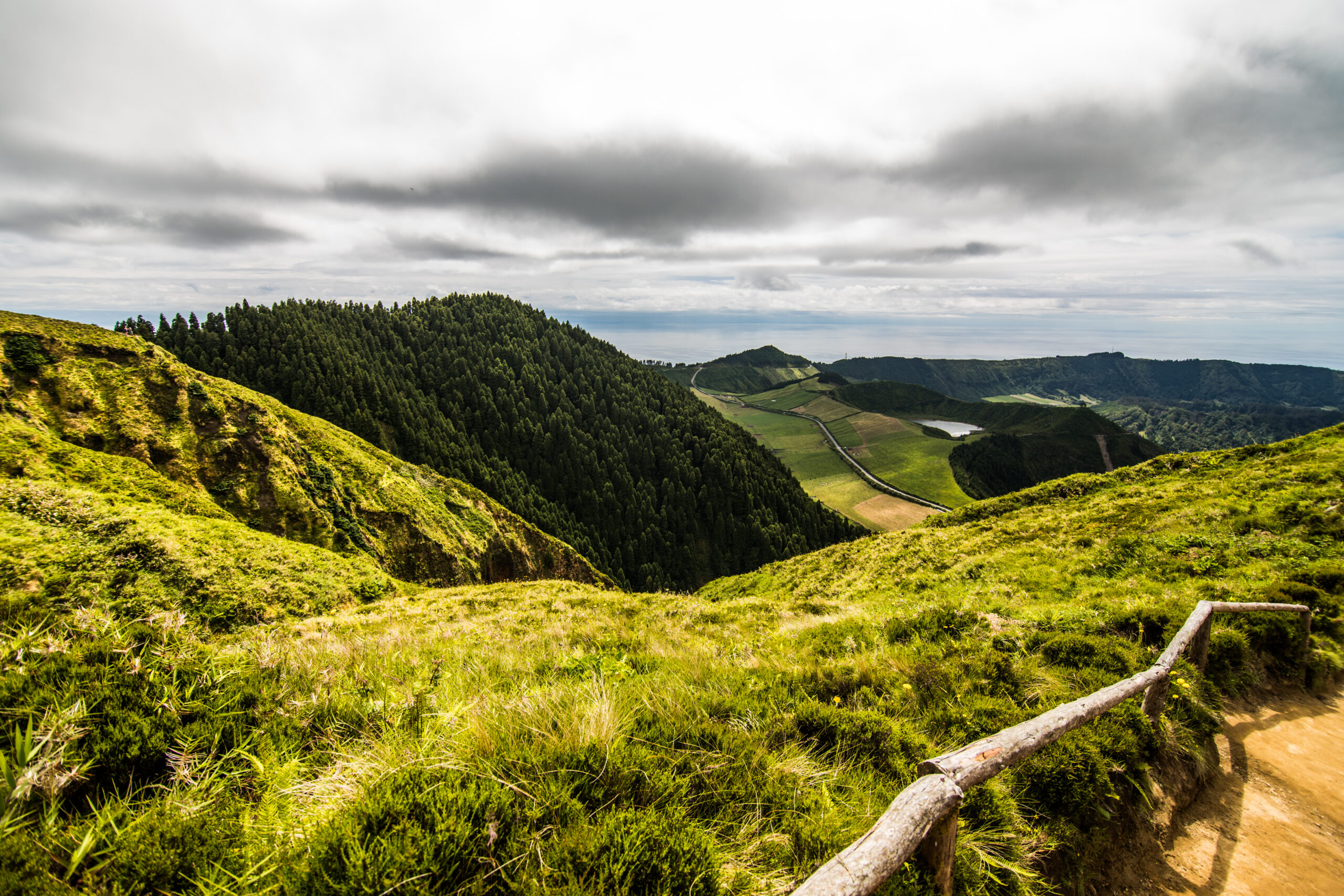
The Azores present a fundamentally different picture. With roughly 470,000 annual visitors spread across nine islands, the tourist-to-resident ratio sits at a manageable 2:1. The archipelago has deliberately pursued a model of sustainable, low-impact tourism. In practice, this means you can hike for an hour and encounter only a handful of other people. It means the viewpoint at the rim of a volcanic crater lake is yours to enjoy in silence. It means the local restaurant you stumble into at lunchtime isn’t a tourist trap — it’s where the fisherman who caught your grilled lapas eats his own dinner.
Choosing between the Azores and the Canary Islands is a bit like choosing between a private screening and a sold-out opening night. Both are showing a great film, but only one offers a comfortable seat.
One of the most common reasons travelers gravitate toward Madeira or the Canary Islands is a specific activity or landscape they’ve seen in a photograph: Madeira’s lush green cliffs, Tenerife’s volcanic peak, Lanzarote’s black lava fields. These are genuinely impressive sights. But what many travelers don’t realize is that the Azores archipelago, with its nine geologically distinct islands, offers the “best of both worlds” — and then some — in a single destination.

Think of it this way: instead of choosing one type of island experience, the Azores let you collect several in a single trip
|
If you’re looking for… |
The common choice is… |
The smarter Azores alternative is… |
|
Lush botanical gardens and dramatic green cliffs |
Madeira |
São Miguel and Flores. Terra Nostra Park on São Miguel is a world-class botanical garden with centuries-old trees and a famous thermal pool. The cliffs and waterfalls of Flores — the westernmost point of Europe — are even more wild and dramatic than Madeira’s, and you’ll likely have them to yourself. |
|
Volcanic “moonscapes” and black sand beaches |
Canary Islands (Tenerife, Lanzarote) |
Pico and Faial. The black basalt vineyards of Pico Island are a UNESCO World Heritage Site, a stunning geometric landscape unlike anything else in Europe. The Capelinhos volcano on Faial erupted as recently as 1957, leaving a raw, lunar landscape you can walk across. Black sand beaches are found across the archipelago. |
|
World-class hiking |
Madeira (levada walks) |
São Jorge and Flores. While Madeira’s levadas are famous, they are increasingly crowded. São Jorge offers miles of pristine coastal trails along its fajãs — flat coastal platforms created by ancient landslides — and the trails on Flores wind through some of the most untouched scenery in all of Europe. |
|
Reliable sunshine and beach time |
Canary Islands |
Santa Maria. While the Azores are generally greener and wetter than the Canaries, Santa Maria is the southernmost island in the archipelago, known for its golden sand beaches (a rarity in the volcanic Azores) and the sunniest, driest climate of the nine islands. |
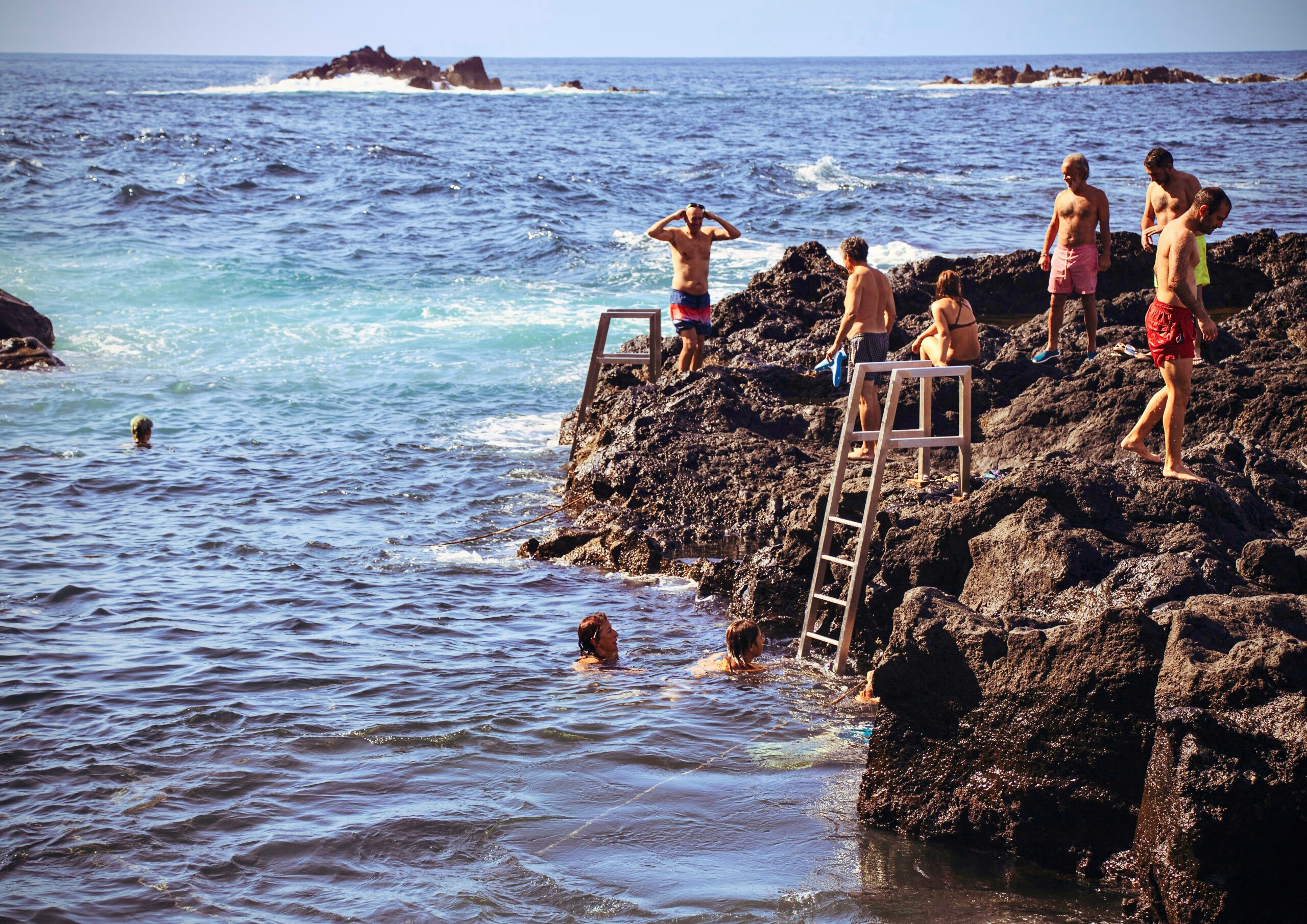
Beyond these direct comparisons, the Azores offer experiences that neither Madeira nor the Canary Islands can match at all. The archipelago is one of the world’s premier destinations for whale and dolphin watching, with over 20 species of cetaceans regularly spotted in its waters — including blue whales, the largest animals on Earth. The geothermal hot springs of São Miguel, where you can soak in naturally heated, iron-rich water surrounded by tropical gardens, have no equivalent in either Madeira or the Canaries. And the traditional cozido das Furnas — a stew slow-cooked underground by volcanic heat — is a culinary experience you simply cannot have anywhere else.
The Azores’ commitment to preserving these natural assets is also unmatched. In October 2024, the regional government created the largest marine protected area in the North Atlantic, covering 287,000 square kilometers and protecting 30% of its surrounding waters [3]. While Madeira’s Natural Park covers about 67% of its land area [4] and the Canary Islands have approximately 40% of their territory under some form of protection [5], the sheer scale of the Azores’ marine commitment speaks to a deeper, more forward-looking ethos of environmental stewardship — one that directly benefits the traveler who wants to experience nature as it should be.
For travelers flying from the United States or Canada, there is one comparison that often settles the debate entirely: how long it takes to actually get there.
|
Destination |
Direct Flight Time |
Typical Travel Time (with layovers) |
Key Notes |
|
Ponta Delgada, Azores (PDL) |
~5 hours |
N/A — direct flights available |
Year-round direct flights from Boston on Azores Airlines; seasonal service from other US and Canadian cities [6] |
|
Funchal, Madeira (FNC) |
~6h 45min (seasonal) |
10–12+ hours |
Direct flights from the US are rare and seasonal; most routes require a layover in Lisbon or another European hub [7] |
|
Tenerife, Canary Islands (TFS) |
N/A |
11–14+ hours |
No direct flights from North America exist. A layover in mainland Europe is always required [8] |
This is not a marginal difference — it is a transformative one. On a one-week vacation, choosing the Azores over the Canary Islands saves you roughly a full day of travel time in each direction. That is an entire extra day of exploring crater lakes, soaking in hot springs, or watching whales breach in the mid-Atlantic — instead of sitting in an airport terminal waiting for a connecting flight.
From Boston, you can board an Azores Airlines flight after work on a Friday evening and be walking along the rim of Sete Cidades — one of the most photographed volcanic crater lakes in the world — by Saturday morning. Try doing that with the Canary Islands.
The proximity advantage extends beyond flight time. The Azores sit in the same time zone as mainland Portugal (GMT/UTC+0, or UTC+1 in summer), which means the jet lag adjustment for East Coast travelers is minimal — typically just four to five hours. Compare that to the Canary Islands, which, despite being geographically further west, operate on the same time zone but require a far longer journey to reach.
By now, the case for the Azores should be clear. But there is one honest concern that holds some travelers back: with nine islands, each with its own character, its own regional airline connections, and its own hidden gems, planning a multi-island Azores trip can feel like solving a logistical puzzle.
We won’t pretend otherwise. Coordinating inter-island flights on SATA Air Açores, booking separate car rentals on each island, finding the best boutique hotels that aren’t listed on major booking engines, and matching ferry schedules with your itinerary — it’s a lot to manage on your own, especially for a first-time visitor.
This is precisely the problem that Azores.com was created to solve. As a specialized travel agency with over 30 years of on-the-ground experience in the Azores, we turn this complex puzzle into a seamless, stress-free vacation. Everything — flights, hotels, tours, transfers, car rentals — is handled by people who know these islands intimately.

Multi-Island Escorted Packages are perfect for travelers who want a curated, all-inclusive experience. Our 3-Island Classic covers São Miguel, Faial, and Pico — the three most iconic islands — with all inter-island flights, accommodations, guided tours, and most meals included. For those with more time, the 5-Island Classic adds Terceira and São Jorge for a deeper dive into the archipelago’s diversity.
Self-Drive Adventures are designed for independent travelers who want the freedom to explore at their own pace, but with the security of pre-booked cars and hotels on each island. Our Self-Drive Packages include detailed itineraries, GPS-equipped rental cars, and hand-picked accommodations, so you can focus on the road ahead — not the logistics behind it.
Custom Trips are for travelers who know exactly what they want — or who want our local travel consultants to help them figure it out. Whether it’s a honeymoon focused on the most romantic spots, a family trip with kid-friendly activities on every island, or an adventure itinerary packed with diving, canyoning, and summit hikes, our team can build a trip tailored precisely to your interests.

The choice, when you lay out the evidence, is remarkably clear. All three Atlantic archipelagos have their merits, and we have no interest in pretending otherwise. Madeira’s gardens are genuinely beautiful. The Canary Islands’ year-round sunshine is genuinely appealing.
But for the North American traveler seeking an authentic, nature-rich, and accessible European island vacation — one that hasn’t been compromised by the pressures of mass tourism — the Azores stand alone. They offer the botanical beauty of Madeira and the volcanic wonder of the Canaries, but spread across nine distinct islands, each with its own personality, and all reachable with a fraction of the crowds and a fraction of the travel time.
The Azores are not a “hidden gem” that will stay hidden forever. Visitor numbers are growing, and the world is taking notice. The best time to experience these islands in their most pristine state is now.
Why settle for a crowded trail when you can have a mountain to yourself? Why spend an extra day traveling when you could be whale watching in the mid-Atlantic? Choose the pristine, diverse, and accessible Azores.
Contact an Azores.com travel consultant today and let us build your perfect, crowd-free island getaway.
Is your time too precious to spend long hours searching for the perfect holiday in the Azores? Looking for expert help in organizing your trip? Hire an Azores.com Travel consultant.
Let us find the right itinerary for your Azores group travel needs. From family reunions to team building, we're here to help. From Sao Miguel to Flores, we guarantee the best service!

Have a question about traveling to Azores? Need more info about booking tour packages, day tours, activitis hotels or car in Azores? Click below to contact us.

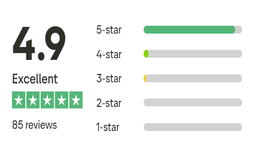
Read Azores.com reviews on Trustpilot.com.