Last reviewed: September 2026. Volcano tours in the Azores are not about standing beside an erupting cone. They are about exploring the landscapes left by volcanism: vast calderas, crater lakes, fumaroles, geothermal springs, lava tubes, young ash fields and Portugal’s highest mountain.
For a first volcanic-focused trip, São Miguel offers the greatest variety in one island. Pico is the choice for a serious summit climb and lava-tube experience, Faial for the dramatic 1957–58 Capelinhos eruption landscape, Terceira for volcanic caves and geothermal terrain, and Graciosa for the remarkable Furna do Enxofre.
Why Are the Azores So Volcanic?
The Azores sit in a tectonically complex part of the North Atlantic where the North American, Eurasian and Nubian/African plate systems meet. Repeated eruptions built the islands from the ocean floor and left a remarkable concentration of volcanic forms across the archipelago.
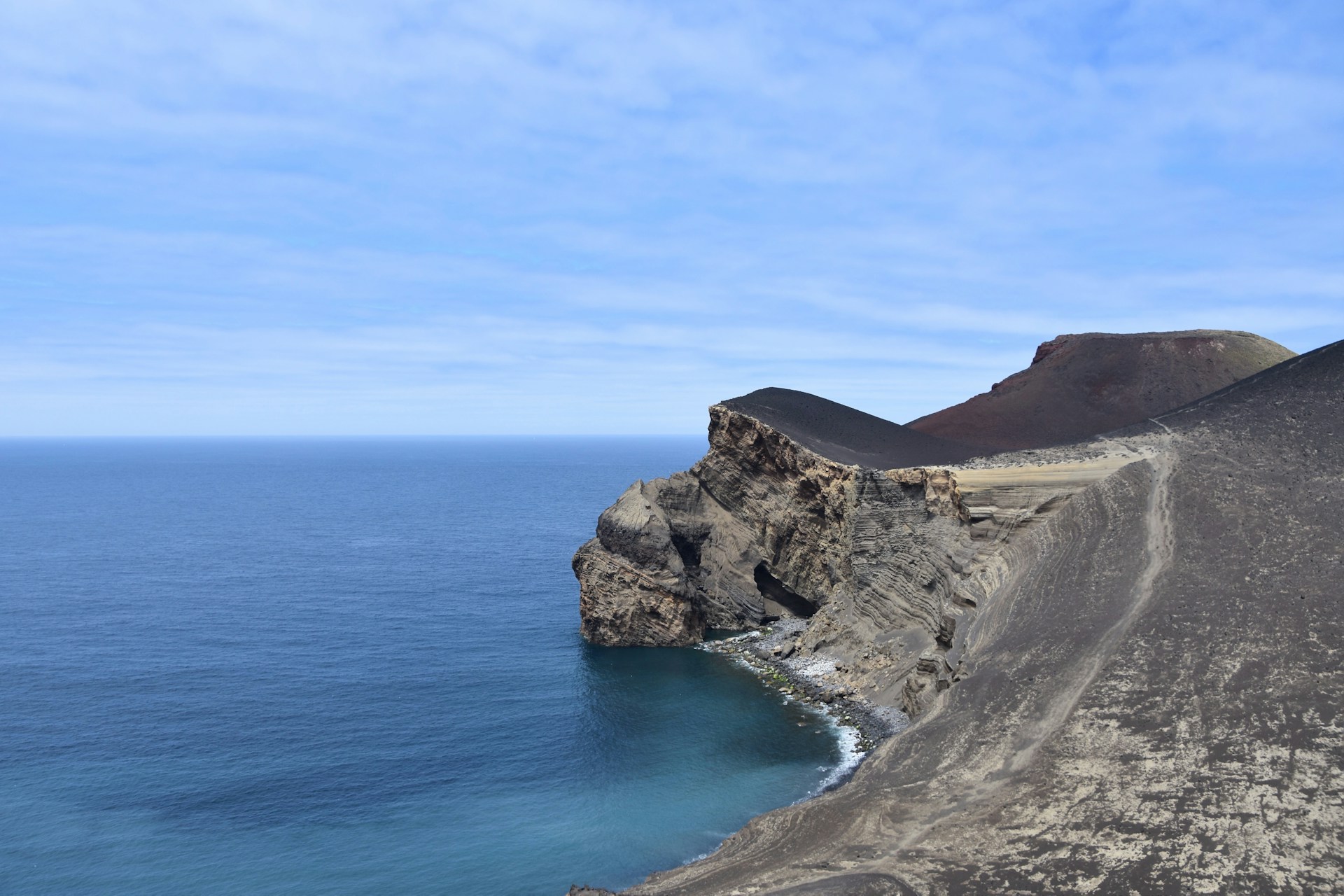
Volcanism is not only ancient history here. The Capelinhos eruption on Faial began offshore in September 1957, connected to the island and continued into October 1958, creating the stark landscape visible today. More recently, a submarine eruption occurred off Serreta, Terceira, from 1998 to 2001—the latest volcanic episode recorded in the archipelago.
The Azores Geopark identifies geosites on every island, which is one reason volcanic tourism can take very different forms from one island to the next.
Best Volcanic Sites in the Azores
| Site | Island | Why it stands out | Best for |
|---|---|---|---|
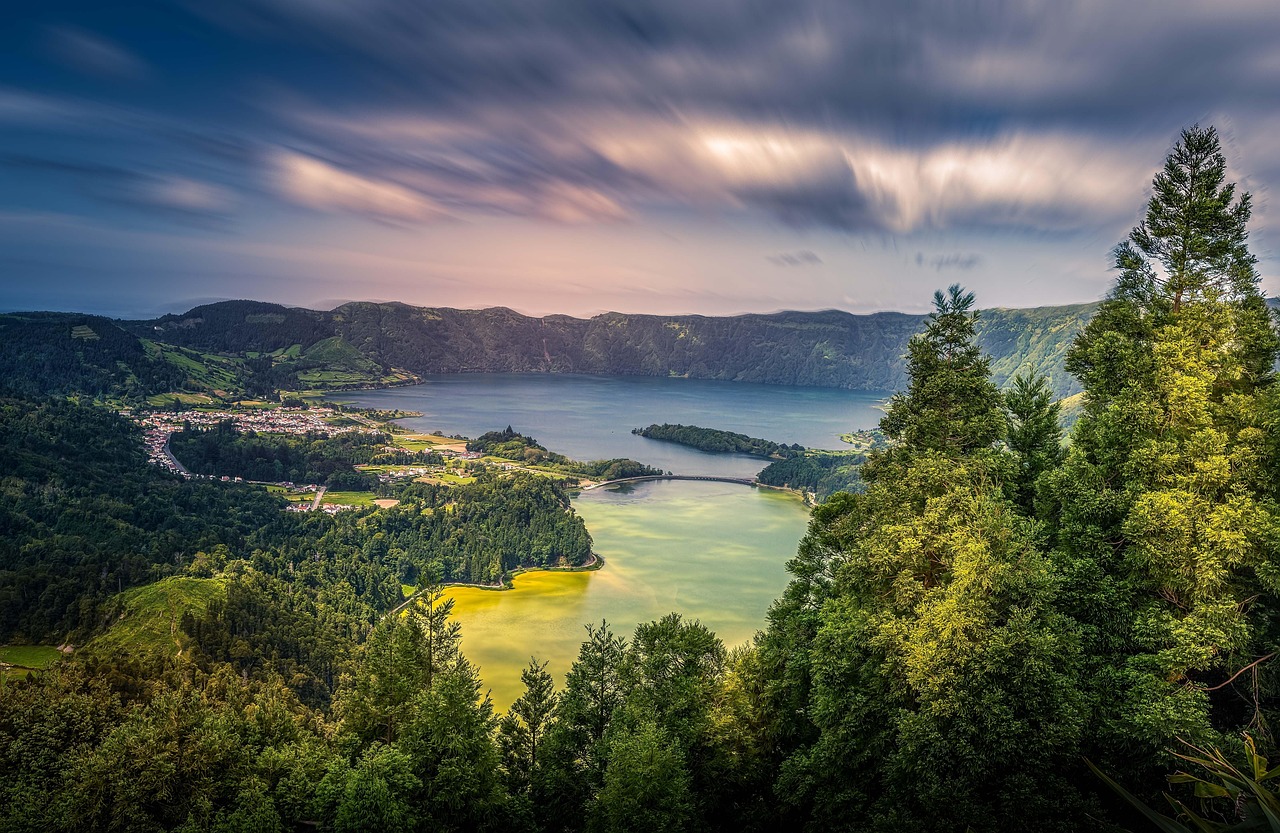
| Sete Cidades | São Miguel | Large collapse caldera with Lagoa Azul and Lagoa Verde, viewpoints and hiking terrain | First-time visitors and photography |
| Furnas | São Miguel | Fumaroles, thermal and mineral waters, crater lake and geothermal cooking | Geothermal activity and easy sightseeing |
| Lagoa do Fogo | São Miguel | Crater lake within the Fogo volcanic complex and protected mountain scenery | Viewpoints and hiking |
| Mount Pico | Pico | Portugal’s highest mountain at 2,351 m | A demanding summit experience |
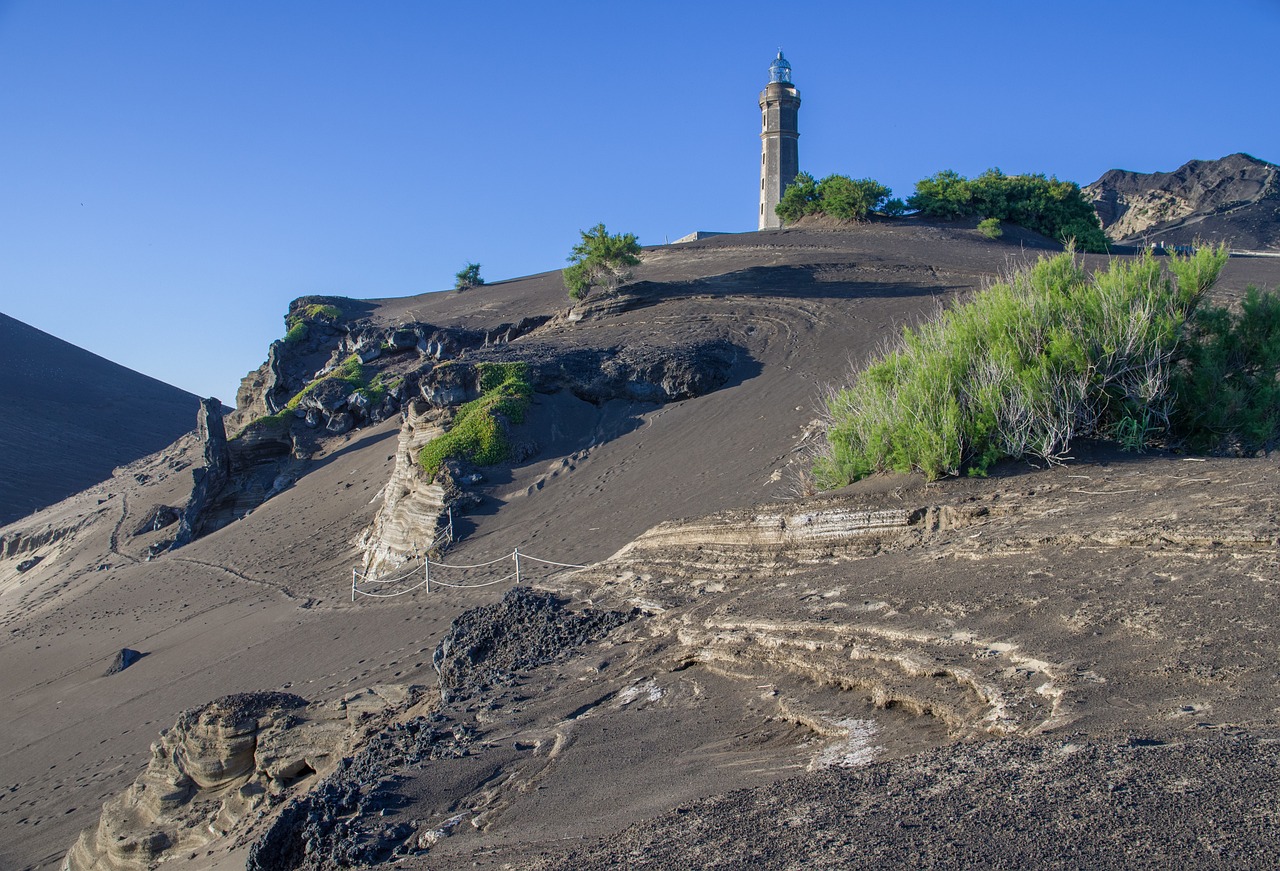
| Capelinhos | Faial | Ash, lava and coastal terrain created by the 1957–58 eruption | Recent volcanic history |
| Algar do Carvão | Terceira | A volcanic chimney visitors can descend into | Underground geology |
| Furna do Enxofre | Graciosa | Large volcanic cave with a cold-water lake and fumarolic field | Volcano-speleology |
São Miguel: Best Island for a First Azores Volcano Trip
São Miguel gives visitors the clearest introduction to Azorean volcanism because several very different volcanic landscapes fit into one island itinerary.
Sete Cidades
Sete Cidades is a large polygenetic volcano whose summit is cut by an almost circular collapse caldera averaging about 5.3 km across. Lagoa Azul and Lagoa Verde dominate the interior, while Vista do Rei and other viewpoints make the caldera easy to appreciate without a strenuous hike.
Furnas
Furnas is where visitors can most clearly see the connection between geology and everyday island life. Its volcanic system includes fumarole fields, mineral and thermal waters, a crater lake and the traditional Cozido das Furnas, cooked using heat from the ground.
Thermal bathing is also part of the experience, but individual pools and facilities have their own opening hours, admission systems and water conditions. Check the current operation before building a day around one specific pool.
Lagoa do Fogo, Caldeira Velha and Ferraria
Lagoa do Fogo occupies the summit area of the Fogo volcanic complex and is one of São Miguel’s defining crater-lake landscapes. Nearby Caldeira Velha adds geothermal springs and fumarolic features, while Ferraria on the western coast demonstrates the meeting of volcanic heat and Atlantic seawater.
Access arrangements around popular São Miguel natural sites can change seasonally. Use our São Miguel Island guide and current local information when finalizing transportation.
Pico: Climbing Portugal’s Highest Volcano
At 2,351 meters above sea level, Mount Pico is Portugal’s highest mountain and the most demanding mainstream volcanic experience in the Azores. This is not simply another scenic stop: the ascent involves steep, uneven volcanic terrain and rapidly changing mountain weather.
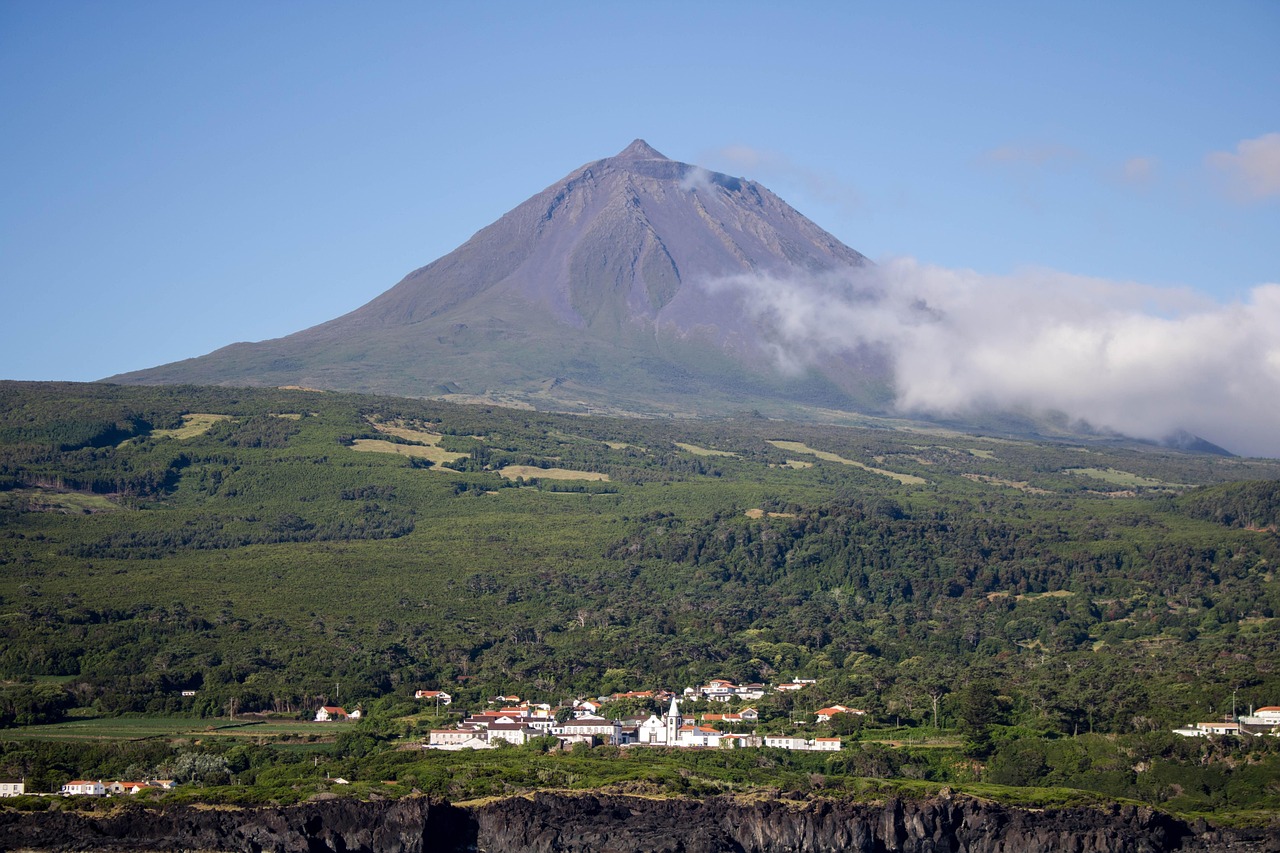
Access is managed through the Casa da Montanha / Mountain’s House, with controlled entry and online ticketing. Travelers should check current rules and availability before committing a specific day to the climb.
Pico also has one of the archipelago’s strongest underground volcanic attractions. Gruta das Torres is the largest known lava tube in Portugal, extending 5,150 meters in total. The visitor route explores only a controlled part of that system. The Natural Parks authority announced that descents resumed in July 2026 under a revised visit model; because operational notices can change, confirm the current status before travel.
See our Pico Island guide and Best Hiking Trails in the Azores if the mountain is a major part of your trip.
Faial: Capelinhos and the Caldeira
Capelinhos is the best place in the Azores to understand how quickly an eruption can reshape an island. The eruption began offshore on September 27, 1957, connected to Faial later that year and continued until October 24, 1958. Ash and lava transformed the western end of the island and deeply affected nearby communities.
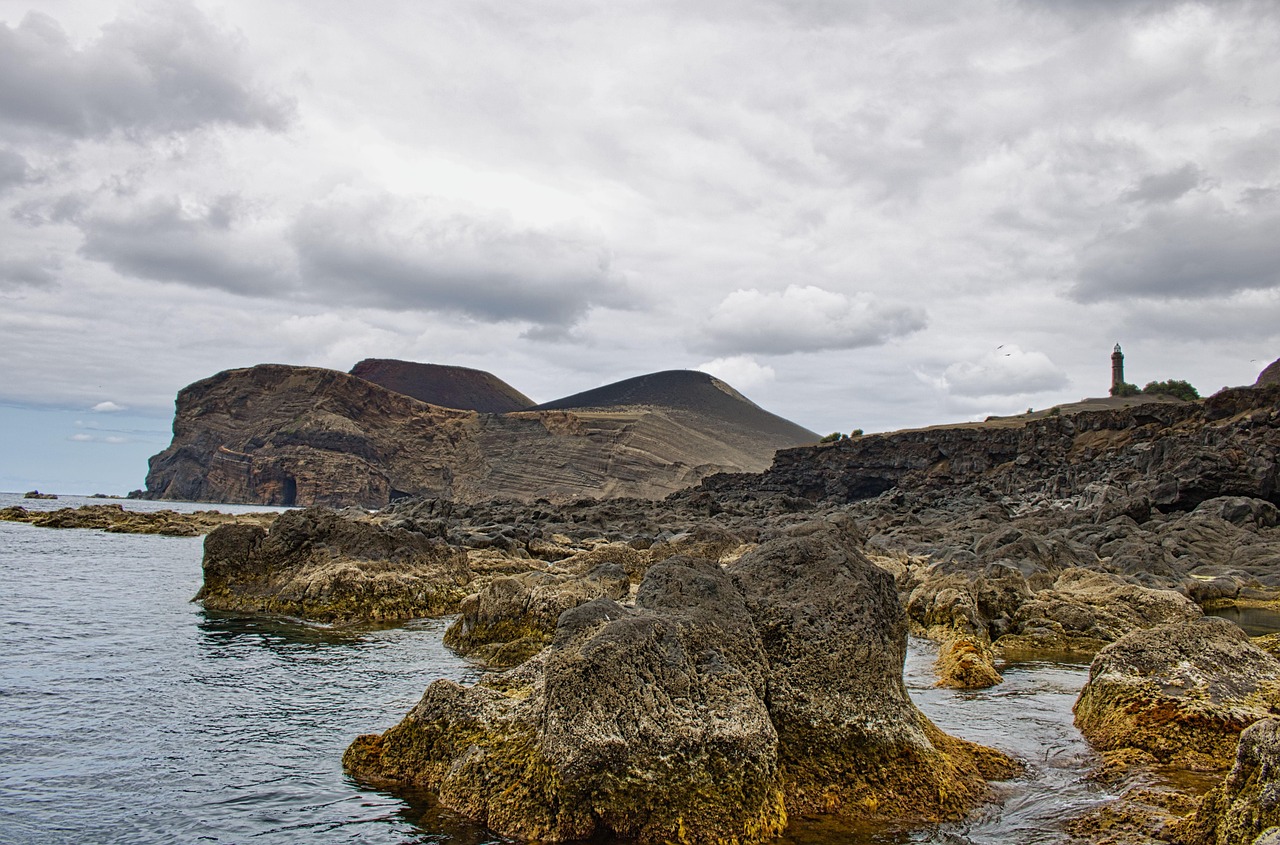
The underground Capelinhos Volcano Interpretation Centre explains the eruption and Azorean volcanism without dominating the surrounding landscape. A second major stop is Faial’s central Caldeira, a roughly 2 km-wide summit depression that shows a very different stage in an island volcano’s evolution.
Read our Faial Island guide before planning the island as part of a Faial–Pico combination.
Terceira: Algar do Carvão, Furnas do Enxofre and Serreta
Terceira offers one of the best combinations of underground and surface volcanism. Algar do Carvão is a volcanic chimney that visitors can descend into, while Furnas do Enxofre shows active degassing at the surface. The island’s western side also connects the visitor story to the submarine Serreta eruption of 1998–2001.
Terceira is therefore a particularly good choice for travelers who want volcanic geology without committing to a mountain summit. See our Terceira Island guide for the wider island context.
Graciosa: Furna do Enxofre
Inside Graciosa’s Caldeira lies Furna do Enxofre, one of the archipelago’s most distinctive volcanic caves. The cave is roughly 194 meters long and contains a cold-water lake plus a fumarolic field with gas emissions. Visitors reach the interior by descending the spiral staircase in the access tower.
Because gases are monitored and safety conditions matter, cave access should always be treated as an operational visit rather than something guaranteed by an old guidebook. The official Furna do Enxofre information is the best place to start.
Volcanic Landscapes on the Other Azores Islands
Corvo
The Caldeirão is the island’s defining volcanic feature: a broad summit caldera whose interior contains lakes and pasture. It is the clearest reason to include Corvo in a geology-focused western-islands trip.
Flores
Flores is better known for waterfalls, but its crater lakes and deeply eroded volcanic landforms are equally important. It is a strong choice for landscape geology rather than geothermal activity.
São Jorge
São Jorge’s long volcanic ridge and its fajãs define the island. Some fajãs are lava-built and others formed through slope collapse, so they should not all be described as lava flows.
Santa Maria
The oldest Azores island presents a very different geological story, with ancient volcanic rocks alongside sedimentary and fossil-bearing formations exposed by erosion.
Central Group combinations
Pico, Faial, São Jorge and Graciosa can be combined for travelers who want to compare young basaltic landscapes, calderas, caves and volcanic ridges.
Nine-island perspective
Every Azores island has volcanic origins, but the visitor experience varies greatly. Choose islands by the type of geology you actually want to see rather than trying to collect every volcano.
Compare the islands in our guide to all nine Azores islands.
What Types of Volcano Tours Are Available?
Scenic Guided Touring
Best for Sete Cidades, Furnas, Lagoa do Fogo and Capelinhos when you want local interpretation without making hiking the center of the day.
Hiking
Ranges from caldera and ridge walks to the much more demanding Mount Pico ascent. Difficulty varies dramatically, so assess the specific trail rather than the word “volcano.”
Caves & Lava Tubes
Algar do Carvão, Gruta das Torres and Furna do Enxofre reveal volcanic processes from inside the rock. Access, stairs, darkness, humidity and capacity rules differ by site.
Geothermal Experiences
Furnas and parts of São Miguel combine fumaroles, thermal waters and food traditions with visible signs of heat beneath the surface.
Interpretation Centres
Capelinhos and other environmental centres are useful when weather obscures the landscape or when you want scientific and historical context before exploring outside.
Self-Drive Geology Days
Many major viewpoints are reachable by road, but self-driving works best when you build in weather flexibility and verify seasonal access arrangements.
Guided Volcano Tour or Self-Drive?
A rental car is enough for many major viewpoints and visitor centres, especially on São Miguel, Faial and Terceira. A guide becomes more valuable when you want geological interpretation, do not want to drive in changing mountain weather, or are combining several sites efficiently in one day.
Some experiences are different: Mount Pico has controlled access, caves have their own entry systems, and technical or demanding hikes should be planned around the specific route. A generic “volcano tour” label does not tell you the fitness or access requirements.
Use our Getting Around the Azores guide when deciding whether to rent a car or rely on guided transportation.
Best Time for Volcano Tours in the Azores
Volcanic landscapes can be visited year-round, but there is no month that guarantees clear crater views. The Azores’ maritime weather can change quickly, especially at elevation. A clear forecast in Ponta Delgada or Horta does not necessarily mean Sete Cidades, Lagoa do Fogo, Faial’s Caldeira or Mount Pico will be cloud-free.
For sightseeing, the most useful strategy is flexibility: keep the highest viewpoints movable within your itinerary and use lower-elevation geothermal, cultural or cave visits when cloud sits over the mountains. Read our Azores Weather by Month guide for seasonal context.
Safety Around Volcanic Landscapes
The Azores are a monitored volcanic region, but the everyday risks for most visitors are more often wet trails, poor visibility, steep ground, slippery cave steps, rough lava surfaces and rapidly changing weather than an eruption.
- Stay on marked routes and behind barriers around fumaroles, geothermal ground and cliff edges.
- Use footwear appropriate to the exact activity; a roadside viewpoint and Mount Pico do not require the same preparation.
- Check official trail, cave and visitor-centre status rather than relying on an old itinerary or guidebook.
- Carry layers and rain protection even when the coast is sunny.
- Do not collect volcanic rock, enter closed terrain or step off designated paths for a photograph.
- For demanding hikes, follow the operator or managing authority’s current equipment, access and fitness guidance.
How to Build a Volcano-Focused Azores Itinerary
Before adding islands, use How Many Days in the Azores and the Azores Island Hopping guide. Volcanoes are spread across the archipelago, but that does not mean every trip should be.
Azores Volcano Tours FAQs
What is the best Azores island for volcanoes?
São Miguel is the strongest all-around first choice because Sete Cidades, Furnas, Lagoa do Fogo, Caldeira Velha and Ferraria show several different volcanic processes within one island.
Are there active volcanoes in the Azores?
Yes. The Azores are volcanically active and monitored. The most recent volcanic episode was the submarine Serreta eruption off Terceira in 1998–2001. Visitors generally experience volcanic landscapes and geothermal features rather than an erupting volcano.
When did the last volcano erupt in the Azores?
The latest recorded volcanic episode in the archipelago was the submarine Serreta eruption off Terceira from 1998 to 2001. Capelinhos on Faial erupted in 1957–58 and remains the most striking recent eruption landscape visitors can explore on land.
Do I need a guide to visit Sete Cidades or Furnas?
No. Many major viewpoints and attractions can be visited independently. A guide adds geological context and can simplify transportation, while specialized hikes and controlled-access sites have their own rules.
Can you go inside a volcano in the Azores?
You can visit volcanic cavities such as Algar do Carvão on Terceira, Gruta das Torres on Pico and Furna do Enxofre on Graciosa. They are managed visitor sites with site-specific access conditions rather than unrestricted caves.
Is Mount Pico suitable for everyone?
No. Mount Pico is a strenuous mountain ascent on steep volcanic terrain. Access is controlled through the Mountain’s House, and travelers should assess fitness, weather and current access requirements before attempting it.
Is Algar do Carvão open in 2026?
It reopened in March 2026 while the new visitor centre remained in the final phase of construction. The managing association warns that temporary suspensions are still possible when works require them, so check the official schedule shortly before visiting.
Plan an Azores Vacation Around Volcanic Landscapes
The best volcanic itinerary is not necessarily the one with the most islands. São Miguel alone can fill several days with calderas, geothermal landscapes and crater lakes, while Pico, Faial, Terceira and Graciosa each add a very different geological experience.
Want volcanic landscapes built into a complete Azores itinerary? Our travel specialists can coordinate islands, hotels, transportation and guided experiences around the volcanic sites that matter most to you.
View 7-Day São Miguel Guided Tour Plan My Azores Vacation

António Coelho has served as Managing Director of Portugal Online Corp., Azores.com, an Azores travel and tour company, since 1996. Born in the Azores and now based in California, António helps create exceptional Azorean travel experiences tailored to the U.S. and Canadian markets. He is also a travel writer, photographer, and contributor to Azores.com, where he produces regional guides, itineraries, and practical travel advice. His published work highlights outdoor adventures, family travel, and wildlife watching across the nine Azorean Islands, helping travelers explore the destination with confidence and insight.