Corvo Weather by Month: Climate & Best Time to Visit
Mild temperatures, exposed Atlantic weather
Corvo Weather and Best Time to Visit
Corvo has a mild maritime climate, but its small size and exposed North Atlantic position bring frequent humidity, wind, rain, low cloud and transportation changes.
Seasonal overview
Corvo Weather at a Glance
Winter
Typical daytime highs are roughly 14–16°C, with cooler evenings around 11°C, frequent rain, stronger wind and a greater risk of travel disruption.
Spring
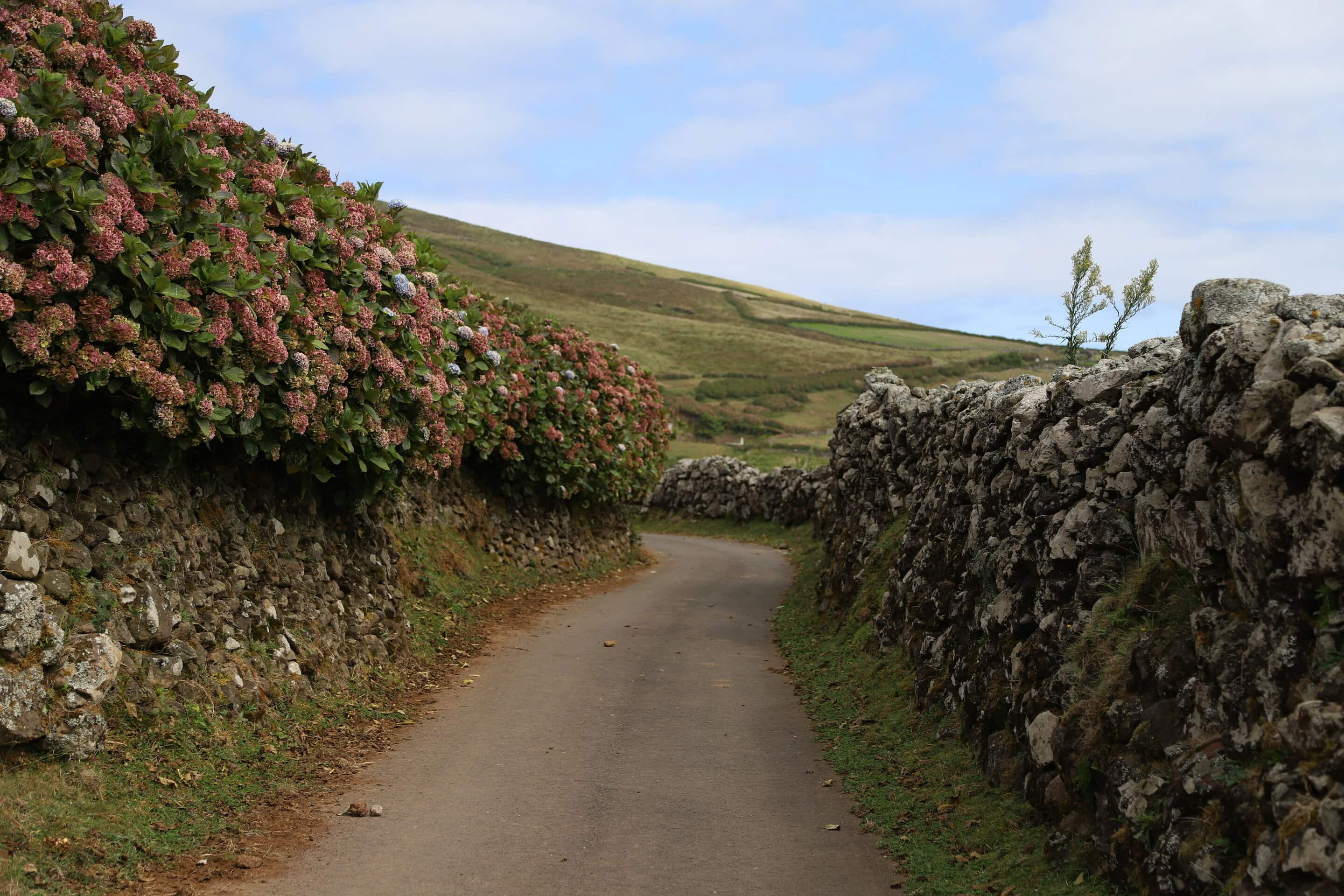
Highs often rise from about 16°C toward 19°C. Green landscapes and longer days come with passing showers and variable visibility.
Summer
The warmest months commonly bring highs near 22–24°C and nights around 18°C, with generally drier and calmer conditions.
Autumn
September can retain warmth near 21°C before average highs trend toward about 17°C in November. The season becomes wetter and windier and is especially important for migratory birdwatching.
Rain and humidity
Rain can occur in every month. October through February is usually wettest, while June through August is relatively drier; high humidity contributes to lush vegetation and fog.
Wind and sea state
Atlantic swell and wind can affect ferries, boat excursions, swimming and flights even when air temperatures feel mild.
Crater microclimate
Why Caldeirão Weather Can Be Different
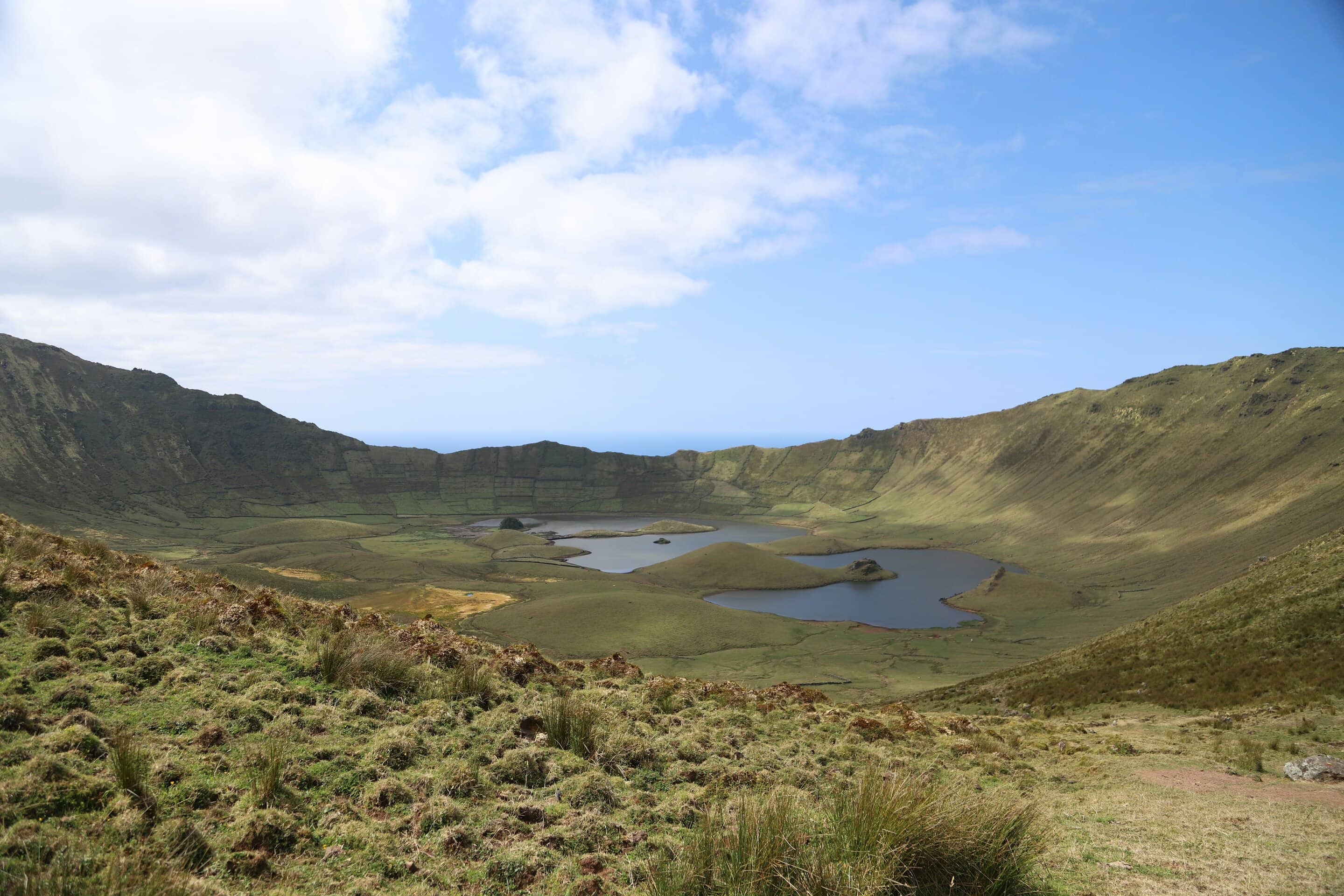
Vila do Corvo may be bright while the crater rim is hidden in dense cloud. Elevation, exposure and moisture make the high interior cooler, windier and more changeable than the southern lava platform. A clouded-in viewpoint is not a minor inconvenience: it can remove the view and make wet trails harder to follow.
Choose your season
Best Time to Visit Corvo
May and June
Longer days, green landscapes and improving weather suit hiking, while showers and low cloud remain possible.
July and August
The warmest, generally most settled period supports outdoor activities and festivals but brings the highest demand for limited services.
September and October
Birdwatchers value autumn migration, though wind, rain and transport disruption become increasingly likely.
November to March
A quiet, dramatic season for prepared travelers who accept shorter days, wetter weather and possible changes to flights or sea links.
Pack and plan
Practical Corvo Weather Tips
Carry waterproof layers
Bring a breathable rain shell and a warmer layer even during summer trips to Caldeirão.
Use sturdy footwear
Crater paths, peat, wet grass and steep descents can become muddy and slippery.
Check live visibility
A general island forecast may not reveal whether the Caldeirão rim is currently clear.
Monitor transport notices
Recheck SATA, Atlânticoline or the licensed boat operator before every weather-sensitive journey.
Protect connection days
Build a buffer before international flights or prepaid plans on another island.
Carry sun protection
Cloud and cool wind can disguise ultraviolet exposure on open trails and the coast.
Questions travelers ask
Corvo FAQ
What is the warmest time on Corvo?
July and August are usually warmest, with typical daytime highs around the low to mid 20s Celsius.
Does it rain all year?
Yes. Summer is generally drier, but showers, humidity and cloud are possible in every month.
When is best for birdwatching?
Autumn migration, especially September and October, attracts birdwatchers, although weather becomes more changeable.
Can weather cancel travel?
Yes. Wind, visibility and swell can disrupt Corvo flights, ferries and small-boat excursions, so itinerary buffers are essential.
What should I pack for Corvo?
Bring layers, a waterproof jacket, comfortable hiking shoes, sunscreen and sunglasses in every season, plus dry protection for electronics and medication.
Build a practical Western Group stay
Plan Your Corvo Vacation
Azores.com can coordinate flights, lodging, Flores connections and enough flexibility for Atlantic weather.