Corvo Things to Do: Top Attractions & Experiences
Crater trails, village heritage and birdlife
Things to Do on Corvo Island
Corvo rewards careful exploration with Caldeirão hikes, Atlantic viewpoints, birdwatching, diving, a dark-sand beach, windmills and the cultural history of Vila do Corvo.
Essential experiences
Top Corvo Attractions and Activities
Caldeirão viewpoint
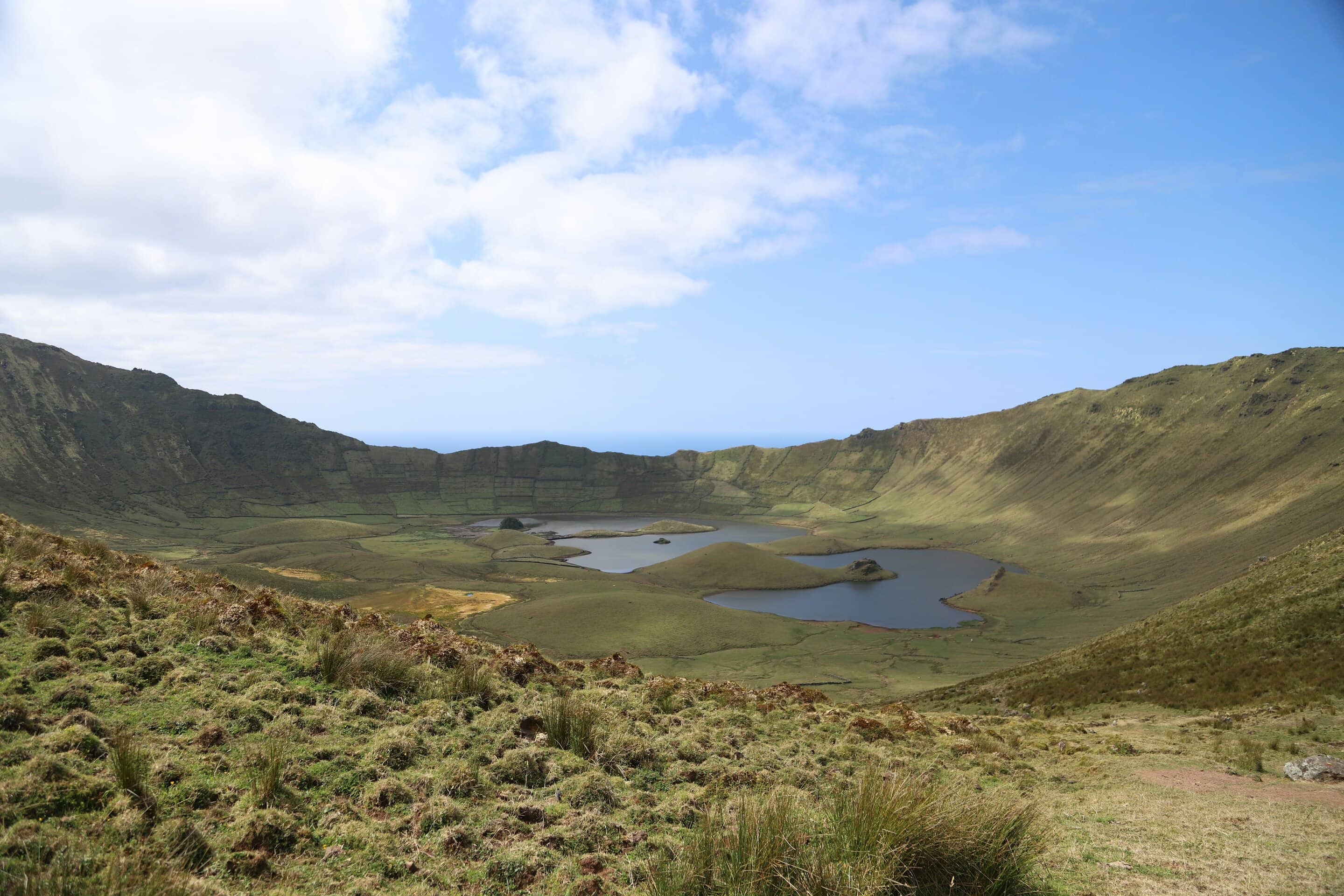
The island’s defining view opens across a collapse caldera about 2.3 by 1.9 kilometers and 305 meters deep. Visibility can disappear quickly in cloud, so check conditions before making the climb.
Morro dos Homens and Estreitinho
The highest ground reaches roughly 718–720 meters. Treat the uplands as exposed terrain rather than assuming an easy walk from the village.
Vila do Corvo
Explore the historic street pattern, dark-stone houses, Largo do Outeiro and the compact scale of the island’s only settlement.
Traditional windmills
Three restored stout dark-stone mills near the southern coast recall Moorish-influenced mainland forms. Their turnable cupolas align triangular sails with wind and recall the grinding of wheat, corn, rye and barley.
Praia da Areia
Corvo’s small volcanic-sand beach offers bathing when sea conditions, water quality and seasonal supervision are suitable.
Fishing and maritime life
The harbor, Casa do Bote and local fishing culture reveal how the community depended on the sea for food and communication.
Walk the volcano
Caldeirão and Cara do Índio Trails
PRC02 COR Caldeirão
The crater route descends through wet pasture, peat and lake-edge terrain. Water levels, mud, livestock and low cloud can affect the safest line.
PR01 COR Cara do Índio
This approximately 10.3-kilometer linear route crosses the island from the Caldeirão area toward Praia da Areia through pasture, endemic vegetation and coastal geology.
Caldeirão wetlands
Two lakes, peat-forming vegetation and smaller volcanic cones create an ecologically sensitive landscape; stay on the official route and do not disturb livestock.
Coroínha and Pingas
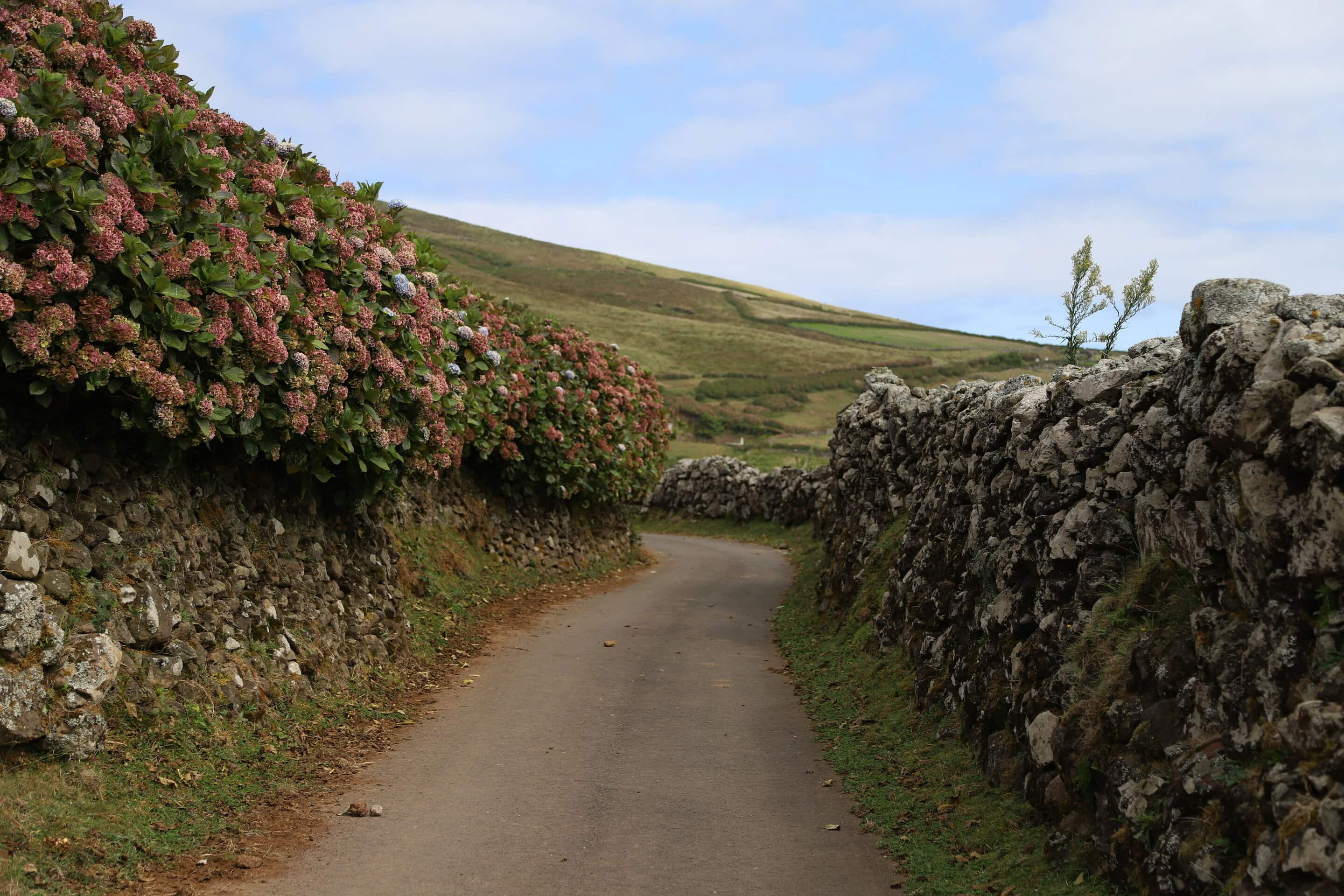
The longer route passes volcanic and cliff geosites, dry-stone walls and terrain shaped by erosion before descending toward the village.
Birds and sea
Birdwatching, Boat Trips and Diving
Corvo Wild Birds Interpretation Centre
Begin here for information about resident seabirds, protected habitats and migratory species arriving from across the Atlantic.
Autumn migration
Corvo is internationally known among birdwatchers for unusual migrants, especially in autumn. Follow access rules and avoid crowding private land.
Boat trip around the coast
A licensed operator can reveal sea cliffs, caves and seabird habitat inaccessible from land when ocean conditions permit.
Caneiro dos Meros
This voluntary marine reserve near Vila do Corvo is known for dusky groupers and is recommended for experienced divers because of its depth.
Baixa do Buraco
A reef southwest of the quay offers clear water and abundant fish; circuit difficulty depends on depth, conditions and the qualified operator.
Recreational fishing
Arrange fishing through local licensed operators and follow current conservation, species, season and equipment rules.
Culture and daily life
Museums, Church and Village Heritage
Casa do Tempo
Part of the Corvo Ecomuseum, it interprets island formation, family histories, photographs, work and everyday life.
Casa do Bote
The visitor center connects maritime history with boats, fishing and the island’s dependence on its small harbor.
Church of Our Lady of Miracles
The parish church holds a sixteenth-century Flemish image tied to the island’s most important historical and religious tradition.
Largo do Outeiro
This central space has long served as a civic, social and religious gathering place in Vila do Corvo.

Why explore
Natural Beauty, Cultural Heritage and Tranquility
Natural Beauty
The high Caldeirão, green pasture, cliffs and Atlantic horizon create exceptional scenery within a very small area.
Cultural Heritage
Windmills, fishing, the Ecomuseum, dark-stone lanes and the parish church connect outdoor exploration with community history.
Tranquility
Corvo suits visitors seeking solitude and relaxation, provided quiet travel does not become intrusion into residents’ daily lives.
Plan well
Practical Corvo Activity Tips
Check visibility before climbing
Caldeirão can remain hidden in cloud even when Vila do Corvo is sunny.
Use official trail status
Confirm closures, route conditions and safety notices before entering the crater or committing to the cross-island trail.
Carry layers and water
Wind, rain and temperature can change rapidly between the village and the high interior.
Reserve limited services
Transfers, guides, meals and boat places can fill quickly when flights or excursions arrive.
Choose a travel style
Corvo Activity Packages
Multi-island tours
Combine Corvo and Flores through Azores multi-island tour packages.
Self-drive itineraries
Use Azores self-drive packages for connected islands while arranging Corvo transfers separately.
Active holidays
Connect hiking, birdwatching and other outdoor days through Azores active holiday packages.
Questions travelers ask
Corvo FAQ
What should I not miss on Corvo?
Prioritize Caldeirão, Vila do Corvo, the windmills, the Ecomuseum and either birdwatching or a marked trail.
Can I hike inside Caldeirão?
Yes when the official route is open and conditions are suitable. Expect mud, wet ground, livestock and possible low visibility.
Is Corvo good for birdwatching?
Yes. It is one of the Azores’ best-known locations for migratory birds, especially during autumn.
Can I dive on Corvo?
Yes. Caneiro dos Meros and Baixa do Buraco are recognized sites, but qualifications, depth and conditions vary, so use a licensed operator.
Can I fish independently?
Fishing is part of Corvo life, but visitors must follow current licensing, species, equipment, protected-area and land-access rules. A qualified local operator is the safest starting point.
Build a practical Western Group stay
Plan Your Corvo Vacation
Azores.com can coordinate flights, lodging, Flores connections and enough flexibility for Atlantic weather.