Corvo Island, Azores: Travel Guide
The Island of the Crow
Plan a Visit to Corvo Island
Corvo is the smallest and northernmost Azores island: one close-knit village below the vast Caldeirão crater, surrounded by steep Atlantic coast, birdlife and a landscape shaped by isolation.
Island at a glance
Corvo Travel Essentials
Why visit
Is Corvo Island Worth Visiting?
Corvo offers something larger islands cannot reproduce: the experience of an entire municipality gathered in one small settlement beneath a volcano. Caldeirão occupies most of the northern interior, while Vila do Corvo sits on the island’s principal flat lava platform along the southern coast.
The island is especially rewarding for travelers interested in birdwatching, volcanic landscapes, local history and slow travel. Weather can alter views and transportation with little warning, so Corvo works best as a carefully planned extension to Flores rather than a tightly timed checklist stop.

Essential experiences
Top Things to See on Corvo
For a day visit or local excursion, examine currently listed Corvo excursions. Some trips depart from Flores, and boat crossings depend on sea conditions.
Caldeirão
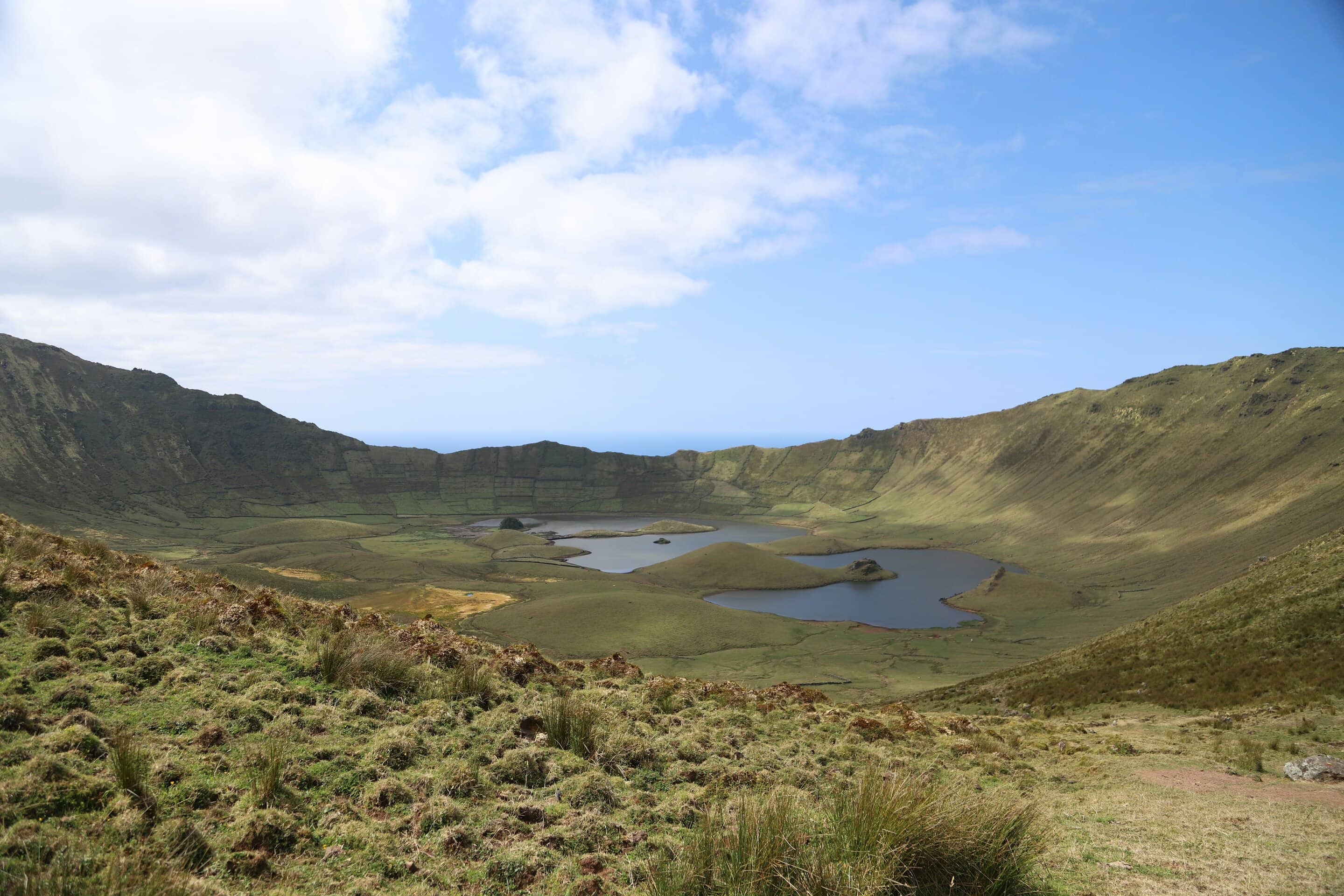
Look into the 305-meter-deep collapse caldera, where lakes, wetlands and small volcanic cones fill the crater floor.
Vila do Corvo
Walk narrow lanes between dark-stone houses and experience daily life in the Azores’ smallest municipality.
Traditional windmills
See the restored conical mills near Ponta Negra, built to turn their wooden roofs and sails into the prevailing wind.
Birdwatching
Visit during migration season or begin at the Corvo Wild Birds Interpretation Centre for ecological context.
Praia da Areia
Relax at the island’s small dark-sand beach when sea conditions and seasonal facilities allow.
Corvo Ecomuseum
Use Casa do Tempo and Casa do Bote to understand settlement, self-sufficiency, emigration, boats and local memory.
One settlement
Life in Vila do Corvo
Smallest municipality
The municipality covers the entire island and has no civil parishes. All permanent residents live in or around Vila do Corvo.
Airport and harbor
The airport, port and boat landing are essential links with Flores and the wider archipelago, while both remain weather-sensitive.
Main street and lanes
A compact main artery and narrow lanes connect dark-stone houses, public services, shops and the island’s civic spaces.
Largo do Outeiro
The central plaza functions as a social, religious and community gathering place rather than a purpose-built visitor attraction.
Figures in context
Older island descriptions use 17.5 km² and approximately 400 residents. This guide uses about 17.1 km² and the 2021 Census total of 384.
A green drop
Lush pasture and crater vegetation above blue Atlantic water create the “green drop in the turquoise ocean” image associated with Corvo.
Peaceful atmosphere
Corvo’s calm pace rewards visitors who accept limited services, changing weather and the privacy of a very small community.
Cultural immersion
The close-knit community is not scenery. Travel slowly, ask before photographing residents and respect limited local capacity.
CHOOSE A BASE
Where to Stay on Corvo
Corvo is different from the other Azores islands because Vila do Corvo is the only settlement and the only practical overnight base. The decision is therefore less about choosing among towns and more about availability, walkability and whether an overnight stay fits your Flores–Corvo plan. For an archipelago-wide comparison, see our Where to Stay in the Azores guide.
Browse Corvo hotels early when planning an overnight visit. Vila do Corvo is the island’s only settlement, and available lodging can be limited.
Vila do Corvo
All lodging is in or around the village. Staying here keeps the airport, harbor, local services and the island’s civic center close at hand.
Stay Near the Village Center
A central location is useful if you want to walk to restaurants, shops, the Ecomuseum and local transport without depending on additional transfers.
Overnight Instead of Day-Tripping
One or two nights gives you more time with the community and a better chance to see Caldeirão if cloud or transport conditions disrupt a single-day visit.
Reserve Early
Accommodation inventory is extremely limited, especially around August events and autumn bird migration. Confirm lodging before building the rest of the Western Group itinerary around Corvo.
Plan the connection
Practical Corvo Travel Tips
SATA Air Açores serves Corvo through the inter-island network. Atlânticoline operates the Flores–Corvo connection on date-specific schedules, and licensed local boat operators also run excursions from Flores. Flights and sea trips can be delayed or canceled by wind, visibility and swell.
Stay one or two nights
A day trip reaches the main sights, but an overnight stay offers a deeper experience and more weather flexibility.
Arrange Caldeirão transport
Visitors commonly use a local transfer from the village rather than renting a car on this very small island. For a comparison of rental cars, buses, taxis, transfers and tours across the islands, see our Getting Around the Azores guide.
Protect onward connections
Avoid depending on a same-day Corvo arrival before an international departure or other inflexible booking.
Reserve lodging early
Accommodation is available but extremely limited, especially during August events and autumn bird migration.
Carry essentials
Opening times and stock are limited. Bring needed medication, rain layers, trail food and backup travel information.
Check crater visibility
Caldeirão can remain in cloud while Vila do Corvo is sunny. Use live local conditions before arranging the climb.
Choose a travel style
Related Corvo Vacation Options
For a multi-day visit with accommodations, transportation and island logistics coordinated together, start with Azores vacation packages and tailor an itinerary that includes Corvo. On Corvo itself, walking and local transfers usually make more sense than renting a car. If your trip includes driving on other islands, compare Azores rental cars for those parts of your itinerary. Separately bookable day tours are linked in the experiences section above and do not replace a complete vacation package.
Multi-island tours
Combine Corvo and Flores with other islands through Azores multi-island tour packages.
Self-drive itineraries
Plan independent travel on connected islands through Azores self-drive packages, while Corvo itself usually uses local transfers.
Active holidays
Connect hiking, birdwatching and outdoor days through Azores active holiday packages.
Questions travelers ask
Corvo FAQ
How do I get to Corvo Island?
Use an inter-island flight or a date-specific Flores–Corvo sea connection. Licensed excursions also operate from Flores when conditions permit; confirm the exact schedule before travel.
What is the best time to visit Corvo?
May through September generally offers warmer and relatively more stable weather. Autumn is especially important for migratory birdwatching but can be more changeable.
What is the Caldeirão Crater?
Caldeirão is Corvo’s defining collapse caldera, approximately 2.3 by 1.9 kilometers and about 305 meters deep, with lakes, wetlands and small cones on its floor.
Is there accommodation on Corvo Island?
Yes, in and around Vila do Corvo, but choices are extremely limited. Reserve early and reconfirm around festivals and bird-migration season.
What activities can I do in Corvo?
Popular activities include official crater and cross-island hikes, birdwatching, Vila do Corvo, windmills, Ecomuseum visits, fishing, diving and boat trips when conditions permit.
How long should I stay in Corvo?
A full day covers the principal attractions; one or two nights provide a deeper cultural experience and more flexibility for crater cloud or transport changes.
Is Corvo family-friendly?
Yes for families comfortable with limited services and weather-dependent outdoor plans. Use designated bathing areas and match trails, boats and crater visits to each child’s ability.
What wildlife can I see in Corvo?
Cory’s shearwaters, petrels, warblers, other seabirds and unusual Atlantic migrants attract birdwatchers. Marine life can include groupers and varied reef fish.
Is there internet access on Corvo?
Internet and mobile service are available, but speed and coverage may be less consistent than on larger islands. Download essential travel information in advance.
What makes Corvo unique?
Its tiny scale, one close-knit settlement, vast Caldeirão, migration birdlife, remote Western Group setting and resourceful cultural traditions create an experience unlike any other Azores island.
Build a practical Western Group stay
Include Corvo in Your Azores Vacation
Azores.com can coordinate flights, lodging, Flores connections and a weather-aware island itinerary.