São Miguel Weather by Month: Climate & Best Time to Visit
Mild Atlantic climate and highly local conditions
São Miguel Weather by Month
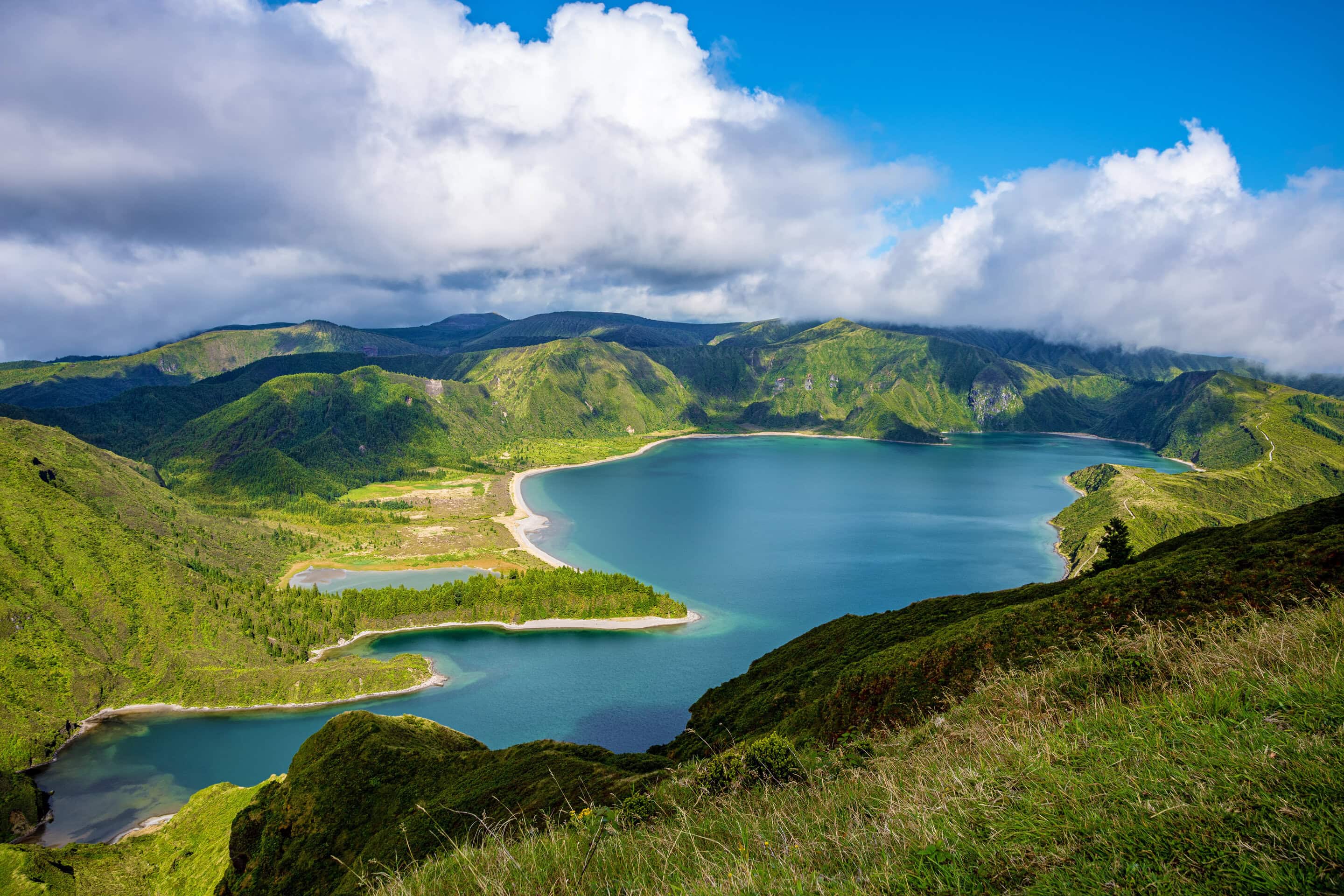
São Miguel has a mild maritime climate: rain is possible in every month, the warmest period normally runs from July through September, and high crater rims can be cloudy while the coast is clear.
Climate at a glance
What São Miguel Weather Is Really Like
Monthly reference
Typical Temperatures, Rain and Sea Conditions
These traveler-friendly Ponta Delgada figures use rounded air temperatures and IPMA’s 1991–2020 normal rainfall for the Observatório Afonso Chaves area. Sea temperatures are approximate regional values. High terrain is often cooler, wetter, windier and cloudier.
January
High: 17°C / 63°F
Low: 12°C / 54°F
Rain: 102.1 mm
Sea: about 16°C / 61°F
February
High: 17°C / 63°F
Low: 12°C / 54°F
Rain: 87.2 mm
Sea: about 15–16°C / 59–61°F
March
High: 18°C / 64°F
Low: 12°C / 54°F
Rain: 97.1 mm
Sea: about 15–16°C / 59–61°F
April
High: 18°C / 64°F
Low: 13°C / 55°F
Rain: 79.6 mm
Sea: about 16°C / 61°F
May
High: 20°C / 68°F
Low: 14°C / 57°F
Rain: 61.0 mm
Sea: about 17°C / 63°F
June
High: 22°C / 72°F
Low: 16°C / 61°F
Rain: 44.4 mm
Sea: about 19°C / 66°F
July
High: 24°C / 75°F
Low: 18°C / 64°F
Rain: 26.0 mm
Sea: about 21°C / 70°F
August
High: 25°C / 77°F
Low: 19°C / 66°F
Rain: 45.8 mm
Sea: about 22–23°C / 72–73°F
September
High: 24°C / 75°F
Low: 18°C / 64°F
Rain: 78.2 mm
Sea: about 22°C / 72°F
October
High: 22°C / 72°F
Low: 16°C / 61°F
Rain: 118.0 mm
Sea: about 20°C / 68°F
November
High: 20°C / 68°F
Low: 14°C / 57°F
Rain: 95.3 mm
Sea: about 18°C / 64°F
December
High: 18°C / 64°F
Low: 13°C / 55°F
Rain: 152.8 mm
Sea: about 17°C / 63°F
Season by season
What the Weather Means for Your Trip
Spring — March to May
Mild temperatures, azaleas, hydrangeas and variable showers suit hiking, gardens and sightseeing. Whale migration adds interest and crowds are often lighter, but waterproof layers remain essential.
Summer — June to August
The warmest and generally driest period supports beaches, swimming, diving and festivals. It is also a busy season, and mountain cloud or passing showers still occur.
Autumn — September to November
September often retains summer warmth; rain and unsettled conditions generally increase later. Harvest foods, changing vegetation and lower demand can reward flexible travelers.
Winter — December to February
Temperatures remain mild, but rain, wind and ocean disruption become more likely. Thermal bathing, museums, food and city exploration provide useful alternatives, with fewer visitors but more outdoor limitations.
Choose by interest
Best Time to Visit São Miguel
Warm weather and beaches
June through September usually provides the warmest air and sea temperatures and lower average rainfall.
Whale watching
Marine excursions operate across the year, while spring is especially associated with migrating baleen whales. Sightings always vary.
Hiking and nature
Spring and early autumn can offer comfortable temperatures, but trail surfaces and mountain visibility remain weather-dependent.
Lower crowds
Late autumn through early spring is quieter and often better value, with a higher risk of rain, wind and altered outdoor plans.
Pack for flexibility
Practical São Miguel Weather Tips
Bring a light waterproof shell
Showers can develop even when the morning begins clear.
Dress in layers
Coastal warmth and exposed crater-rim wind can occur on the same day.
Use shoes with grip
Trails, stone streets, viewpoints and garden paths can remain wet after rain.
Carry sun protection
Atlantic cloud can make UV exposure easy to underestimate.
Check conditions each morning
Move high-elevation sights to the clearest window and keep coastal, city or thermal alternatives ready.
Protect transport days
Strong wind, fog and swell can disrupt flights and sea activities; avoid overly tight onward connections.
Match a trip to the season
São Miguel Vacation Planning Links
Hiking itinerary
Spring and early autumn are attractive windows for the nine-night hiking tour, provided official trail and weather conditions cooperate.
Sea and land itinerary
Warmer months suit the seven-night sea and land package, although every marine activity remains weather-dependent.
Flexible self-drive
A six-night hotel-and-car stay makes it easier to move high viewpoints to the clearest days.
Guided alternative
A private guided tour helps travelers adapt regional sightseeing without navigating unfamiliar roads.
Questions travelers ask
São Miguel Weather FAQ
What is the best month to visit?
There is no single best month. June through September is generally warmest and drier, while spring and early autumn can be excellent for walking and sightseeing.
Does it rain every day?
No. Rain is possible year-round, but it often comes as passing showers and can differ sharply by region and elevation.
Why are Sete Cidades and Lagoa do Fogo sometimes invisible?
Both involve elevated volcanic terrain where low cloud and mist can develop even when coastal areas are brighter.
Is winter a bad time to visit?
Not necessarily. Winter is wetter and less predictable, but temperatures remain mild and thermal pools, food and cultural sightseeing still reward flexible travelers.
Do I need warm clothing in summer?
A heavy coat is usually unnecessary, but a light layer and wind/rain shell are useful for high viewpoints, boat trips and changing weather.
Build a practical island stay
Plan Your São Miguel Vacation
Azores.com can coordinate lodging, transportation, guided experiences and enough flexibility for São Miguel’s changeable Atlantic weather.