Travel Consultants
Is your time too precious to spend long hours searching for the perfect holiday in the Azores? Looking for expert help in organizing your trip? Hire an Azores.com Travel consultant.
Most travelers visit the Azores archipelago for the volcanic lakes and whale-watching. Heritage travelers visit because a surname on a weathered stone marker in a São Miguel village matches the name they’ve carried their whole life. Something shifts.
The Azores, a Portuguese archipelago of nine volcanic islands in the North Atlantic, are not a foreign destination for millions of North Americans. For families of Azorean descent scattered across Massachusetts, Rhode Island, California, Ontario, and Québec, the islands are the origin point of everything: the surname, the recipes, the saints’ festivals, the particular cadence of grief and celebration that no English word quite captures.
The Azorean diaspora in North America settled into three geographic corridors, each built in a different era and for a different reason.
The SouthCoast Massachusetts–Rhode Island corridor is the densest concentration of Azorean-descended families in the United States. Across eleven cities (Fall River, New Bedford, Dartmouth, Taunton, Somerset, Westport, East Providence, Pawtucket, Warwick, Tiverton, and Providence), more than 132,000 residents reported Portuguese ancestry in the American Community Survey’s 2019–2023 five-year estimates. Fall River alone recorded 33,742 residents of Portuguese ancestry, the largest Portuguese-ancestry city in the United States by that measure. New Bedford followed with 30,746.
The California Bay Area–Central Valley corridor is the second major concentration. Across nineteen cities (San Jose, Modesto, Turlock, Tulare, Visalia, Hanford, and Merced among them), more than 52,000 residents reported Portuguese ancestry in the same ACS period. San Jose recorded 9,981; Modesto, 6,433; Turlock, 4,876.
Canada’s Ontario–Québec axis provides the most precise data of the three, because Statistics Canada’s 2021 Census distinguishes “Azorean” as a separate ethnic origin from “Portuguese.” The Toronto Census Metropolitan Area recorded 180,820 residents of Portuguese origin and 3,515 who identified specifically as Azorean. The City of Montréal recorded 23,120 Portuguese and 730 Azorean. Laval recorded 315 Azorean. Cambridge, Ontario, recorded 355 Azorean, a direct count rather than an estimate.
What’s striking about these numbers isn’t just their size. It’s how recent much of this movement was. Many of the grandparents of today’s North American Azorean community made this crossing within living memory.
The Azorean emigration story reaches North America in three waves, each driven by a specific pressure.
The whaling wave (1760s–1880s) carried the first large groups of Azorean men to New England. New England whaling captains routinely recruited sailors from Faial, Pico, and São Jorge, islands whose men knew the open Atlantic as thoroughly as their own village streets. Many of those sailors disembarked in New Bedford or Fall River, found work in the expanding textile mills of southeastern Massachusetts, and set off chain migrations that lasted for generations. New Bedford’s Azorean maritime heritage is still visible: the city’s competitive whaleboat rowing crews race vessels named Pico and Faial in an annual international regatta.

The agricultural and factory wave (1880s–1950s) drew São Miguel families to Fall River and Dartmouth, where the cotton mills offered stable wages that farming in the Azores simply could not. Terceira, São Jorge, and Pico families tracked a different path westward, arriving in the San Francisco Bay Area through the same maritime networks, then moving into California’s dairy and agricultural economy. The National Park Service’s historical record of Portuguese dairy farmers in the Point Reyes National Seashore area documents this precisely: Azorean immigrants arrived on whaling ships, disembarked in the Bay Area, and transferred their livestock knowledge to California’s pasture-and-dairy economy. Modesto, Turlock, Tulare, and Hanford built their Azorean communities through this agricultural chain migration.
The Capelinhos wave (1957–1965) arrived without warning. In September 1957, the Capelinhos submarine volcano erupted off the western coast of Faial, burying farms, homes, and entire villages under volcanic ash over the following 13 months. The United States Congress responded with the Azorean Refugee Act, which created a dedicated immigration pathway for Faial families displaced by the eruption. Rhode Island and southeastern Massachusetts absorbed the largest share of these arrivals. East Providence became, in the memory of its Portuguese-Azorean community, a second Faial.
Canada’s story was later and more urban. Toronto, Hamilton, and Cambridge built their Portuguese-Azorean communities primarily through family reunification from the 1960s onward. Casa dos Açores do Ontário, a cultural association founded in Toronto in 1985 by twelve Azorean immigrants (whose first president came from the island of Graciosa), still holds annual Divino Espírito Santo celebrations and maintains ties to the World Council of Houses of the Azores. The Portuguese Canadian Walk of Fame, in Toronto’s Camões Square, was inaugurated during the 60th anniversary of Portuguese immigration to Canada.
The decision to leave the Azores was almost always economic. Azorean land inheritance customs concentrated property in the eldest child, leaving younger siblings with limited options. Factory wages in Fall River or dairy work in Modesto paid more in a month than farming in São Miguel paid in a year. The letters home described this plainly, and those letters triggered chain migrations that continued for decades.
What emigrants carried across the Atlantic wasn’t property. It was surnames: Medeiros, Silveira, Moniz, Ávila, Pavão, Borges, Machado. Along with the Espírito Santo festival traditions, specific bread-baking methods, and a way of marking the seasons that the Azores had practiced for centuries. What they left behind was equally real: siblings, parish records, family homes, the graves of grandparents.
Online genealogy tools have opened up Azorean heritage research in ways that were impossible a generation ago. The Azores Genealogy Google Group, a long-running forum focused on Azorean surname, parish, and island research, records more than 13,800 indexed conversations and averages 15 to 20 new messages per day. The Azores Islands Geographical DNA Project on FamilyTreeDNA has enrolled approximately 2,839 members actively mapping their lineage to specific Azorean islands.

But genealogy databases don’t show you the house your great-grandmother grew up in. DNA platforms don’t introduce you to the third cousin who still farms the same land. The most important documents are the ones that haven’t been digitized. They’re only accessible in person.
Parish records in the Azores are extraordinarily well-preserved. Baptism, marriage, and burial records dating to the 1500s survive in many island parishes and in the Arquivo Regional dos Açores in Ponta Delgada, the regional archive on São Miguel that holds the most comprehensive collection of genealogical documents in the archipelago. The Arquivo Histórico da Terceira in Angra do Heroísmo holds the equivalent collection for Terceira. These records contain not just names and dates, but the names of parents, godparents, and witnesses, threads that reconstruct complete family trees across multiple generations when followed carefully.
Local parish priests and municipal historians on each island hold a kind of institutional memory that no database can index. In Azorean villages of 300 to 500 residents, the parish priest knows which families are related, which surnames are tied to which streets, and which emigrants left in which decade. A single conversation in Faial’s Horta or in a São Jorge fajã can yield a name, an address, and a phone number. Suddenly a visitor is sitting at the kitchen table of a relative they didn’t know existed.
The Casa do Povo cultural centers on each island frequently maintain oral history collections, local genealogical records, and emigration registers that are not digitized and cannot be accessed remotely. Heritage travelers who try to do all this research before arriving consistently find that the most valuable material only surfaces in person.
There’s also something that no archive can replace: the physical experience of the place itself. Heritage travelers whose families came from Faial can walk to the Capelinhos lava field (a UNESCO Geopark site) and understand in a direct, physical way what their great-grandparents faced when they decided the eruption had made staying impossible. Heritage travelers whose families came from São Miguel can stand at the rim of Sete Cidades crater at dawn and grasp precisely what their ancestors gave up when they boarded a ship for New Bedford or Fall River. That understanding isn’t genealogical data. It’s something closer to empathy across time, and for many heritage travelers, it changes how they carry their history afterward.
The research on the Azorean diaspora shows consistent patterns between specific islands and specific North American communities, and knowing these patterns helps focus a heritage trip. Use the table below as a starting point.
| Island | Strongest North American connections | Key genealogical archive | Island character |
|---|---|---|---|
| São Miguel | Fall River, New Bedford, Dartmouth (MA); East Providence (RI) | Arquivo Regional dos Açores, Ponta Delgada | Largest island; most complete parish and civil records in the archipelago |
| Faial | New Bedford (MA); East Providence (RI); Toronto (ON) | Arquivo da Faial, Horta | Capelinhos eruption 1957; historic sailors’ port of Horta; blue hydrangeas |
| Pico | New Bedford (MA); East Providence (RI) | Records held at Arquivo da Faial, Horta | Whaling heritage; UNESCO-listed vineyards; Portugal’s highest peak |
| Terceira | Modesto, Turlock, Tulare (CA) | Arquivo Histórico da Terceira, Angra do Heroísmo | UNESCO World Heritage city; Altares festival tradition; Central Valley dairy connection |
| São Jorge | New Bedford (MA); Central Valley (CA) | Local parish records, Vila das Velas | Dramatic fajãs coastline; artisanal cheese tradition; strong in maritime and agricultural networks |
| Graciosa | Toronto and Ontario corridor | Casa dos Açores do Ontário records; local parish records | UNESCO Biosphere Reserve; Caldeira crater; windmills; pastoral landscape |
| Santa Maria | Broader North American diaspora | Local parish records, Vila do Porto | Oldest settled island in the Azores; warmest climate; Praia Formosa beach |
| Flores | Broader North American diaspora | Local parish records, Santa Cruz das Flores | Westernmost island; waterfalls; dramatic cliffs; remote and unhurried |
| Corvo | Broader North American diaspora | Local parish records, Vila do Corvo | Smallest island in the Azores (430 residents); single village; volcanic crater lake |
For families from southeastern Massachusetts and Rhode Island (particularly Fall River, New Bedford, Dartmouth, East Providence, and Pawtucket), the strongest island connections documented in historical sources are São Miguel (the dominant cultural identity across the SouthCoast corridor), Faial and Pico (central to New Bedford’s maritime past and to the post-Capelinhos refugee settlement in Rhode Island), and São Jorge (present throughout the whaling and fishing networks). São Miguel is the largest island in the Azorean archipelago and holds the most complete genealogical archive. Faial’s port town of Horta has been a transatlantic waypoint for sailors and emigrants for three centuries. The same blue hydrangeas that line Faial’s roadsides today grew in the gardens your ancestors left behind.
For families from California (particularly San Jose, Modesto, Turlock, Tulare, Visalia, and Hanford), historical sources and community memory most frequently point to Terceira, São Jorge, Pico, and Faial. Terceira is home to Angra do Heroísmo, a UNESCO World Heritage city whose baroque architecture and traditional Altares festival street-art installations have survived intact since the 16th century. São Jorge is known for its dramatic fajãs, flat coastal terraces that drop from volcanic cliffs directly to the Atlantic, and for an artisanal cheese-making tradition with direct parallels to the dairy farming culture Azorean immigrants established in California’s Central Valley.
For families from Toronto, Hamilton, Cambridge, Brampton, Montréal, and Laval, Statistics Canada’s 2021 Census identifies Azorean communities across all these cities, with the Toronto CMA holding the largest direct Azorean count in Canada at 3,515 people. The institutional infrastructure is strongest in Toronto, where Casa dos Açores do Ontário has been organizing Azorean cultural programming since 1985 and maintains active links to all nine islands through the global Houses of the Azores network.
The Azores archipelago holds a permanent population of approximately 250,000 people across nine islands. Emigration reshaped the islands profoundly between the 1880s and the 1970s, but it did not empty them.

The families who stayed are still there: farming volcanic soil, fishing the North Atlantic, teaching in Ponta Delgada’s schools, running the restaurants and dairy cooperatives and quintas that define Azorean daily life. The sibling who didn’t emigrate in 1920, or whose children chose to stay in the 1960s, may well have descendants who still live in the same village, carry the same family name, and know exactly which house on which street your great-grandparents called home.
Heritage reunions happen more regularly than most diaspora visitors expect. Azores.com’s local guides and genealogy contacts on each island, specialists who have been facilitating these connections since 1996, can often trace a living relative from a surname, an island name, and an approximate decade within one to two days of in-person research. Visitors who arrive convinced no family remains in the Azores have left Faial or Terceira with a phone number, a photo album full of familiar faces, and an open invitation to return.
One family from Modesto, California, arrived with only a great-grandfather’s surname and the knowledge that he had emigrated from “somewhere in the Azores” in the early 1900s. A local historian in Terceira located the baptism record within a day. By the end of the week, the family was sharing a meal with a second cousin who had spent her entire life on the island and had wondered for years what had become of the branch of the family that went to America. That story is not unusual. For families that arrive with even a small amount of information, the islands have a way of closing the gap.
The Espírito Santo festival, the celebration of the Holy Spirit that Azorean emigrants carried to Fall River, New Bedford, Turlock, East Providence, and Toronto, is still performed across all nine islands between May and August each year. Attending one in the place where the tradition originated is, for many heritage travelers, the single most emotionally significant experience of their trip.
The more specific information you bring to the Azores, the more a heritage trip can uncover. Some of the most useful groundwork happens before you book.
Start with what you can find online. The Azores Genealogy Google Group (groups.google.com/g/Azores) is the most active English-language forum for Azorean surname and parish research, with 13,800 indexed conversations and a community that responds quickly to specific queries. If you have already taken a consumer DNA test through AncestryDNA or 23andMe and seen Portuguese or Azorean heritage in your results, the Azores Islands Geographical DNA Project on FamilyTreeDNA takes that a step further, mapping lineage to specific islands through a community of approximately 2,839 members. Neither replaces in-person research, but both can help you arrive with a clearer picture of which island to focus on.
Check with Azorean community organizations in your own city. If you are based in the Toronto area, Casa dos Açores do Ontário (casasdosacores.org) has maintained genealogical and community records since 1985 and its members frequently know which families emigrated from which villages. In southeastern Massachusetts, the long-established Portuguese parish networks in Fall River, New Bedford, and Dartmouth hold baptism and marriage records that predate digital databases. Connecting with these organizations before your trip can surface family details that are not available online.
Then gather your documents. Full names of grandparents and great-grandparents, their approximate birth years, and any documented island or village of origin are the most useful starting points. Naturalization papers, ship passenger manifests, death certificates, and baptism records from North American parishes often contain a specific birthplace (island, parish, or village) that makes in-person research in the Azores immediately productive. Certain Azorean surnames are strongly associated with specific islands: Moniz appears frequently in Graciosa records, Pavão in São Jorge, Melo in Faial.
Once you have a starting point, the Azores.com team builds a trip around it. Azores.com has been designing personalized Azores itineraries since 1996, with island-based guides who live where they lead and a 5-star Trustpilot rating across 73 verified reviews. The genealogical research and the travel experience are planned together, not as separate pieces of a trip.

The Azores are a year-round destination, but heritage travelers have a particular reason to consider May through August. The Espírito Santo festival cycle runs across all nine islands during these months, with individual villages and parishes each celebrating on their own date. For families whose ancestors carried this tradition to Fall River, Turlock, or Toronto, attending the festival in the Azores is something no other travel experience replicates.
April and May bring the hydrangea bloom to Faial and São Miguel, and the islands are quieter than in high summer. September and October are warm, uncrowded, and ideal for combining genealogical research with unhurried exploration. If your priority is archive access, any month works: the Arquivo Regional dos Açores in Ponta Delgada and the Arquivo Histórico da Terceira in Angra do Heroísmo are open year-round and do not require advance booking for individual researchers.
Azores.com builds ancestry and heritage packages around your specific island connections.

The São Miguel Heritage Experience is a 7-day personalized itinerary that combines three full days of genealogical research (with the Arquivo Regional dos Açores, local parish historians, and guided village exploration) and four days in São Miguel’s landscape: the twin crater lakes of Sete Cidades, the thermal gardens of Furnas where local restaurants slow-cook meals underground using volcanic heat, and the working tea estates of Gorreana, the only tea plantation in Europe. São Miguel is the right anchor for families whose roots connect to the SouthCoast Massachusetts or Rhode Island corridor.
The Multi-Island Roots Journey is a 12-day itinerary covering São Miguel, Faial, and Terceira. Faial’s Horta marina, Capelinhos Volcano Interpretation Centre, and hillsides of blue hydrangeas carry the direct memory of departure. Terceira’s UNESCO-listed Angra do Heroísmo, with its 16th-century forts and baroque city center, preserves the culture that California’s Central Valley families carry in their own memories. Dedicated research time on each island matters here because multi-island ancestry (more common than most visitors expect, given how frequently interisland marriages occurred) means the story doesn’t fit neatly into one archive.
The Self-Drive Heritage Package gives you the freedom to follow the research wherever it leads. Azores.com pre-arranges archive appointments, provides a curated contact list of island-based genealogists and parish historians who work with English-speaking visitors, and keeps a team member available by phone and WhatsApp throughout the trip. For travelers who want structured access without a fixed daily schedule, especially those who know from experience that genealogical research has a way of producing unexpected turns, this is usually the right format.
All heritage packages include accommodation in properties selected for historical character: quintas, manor houses, and family-run guesthouses that reflect Azorean life. Every itinerary begins with a conversation. Tell our team your surname, your island, your decade. We’ll start building your journey home.
Start with the documents you already have. Naturalization papers, ship passenger manifests, and death certificates filed in North American parishes often name a specific island or village of origin. Certain surnames also point to specific islands: Moniz is common in Graciosa records, Pavão in São Jorge, Melo in Faial. If documents don’t give you a clear answer, the Azores Genealogy Google Group (groups.google.com/g/Azores) — which averages 15 to 20 messages per day across more than 13,800 indexed conversations — is one of the most reliable starting points for surname and island research. A DNA test through AncestryDNA or 23andMe, cross-referenced with the Azores Islands Geographical DNA Project on FamilyTreeDNA, can also help narrow the island, particularly when documentary records are thin.
The Azores holds some of the most complete parish records in Portugal. Baptism, marriage, and burial registers survive from the 1500s on several islands. The Arquivo Regional dos Açores in Ponta Delgada, São Miguel, holds the most comprehensive genealogical collection in the archipelago. The Arquivo Histórico da Terceira in Angra do Heroísmo covers Terceira, and each island maintains its own local parish records. These documents record not just names and dates but the names of parents, godparents, and witnesses — enough to reconstruct complete family trees across many generations. Most archives are accessible to visiting researchers without advance booking, and the Arquivo Regional dos Açores accepts queries by email for preliminary research before a trip.
Very possibly. The Azores archipelago has a permanent population of approximately 250,000 people, and emigration between the 1880s and the 1970s did not empty the islands. The siblings and cousins of emigrants who chose to stay, or whose children stayed, may well have descendants living in the same villages today, carrying the same family name. Local historians, parish priests, and genealogy specialists on each island can often trace a living relative from a surname, an island, and an approximate decade within one to two days of in-person research. Many heritage travelers who arrive convinced no family remains have left Faial or Terceira with a phone number, a photo album full of familiar faces, and an open invitation to return.
The primary reason was economic. Azorean land inheritance customs concentrated property in the eldest child, leaving younger siblings with limited options on the islands. Factory wages in Fall River or dairy work in Modesto paid more in a month than farming in the Azores paid in a year. New England whaling captains recruited Azorean sailors from Faial, Pico, and São Jorge from the 1760s onward, creating the first major migration corridor. A second wave followed the September 1957 Capelinhos volcanic eruption on Faial, which buried entire villages under ash and prompted the United States Congress to pass the Azorean Refugee Act, opening a dedicated immigration pathway for displaced families. Canada’s communities grew primarily through family reunification from the 1960s onward, consolidating in Toronto, Hamilton, Cambridge, and Montréal.
The most practical first step is gathering whatever documents you already have: full names of grandparents and great-grandparents, approximate birth years, and any mention of an island or village of origin. Naturalization papers, ship passenger manifests, and baptism records from North American parishes frequently contain specific birthplace information. From there, the Azores Genealogy Google Group is the most active English-language forum for Azorean surname and parish research. If you are based in Ontario, Casa dos Açores do Ontário (casasdosacores.org) in Toronto maintains community records dating to 1985 and its members often hold knowledge of specific emigrant families and island connections. If you have already taken a consumer DNA test, the Azores Islands Geographical DNA Project on FamilyTreeDNA — with approximately 2,839 members — can map your results to a specific island and connect you with other researchers working on the same family lines.
Ready to trace your Azorean roots? Contact the Azores.com heritage travel team at travel@azores.com, by phone or on WhatsApp at +1 831-588-7794.
Your ancestors made the hardest journey of their lives to build something for you. The journey back is the easy part, and we’ll make it unforgettable.
Get a Personalized Heritage Quote →
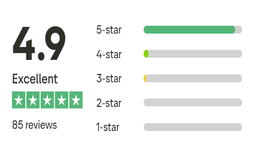
Azores.com has been crafting personalized Azores travel experiences since 1996. Rated 5 stars on Trustpilot across 85 verified reviews. IATA certified (05-707321). California Seller of Travel licensed (CST 2114755-40).

Eunice Costa has served as Travel Director of Portugal Online Corp., Azores.com (Azores Travel and Tours) since 1996. Born in the Azores and now based in California, she brings more than 30 years of experience promoting the Azorean Islands and creating thoughtfully designed tour packages, especially tailored for the U.S. and Canadian markets, that combine exceptional experiences with great value. Through her contributions to the Azores.com blog, Eunice shares her deep knowledge and passion for all nine Azorean Islands, helping travelers discover the very best of this unique destination.
Is your time too precious to spend long hours searching for the perfect holiday in the Azores? Looking for expert help in organizing your trip? Hire an Azores.com Travel consultant.
Let us find the right itinerary for your Azores group travel needs. From family reunions to team building, we're here to help. From Sao Miguel to Flores, we guarantee the best service!

Have a question about traveling to Azores? Need more info about booking tour packages, day tours, activitis hotels or car in Azores? Click below to contact us.

Read Azores.com reviews on Trustpilot.com.