Travel Consultants
Is your time too precious to spend long hours searching for the perfect holiday in the Azores? Looking for expert help in organizing your trip? Hire an Azores.com Travel consultant.
Nine volcanic islands in the mid-Atlantic are no longer a secret, but the Azores remain uncrowded, unspoiled, and well suited for one type of trip most destinations struggle with: a group holiday where every friend, regardless of age or fitness level, finds exactly what they want.
That’s the case for the Azores in a single sentence. Your 25-year-old friend surfs volcanic reef breaks on São Miguel’s north coast. Your 50-year-old friend hikes to a crater lake ringed by hydrangeas. Your 65-year-old friend soaks in a geothermal pool at Terra Nostra Botanical Park and sips Verdelho wine from Pico Island’s UNESCO-listed vineyards. Then everyone meets for dinner: cozido stew slow-cooked underground by the Earth’s own volcanic heat. No compromise required.
 Whale and Dolphin Watching in Azores
The Azores archipelago packs a remarkable density of activities, landscapes, and cultural experiences into nine compact islands. Group logistics stay simple even when personal preferences differ widely. São Miguel, the largest island, stretches just 65 kilometers end to end. Nobody in your group is ever more than an hour from everyone else, yet each person can fill their day with completely different experiences.
Multigenerational and multi-age group travel is surging globally. According to Campspot’s 2026 Travel Trend Report, 85% of families plan multi-generational trips, and 82% say a desire for connection strongly influences their travel choices. The Azores fit this trend for a practical reason: the islands put adventure, relaxation, culture, gastronomy, and nature within close proximity of each other, so mixed-age groups don’t need to split up or settle for a lowest-common-denominator itinerary.
The Regional Government of the Azores classifies all hiking trails by difficulty (easy, medium, and hard), so friends of different fitness levels can choose their own route on the same island, on the same morning, and meet for lunch at a seaside restaurant afterward.
The Azores won the World’s Best Adventure Tourism Destination award at the World Travel Awards in both 2023 and 2024. The archipelago offers active pursuits from beginner-friendly excursions to physically demanding challenges, all set against volcanic landscapes and the open Atlantic Ocean.
Twenty-nine cetacean species have been recorded in Azorean waters, roughly one-third of the world’s known whale and dolphin species. Four species, including bottlenose dolphins and common dolphins, are year-round residents. Migratory species such as blue whales, fin whales, and sperm whales pass through the archipelago seasonally between spring and autumn.
Whale watching tours depart from Ponta Delgada on São Miguel and Lajes do Pico on Pico Island, led by onboard marine biologists from operators like Terra Azul and Futurismo Azores Adventures. Most operators guarantee cetacean sightings or offer a free return trip. Swimming with wild dolphins in open water is available from May through September when the Atlantic is warmer and calmer. The experience works for swimmers of varying confidence levels, with experienced guides in the water alongside participants.
São Miguel Island has hosted a World Surf League (WSL) Qualifying Series event at Ribeira Grande since 2010. The north coast draws experienced surfers with powerful winter swells funneled from the Arctic, particularly at Mosteiros and Santa Bárbara Beach.
Beginners in the group don’t need to sit this one out. Água d’Alto and Praia de São Roque on the south coast offer sheltered conditions with sandy bottoms and manageable waves, supported by local surf schools like Santa Barbara Surf School Azores. The fact that a single island serves both WSL-level surfers and first-time learners tells you something about the range the Azores offer.
The Azores have over 80 officially classified trails across all nine islands. The Lagoa das Furnas trail on São Miguel covers 9.6 kilometers at moderate difficulty, winding past geothermal vents and Furnas Lake in roughly two and a half hours. The ascent of Mount Pico, Portugal’s highest peak at 2,351 meters, is a 7-kilometer climb that takes three to four hours up. On clear days, the summit offers panoramic views across four islands.
For those who prefer gentle walks, botanical gardens like Terra Nostra on São Miguel, lakeside paths at Sete Cidades, and coastal walkways on Flores and Faial provide scenic strolls through lush volcanic scenery without steep elevation changes. The Azores’ mild, subtropical climate makes trail access possible year-round.
The Azores sit on the Mid-Atlantic Ridge, a tectonic boundary where the North American and Eurasian plates meet. This geological position produces a landscape you won’t find anywhere else in Europe: volcanic calderas filled with emerald and cobalt water, lava fields stretching to the sea, fumaroles venting sulfuric steam, and hot springs bubbling through iron-rich earth.
Sete Cidades on São Miguel contains twin crater lakes, one green and one blue, inside a volcanic caldera wrapped in mist. Capelinhos on Faial Island is a volcano that erupted as recently as 1957, leaving a moonscape of ash and rock that visitors can walk across today. Mount Pico rises 2,351 meters above sea level, the highest point in all of Portugal. The entire Azores archipelago holds UNESCO Global Geopark status, and EarthCheck certified the islands as the world’s first archipelago to achieve Gold Level sustainable destination status in 2024.
Each island has its own geological character. São Miguel is the green island: thermal pools, crater lakes, and tea plantations. Pico has volcanic grandeur and UNESCO-listed vineyards grown in black basalt enclosures. Faial, the blue island, is lined with hydrangeas and anchored by its historic Horta marina. Flores, the flower island, drops waterfalls from sea cliffs into the Atlantic. Corvo, the smallest island, holds a single volcanic crater lake and a population of around 430 people. The end-of-the-world feeling is real.
Some historians and researchers have linked the Azores to Plato’s description of Atlantis since at least 1882, when American congressman Ignatius Donnelly proposed the theory in his book Atlantis: The Antediluvian World. The Azores are the visible peaks of massive underwater volcanoes rising from the Mid-Atlantic Ridge, and Nuno Ribeiro, president of the Portuguese Association of Archaeological Research, has identified pre-Portuguese stone structures on Pico Island that keep the discussion alive.
Geological science attributes the Azores to volcanic tectonic activity rather than a sunken continent. Still, standing on the rim of a volcanic caldera and staring into deep blue water thousands of kilometers from the nearest mainland, the Atlantis connection feels less like myth and more like possibility. It’s the kind of detail that adds a layer of mystery to exploring the islands with friends.
 Pico Island Mountains
Group holidays run on shared meals, and Azorean gastronomy delivers food experiences that become the stories friends retell for years. The archipelago’s volcanic soil, Atlantic waters, and centuries of Portuguese culinary tradition produce a cuisine that is hearty, fresh, and hard to find anywhere else.
Cozido das Furnas is the Azores’ most well-known dish. On São Miguel Island, cooks lower large pots layered with beef, pork, chicken, local chouriço sausage, and root vegetables into holes dug in geothermally heated ground near Furnas Lake. The Earth slow-cooks the stew for six to seven hours, producing a mineral depth and tenderness that no kitchen stove replicates. Watching the pots pulled steaming from the ground is an event in itself. Sitting down to eat together afterward is the kind of shared moment that sticks with a group long after the trip ends.
Azorean tuna gets exported to Tokyo. That’s how high the quality ranks. Lapas (limpets) arrive sizzling on a metal plate with butter, garlic, and local pimento chili paste. Fresh fish from the Atlantic appears on menus across every island, caught that same morning.
São Jorge Island produces a sharp, aged cheese that has gained international recognition and is exported worldwide. On São Miguel, Chá Gorreana, Europe’s oldest tea plantation operating since 1883, offers tastings and tours of its hilltop estate on the north coast. The Azores are also the only place in Europe where pineapples are commercially grown, cultivated in volcanic-soil greenhouses that produce small, intensely sweet fruit.
Pico Island’s vineyards are a UNESCO World Heritage Site. Vines grow in small plots called currais, enclosed by walls of black volcanic basalt that protect the grapes from Atlantic winds. The Verdelho grape produces a citrusy, mineral-forward white wine that pairs well with local seafood. Tasting Pico wine surrounded by those black lava walls, with the peak of Mount Pico rising behind you, is not something you get on a typical European holiday.
The Azores hold nearly 600 years of recorded history, from their official discovery in the 15th century through their role as a waypoint for maritime fleets traveling between Europe, Africa, and the Americas.
Angra do Heroísmo on Terceira Island is a UNESCO World Heritage Site. The city’s colorful streets, baroque churches, and Renaissance-era fortifications have been preserved since the 16th century, when Angra served as an obligatory port for ships sailing to the Indies. Walking through Angra do Heroísmo feels like stepping into a living museum, and the café culture is good enough to keep a group occupied all afternoon.
The Azorean festival calendar mixes deep Catholic tradition with distinctly island celebrations. Senhor Santo Cristo dos Milagres on São Miguel is one of the largest religious festivals in Portugal. The Festival of the Divine Holy Spirit takes place across all nine islands. On Terceira, the Festas da Praia features tourada à corda, a uniquely Azorean tradition where bulls are guided through streets by rope. It draws crowds of all ages.
 Festivities in Azores Islands
Traditional craftsmanship is alive across the archipelago: hand-painted ceramics, detailed embroidery, artisanal cheesemaking, and folk music performed on the viola da terra and cavaquinho. These are living traditions, not museum pieces. Visitors encounter them in town squares, family workshops, and local festivals throughout the year.
The Azores have a mild, subtropical climate year-round thanks to their position on the Gulf Stream. Average temperatures range from 13°C (55°F) in winter to 24°C (75°F) in summer, which means group trip planning isn’t locked to a narrow peak-season window the way it is with most European island destinations.

Summer months from June through September bring the warmest and driest conditions, with water temperatures comfortable for swimming and diving. Spring (April and May) and autumn (October) offer fewer visitors, blooming hydrangeas that turn Faial entirely blue, and dramatic cloud formations over volcanic peaks. Winter draws storm watchers to clifftop viewpoints, followed by long soaks in natural hot springs. That’s a combination most winter sun destinations can’t match.
Azoreans have a saying: you can experience four seasons in one day. The weather shifts quickly in the mid-Atlantic, but that changeable quality is part of the appeal. Mist rolling across Sete Cidades, then parting to reveal twin lakes below. That’s the kind of moment that makes everyone in the group stop talking and reach for their camera.
Planning a group trip across a volcanic archipelago of nine islands doesn’t need to be complicated. Not when specialists have been doing exactly this for nearly three decades.
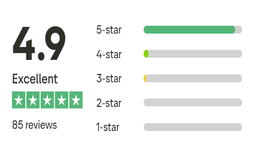
Azores.com, operating since 1996, crafts private group experiences across all nine Azores islands. With Azorean-born guides, a 5-star Trustpilot rating from over 73 verified reviews, and nearly 30 years of local expertise, the Azores.com team handles the logistics (flights, hotels, tours, meals, and transfers) so your group focuses on the experience rather than the planning.
 Streets of Ponta Delgada, São Miguel, Azores
We offer Small Private Group Tours designed for friends and family traveling together. Each package includes 7 days and 6 nights on São Miguel Island with 4-star hotel accommodation, daily breakfast, guided excursions to Sete Cidades, Furnas, Fire Lake, and Nordeste, park entrance fees, select meals with drinks, airport transfers, and a complimentary crate of regional Azorean products.
Three group size options are available:
VIP Private Guided São Miguel for 4 to 7 persons is built for smaller circles of close friends. A private English-speaking guide leads the group through São Miguel’s highlights with premium transportation and a flexible itinerary that departs any day of the week. Rates start from $2,044 per person in double occupancy, depending on season.
VIP Private Guided São Miguel for 8 to 15 persons gives a larger friend group the same depth of experience, with private bus transportation and a certified guide. Per-person pricing improves with group size. Rates start from $1,623 per person depending on travel dates and room configuration.
VIP Private Guided São Miguel for 16 to 22 persons is suited for bigger gatherings: milestone birthdays, reunions, or that dream trip with an extended circle. All-inclusive touring with rates starting from $1,387 per person makes larger groups more affordable per head.
Not every group fits a standard package. Some friends want a surf-focused week. Others prefer a food and wine tour across multiple islands. Some groups mix adventure days with relaxation days, or want to visit Terceira’s UNESCO sites and Pico’s vineyards alongside São Miguel.
Azores.com’s tailor-made group holidays exist for exactly this. Share your group size, travel dates, interests, and budget, and the Azores.com team designs a private itinerary from scratch. Multi-island tours, active holidays combining hiking and whale watching, self-drive packages for groups who want independence, and combinations of all three are available. The team responds within 48 hours of inquiry.
As one traveler put it: “Everything was taken care of. This was the greatest holiday I have ever been on.”
Ready to start planning? Get a personalized quote from Azores.com and share your dates, group size, and what your ideal trip looks like. The team will put together an itinerary that works for every age and every interest in your circle. You can also reach the team via WhatsApp at +1 831-588-7794.

Is your time too precious to spend long hours searching for the perfect holiday in the Azores? Looking for expert help in organizing your trip? Hire an Azores.com Travel consultant.
Let us find the right itinerary for your Azores group travel needs. From family reunions to team building, we're here to help. From Sao Miguel to Flores, we guarantee the best service!

Have a question about traveling to Azores? Need more info about booking tour packages, day tours, activitis hotels or car in Azores? Click below to contact us.

Read Azores.com reviews on Trustpilot.com.