Travel Consultants
Is your time too precious to spend long hours searching for the perfect holiday in the Azores? Looking for expert help in organizing your trip? Hire an Azores.com Travel consultant.

Two volcanic archipelagos. Both rising from the Mid-Atlantic Ridge. Both built on crater lakes, geothermal hot springs, and whale-rich waters.
But here’s what most “Azores vs. Iceland” articles won’t tell you: these destinations aren’t interchangeable. Choosing between them says more about what kind of traveler you are than which place is “better.”
Iceland welcomed 2.5 million visitors in 2025. The Azores welcomed 1.4 million. One is a global tourism juggernaut grappling with overtourism taxes and eroded hiking trails. The other is Europe’s fastest-growing island destination, still largely unknown to American travelers, and deliberately keeping it that way.
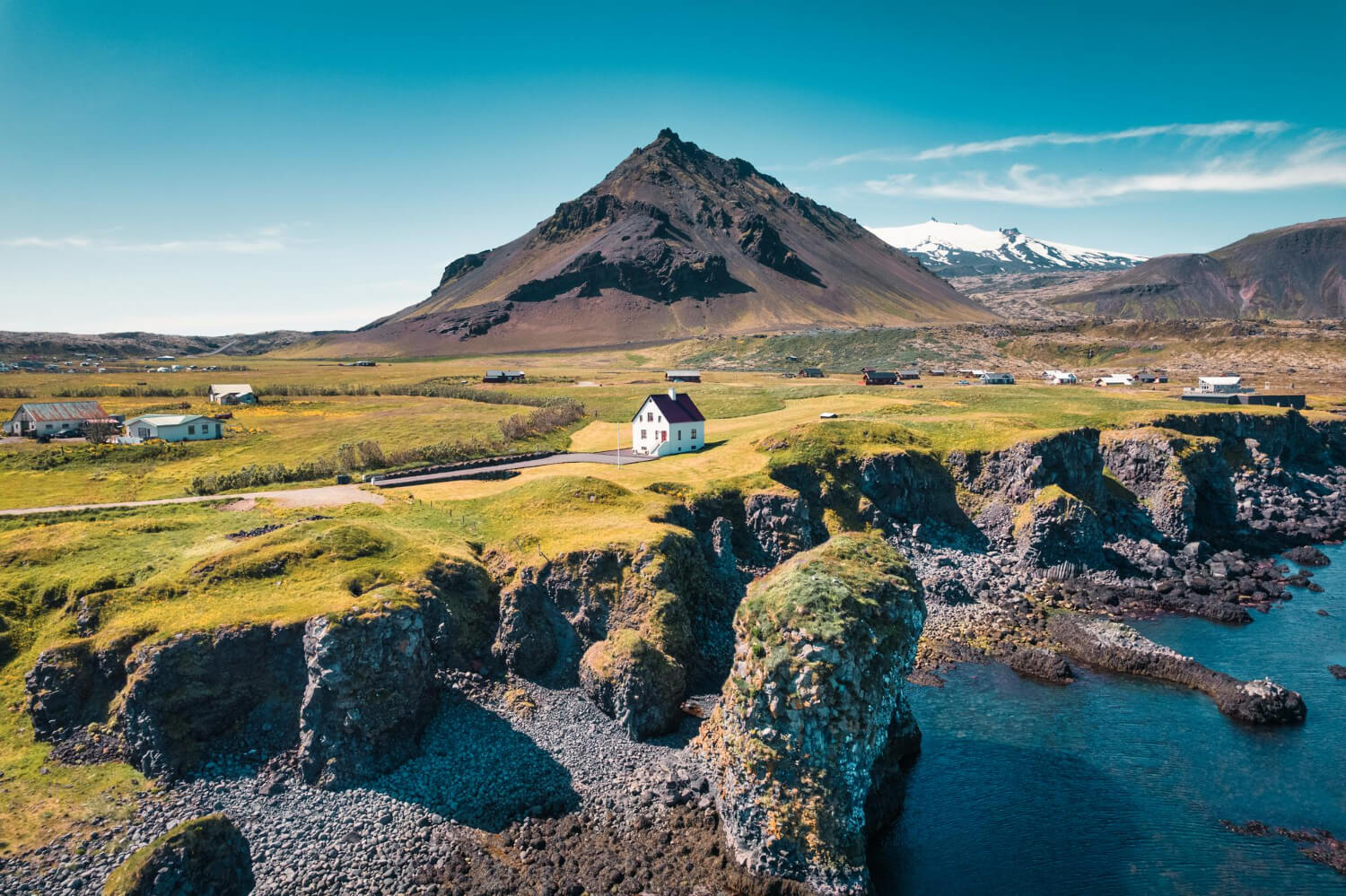 Arnarstapi fishing village with a Nordic house and Stapafell Mountain by basalt formations on the Snæfellsnes Peninsula, Iceland.
Let’s break down the real differences so you can pick the right trip for you.
You’ll hear it everywhere. The Azores are “the next Iceland.” Travel magazines, TikTok creators, Reddit threads. They all reach for the same lazy comparison.
Catarina Maia, a local Azores travel expert, put it best: “Everyone says the Azores are the new Iceland, but we’re not the ‘new’ anything. We’ve always been here.”
She’s right. The nine islands of the Azores have been sitting 900 miles off the Portuguese coast since volcanic forces pushed them out of the Atlantic millions of years ago. They’ve had centuries-old villages, geothermal hot springs, and sperm whale migration routes long before Instagram discovered them.
The comparison exists because both places share volcanic DNA: crater lakes, hot springs, rugged coastlines. But the similarity ends at geology. The climate, the culture, the crowds, and the costs tell completely different stories.
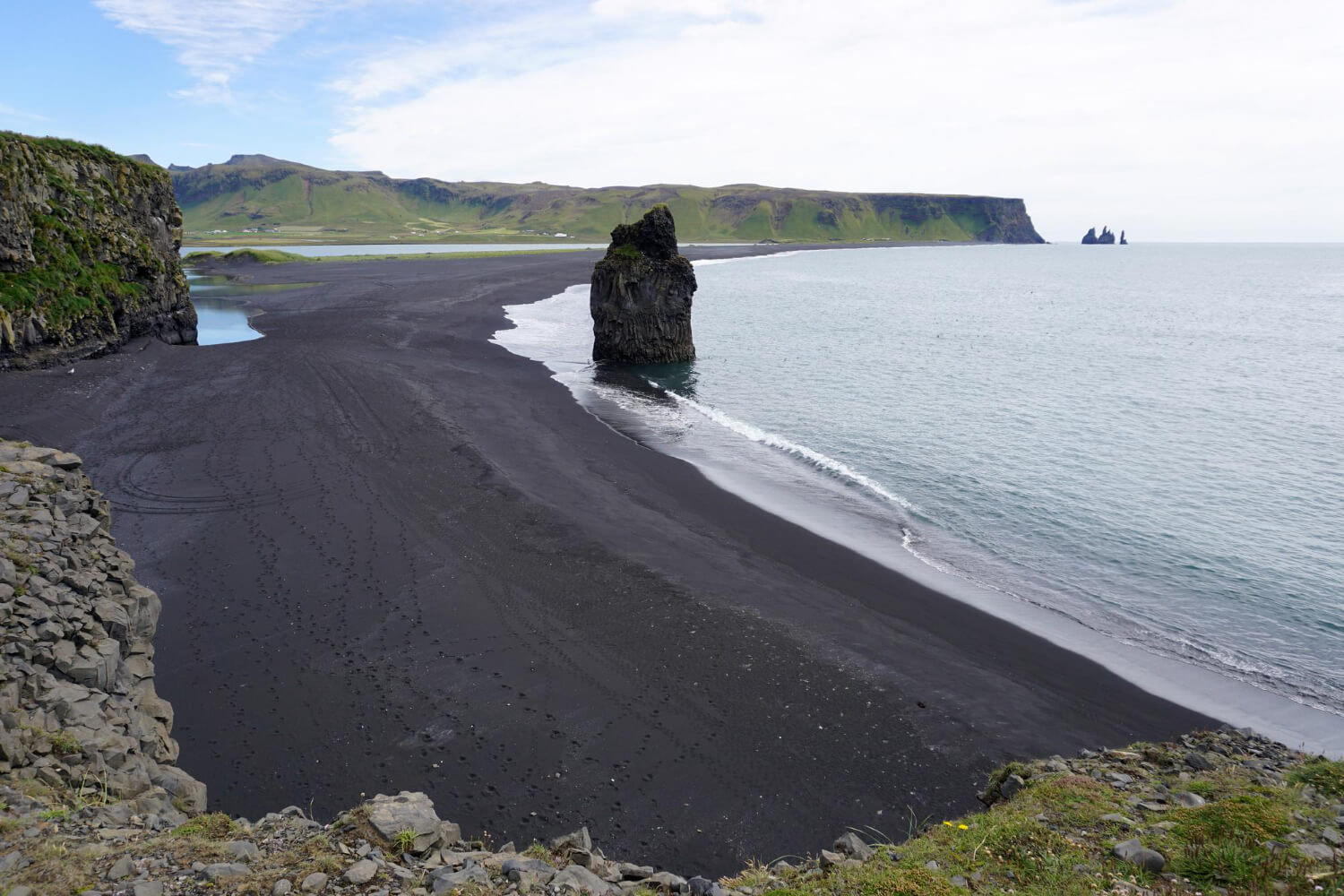 Reynisfjara black beach in iceland single rock and cliffs.
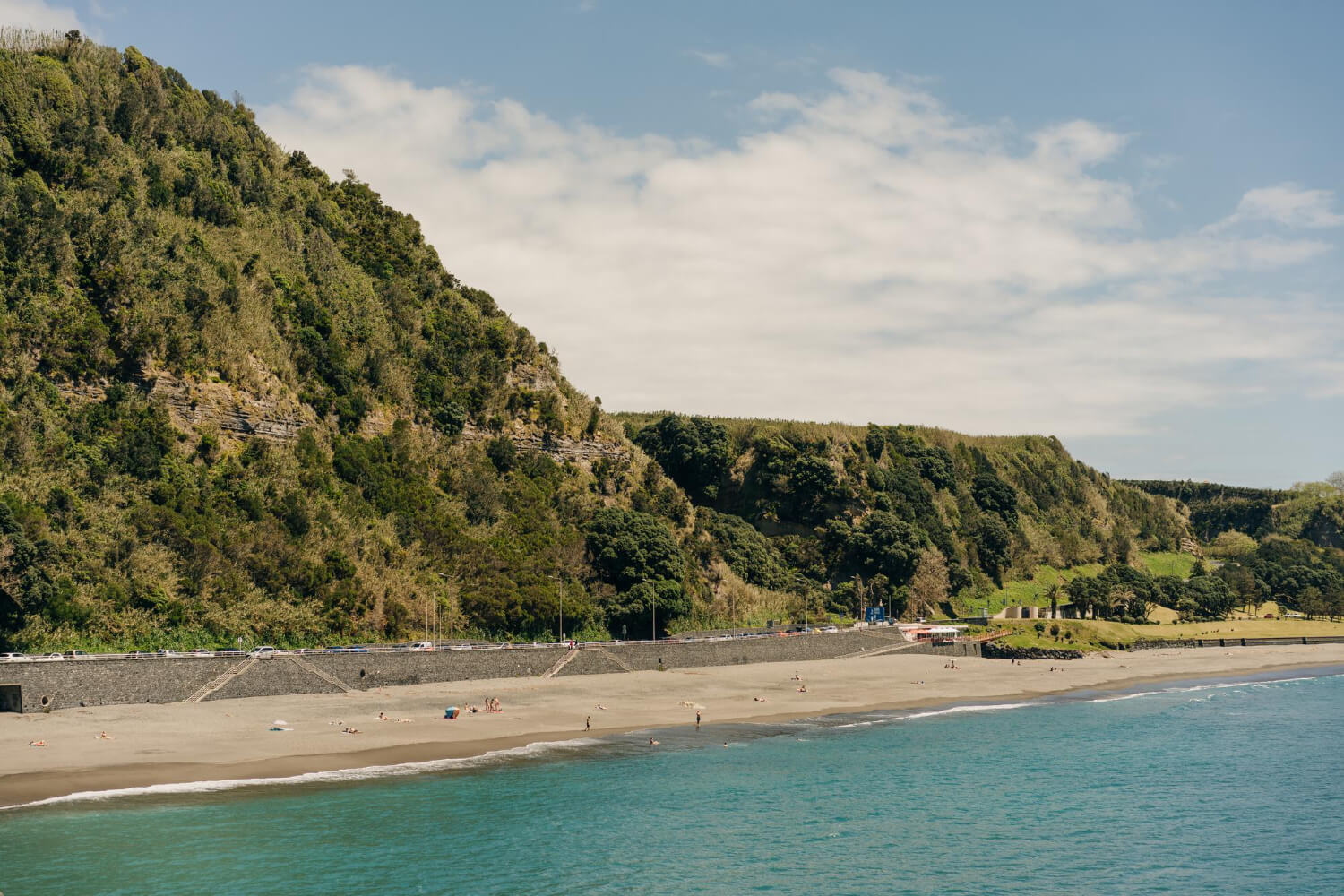 Agua d’alto beach at sao miguel island azores portugal.
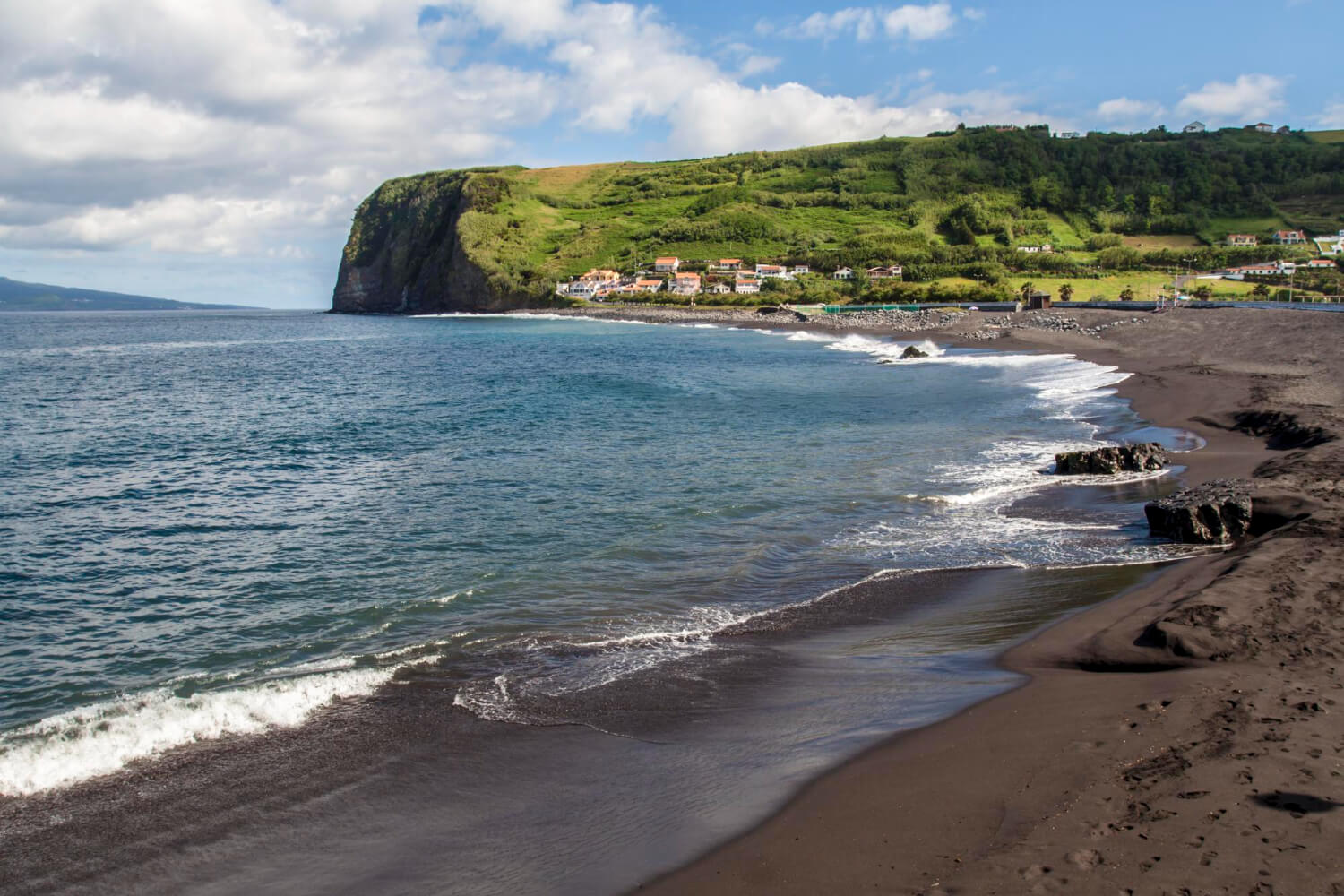 Landscape of the coast of the atlantic ocean with waves sunny summer day in the azores.
This is where the comparison gets interesting.
Start with cost. A comfortable week in Iceland runs about $1,763 per person (excluding flights), with hotel rooms averaging $150 to $280 per night depending on season. In the Azores, that same week costs roughly $1,665 per person, with mid-range hotels between €120 and €200 per night. The gap isn’t dramatic on accommodation alone, but it compounds fast at the restaurant table. Dinner for two in Iceland rarely dips below €50. In the Azores, you’ll eat grilled limpets, fresh tuna, and Azorean cheese at a family-run restaurant for half that.
Then there’s temperature. Iceland’s summer averages hover between 10°C and 15°C (50-59°F). The Azores average 24°C (75°F) in summer and stay mild year-round. Winter rarely drops below 13°C (55°F). If you want to hike in a t-shirt, the Azores win by double digits.
Crowds are where it got interesting to me. Iceland funnels 2.5 million visitors through a handful of hotspots: the Golden Circle, the Blue Lagoon, the south coast. The government proposed higher tourist taxes in late 2025 after soil erosion at popular sites became impossible to ignore. The Azores spread visitors across nine separate islands. São Miguel absorbs about 70% of tourism activity, but step onto Flores, São Jorge, or Corvo and you might be the only foreigner at the trailhead.
And then there’s whale watching. The Azores record a 98% success rate for spotting cetaceans on whale watching tours. In 2016 alone, 18 different species were sighted across 474 tours, including sperm whales, blue whales, and multiple dolphin species. Twenty-nine cetacean species pass through Azorean waters, roughly a third of all known species worldwide. Iceland offers whale watching too, but the Azores are one of the best places on the planet for it.
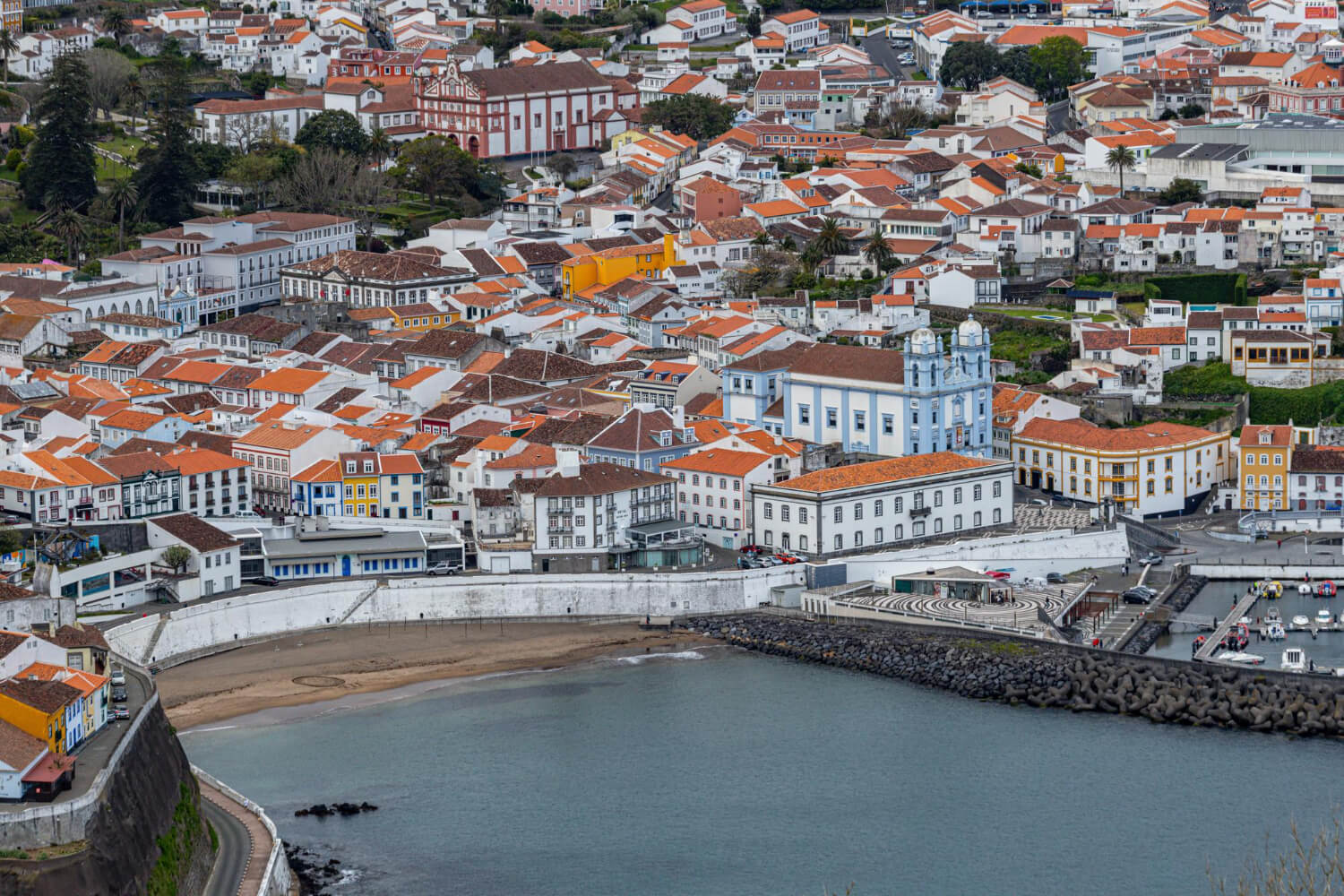 Aerial view of Angra do Heroísmo on Terceira Island, Azores, Portugal.
Here’s the honest part. Iceland does certain things that the Azores simply cannot match, and pretending otherwise would waste your time.
If seeing the Northern Lights is on your list, the conversation ends here. Iceland sits within the Auroral Zone, with peak viewing from September through April. The 2025-2026 season coincides with a solar maximum, making conditions unusually good. The Azores are too far south. No amount of wishful thinking changes latitude.
 Kirkjufell northern lights, iceland.
Same goes for glaciers. Walking inside a glacier, trekking across ice fields, exploring blue ice caves beneath Mýrdalsjökull. These experiences exist in Iceland and nowhere else in the North Atlantic. The Azores are green and volcanic, not glacial.
Iceland’s summer days stretch to near-24 hours of light. You can hike at 11 PM under a golden sky. The Azores get long summer days, but nothing approaching that.
And Iceland has Reykjavik, a real capital city with museums, galleries, a bar scene, and restaurants that have put New Nordic cuisine on the global map. Ponta Delgada, the Azores’ largest town, has charm and good food, but it’s a small city of around 70,000. Not an urban destination.
If Northern Lights, glaciers, or city nightlife are non-negotiable for your trip, book Iceland. The Azores aren’t trying to compete on those fronts.
Now for what the Azores do that Iceland can’t touch.
Start with the food, specifically a dish called cozido das Furnas. On the island of São Miguel, restaurant owners wake before dawn to bury massive metal pots filled with pork, chicken, beef, chouriço, sweet potatoes, cabbage, and taro root at lakeside geothermal vents. The volcanic earth cooks the stew underground for six to seven hours. Around midday, workers pull the pots from the ground in a ritual that’s been happening for generations. You eat the meal at restaurants like Vale das Furnas or the Terra Nostra Garden Hotel, often followed by a soak in the hotel’s iron-rich thermal pool. No restaurant in Iceland is cooking your dinner with volcanic heat.
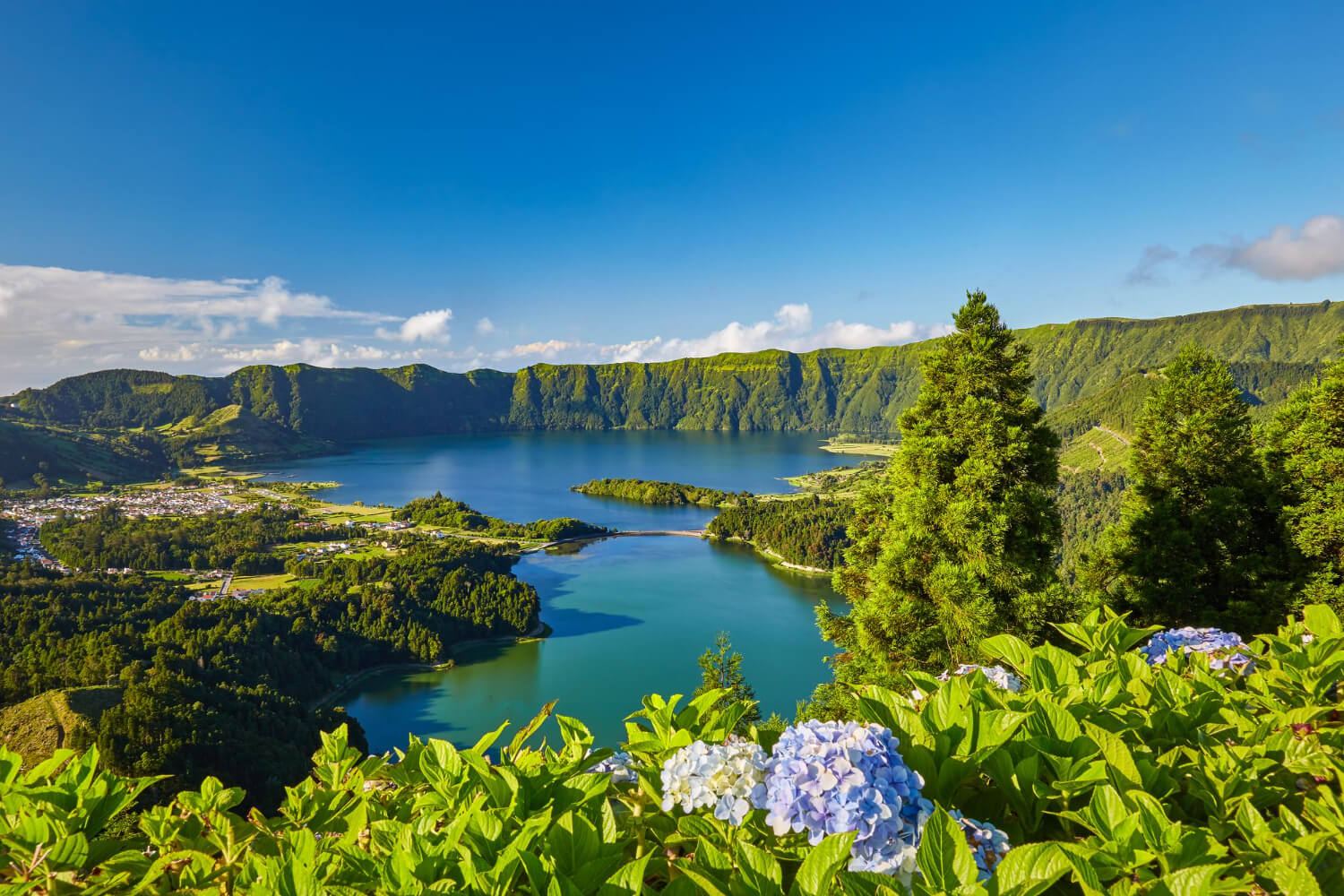 Lagoa das 7 Cidades
Then there’s the sheer variety. Iceland is one large island with regional differences. The Azores are nine distinct worlds. São Miguel is the green island of crater lakes and tea plantations. Pico has Portugal’s highest peak and UNESCO-listed vineyards where stone walls called “currais” protect grapevines from Atlantic wind. Faial is a blue-hydrangea-covered sailing hub. Flores has waterfalls cascading off cliffs into the sea. Corvo, the smallest, has a single village and a silence that makes you forget what day it is.
You can actually swim here. The ocean around the Azores reaches 22°C (73°F) in summer. It’s not tropical (nobody should call the Azores “the Hawaii of Europe”), but it’s genuinely swimmable. Natural volcanic rock pools dot the coastline on every island. Iceland’s ocean temperature hovers around 10°C. Fine for a quick polar plunge, not for an afternoon swim.
There’s also something worth saying about how the Azores handle tourism. The Azores became the first island archipelago in the world to earn EarthCheck Gold certification for sustainable destination management. National Geographic called them “a trailblazer in sustainable tourism.” Nearly 50% of the islands’ electricity comes from geothermal, wind, and hydropower. The regional government has been explicit about their strategy: “We don’t want to ever become a mass tourism destination; what we need is to promote more quality over quantity.” That philosophy shapes everything from building regulations (no mega-resorts) to trail maintenance to whale watching protocols.
And the food, honestly, is better than it has any right to be. Lonely Planet’s assessment: “Come to the Azores for the hiking and volcanoes, stay for the vibrant culture, unique cuisine and exceptional wine.” Pico’s volcanic wine, São Jorge’s pungent raw-milk cheese, fresh-caught tuna and limpets grilled minutes from the dock, pineapples grown in century-old greenhouses on São Miguel — the Azores have a food identity that catches most visitors off guard.
We’d be doing you a disservice if we didn’t lay out what frustrates some travelers.
The weather is fickle. The Azores are mild, not predictable. You can get four seasons in a single day on São Miguel. Rain can roll in fast, especially between November and March. If you need guaranteed sunshine, the Canary Islands are a safer bet. The Azores reward flexibility. Build a buffer day into your itinerary and you’ll be fine.
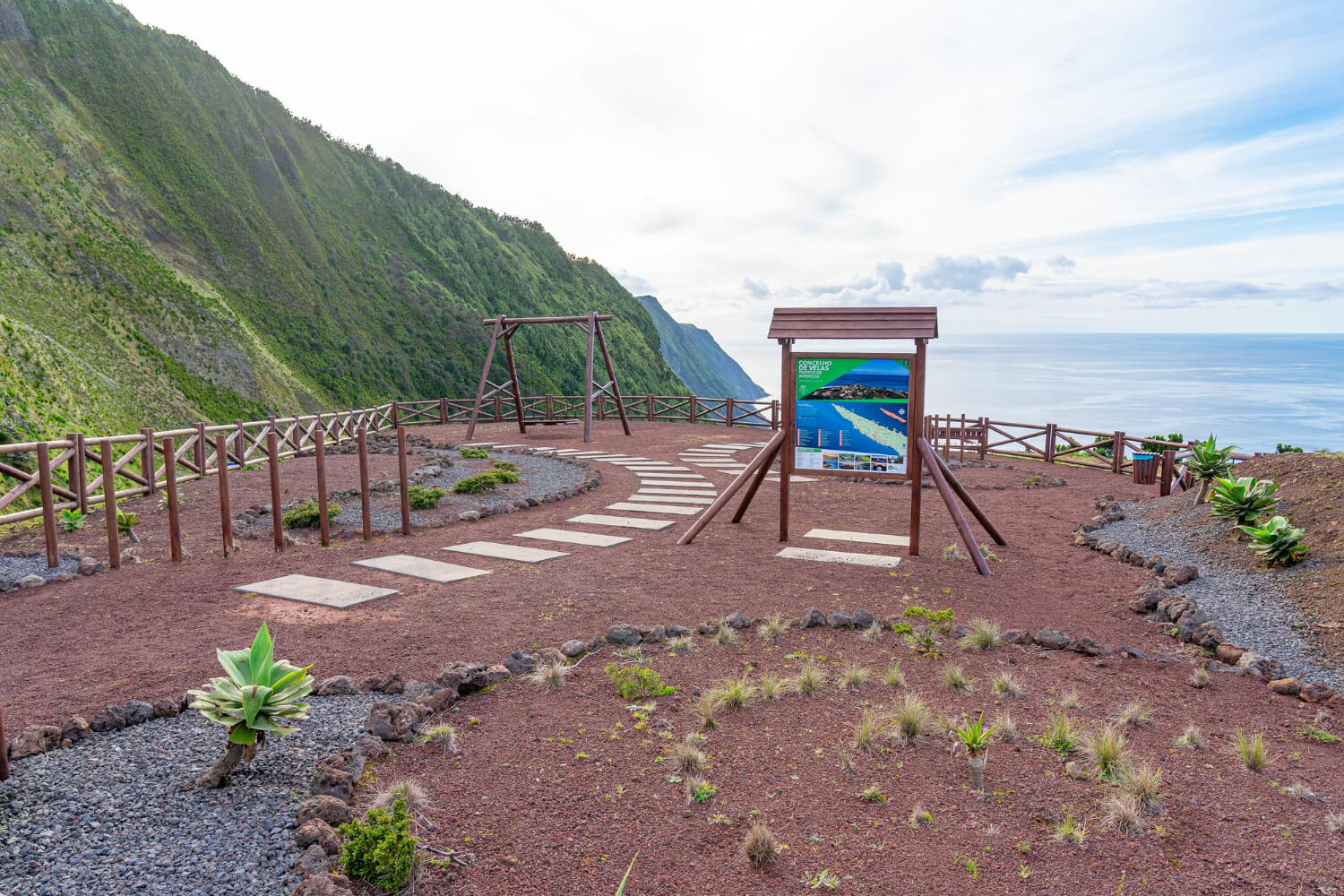
You’ll also need a car. Public transit on the islands serves commuters, not travelers. A rental car is basically required for exploring beyond Ponta Delgada. Budget €40-60 per day for car hire, a cost that doesn’t always show up in those “Azores are cheap” blog posts.
Inter-island travel takes planning too. Ferries run between some islands but not all, and flight connections can be infrequent. If you have five days, stick to one or two islands rather than trying to hop across three. The Azores reward slow travel, not checklists.
And it’s not budget travel. The Azores are roughly 30-40% cheaper than Iceland on food and activities, but they’re not backpacker territory. Mid-range accommodation, car rental, and inter-island flights add up. Expect €100 per person per day as a comfortable baseline. The value is real, but “cheap” oversells it.
We’ve spent nearly 30 years helping people plan Azores itineraries, and we’ve talked to plenty of travelers who’ve done both trips. Here’s our honest read.
Choose Iceland if Northern Lights are a priority, you want glacier hiking or ice cave exploration, you prefer a single base with organized day tours, or you’re traveling in winter and want Arctic scenery.
Choose the Azores if you’d rather hike volcanic crater rims in warm weather than walk glaciers in the cold. If whale watching is high on your list. If you want to eat at family-run restaurants where the owner remembers your name. If you want to explore multiple islands, each with its own character, in a place that’s actively protecting itself from overtourism.
Or choose both. The Azores sit on the shortest US-to-Europe flight path. Boston to Terceira is just 4 hours and 55 minutes. Several airlines now offer Azores stopovers that let you split your trip between the islands and mainland Portugal or other European destinations.
North American access to the Azores is expanding fast. United Airlines launched nonstop Newark-to-Ponta Delgada service, and North American flights surged 203% year-over-year in July 2024. Air Canada is adding Toronto-to-Ponta Delgada direct flights for summer 2026. TAP Air Portugal just announced new Porto-to-Terceira routes launching March 2026 with four weekly flights.
The Azores had their fourth consecutive record-breaking tourism year in 2025, welcoming 1.4 million guests and generating nearly €100 million in revenue in the first half alone. The USA is now the top source market. The window for visiting before the world fully catches on is still open. But it’s closing.
Iceland is a great trip. It earned its reputation. But that reputation brought trade-offs: overcrowding at signature sites, rising accommodation taxes, soil erosion from millions of boots on fragile volcanic ground.
The Azores offer something Iceland increasingly can’t: the feeling that you’ve discovered a place before it changed. Volcanic landscapes that rival anything on the Golden Circle, but without the tour bus in your photo. Geothermal hot springs where you soak alone, not in a timed entry slot that costs $100. Whale watching where the crew knows the individual whales by name.
These nine islands won’t stay under the radar forever. The numbers are growing every year. But right now, in 2026, the Azores are exactly what Iceland was fifteen years ago — an Atlantic volcanic paradise where you can still hike a crater rim alone, eat dinner cooked by the earth itself, and ask a local for directions without competing with a tour group for their attention.
Ready to see it for yourself? Start planning your Azores trip — tell us your dates, your interests, and which islands intrigue you most. We’ve been helping travelers discover the Azores since 1996. We’ll craft an itinerary around what you actually want to experience, not a one-size-fits-all package.

Is your time too precious to spend long hours searching for the perfect holiday in the Azores? Looking for expert help in organizing your trip? Hire an Azores.com Travel consultant.
Let us find the right itinerary for your Azores group travel needs. From family reunions to team building, we're here to help. From Sao Miguel to Flores, we guarantee the best service!

Have a question about traveling to Azores? Need more info about booking tour packages, day tours, activitis hotels or car in Azores? Click below to contact us.

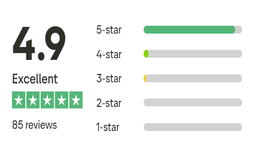
Read Azores.com reviews on Trustpilot.com.