Pico History: Settlement, Culture & Island Heritage
Settlement, wine, eruption, whaling and adaptation
Pico Island History: From Settlement to Today
Pico’s history follows the transformation of volcanic ground into farms and vineyards, strong trade with Faial, the rise and decline of whaling, and a modern economy built around heritage, food, marine life and nature.
First communities
Early Settlement and Agricultural Beginnings
Preparation for settlement
Cattle were introduced around 1460 as part of preparing Pico for permanent habitation. Settlement drew people primarily from northern Portugal and was closely linked to nearby Faial.
Wheat and woad
Early communities grew wheat for food and trade and woad as a dye crop exported toward Flanders through wider Atlantic commercial connections.
Volcanic challenge
Thin soils and extensive rock required labor, walls and careful land use. Islanders gradually converted difficult ground into fields, orchards and vineyard plots.
Genealogy and parishes
Pico family history grew through small coastal settlements, parish communities, inter-island marriage and migration. Church and civil records are central to genealogical research.
First towns and ports
Lajes, São Roque and Madalena
Lajes do Pico
Lajes became Pico’s first official town and remains closely associated with initial settlement, south-coast navigation and later whaling.
São Roque do Pico
Recognized as a town in 1542, São Roque developed agricultural, maritime and eventually industrial whaling activity along the north coast.
Madalena
Its port opposite Faial supported trade and wealthy vineyard owners. Madalena was officially elevated in 1723 and became Pico’s principal western gateway.
Faial connection
Horta provided markets, shipping links and commercial capital, while Pico supplied wine, fruit, labor and agricultural goods across the channel.
Wine cycle
Growth, International Fame and Nineteenth-Century Crisis

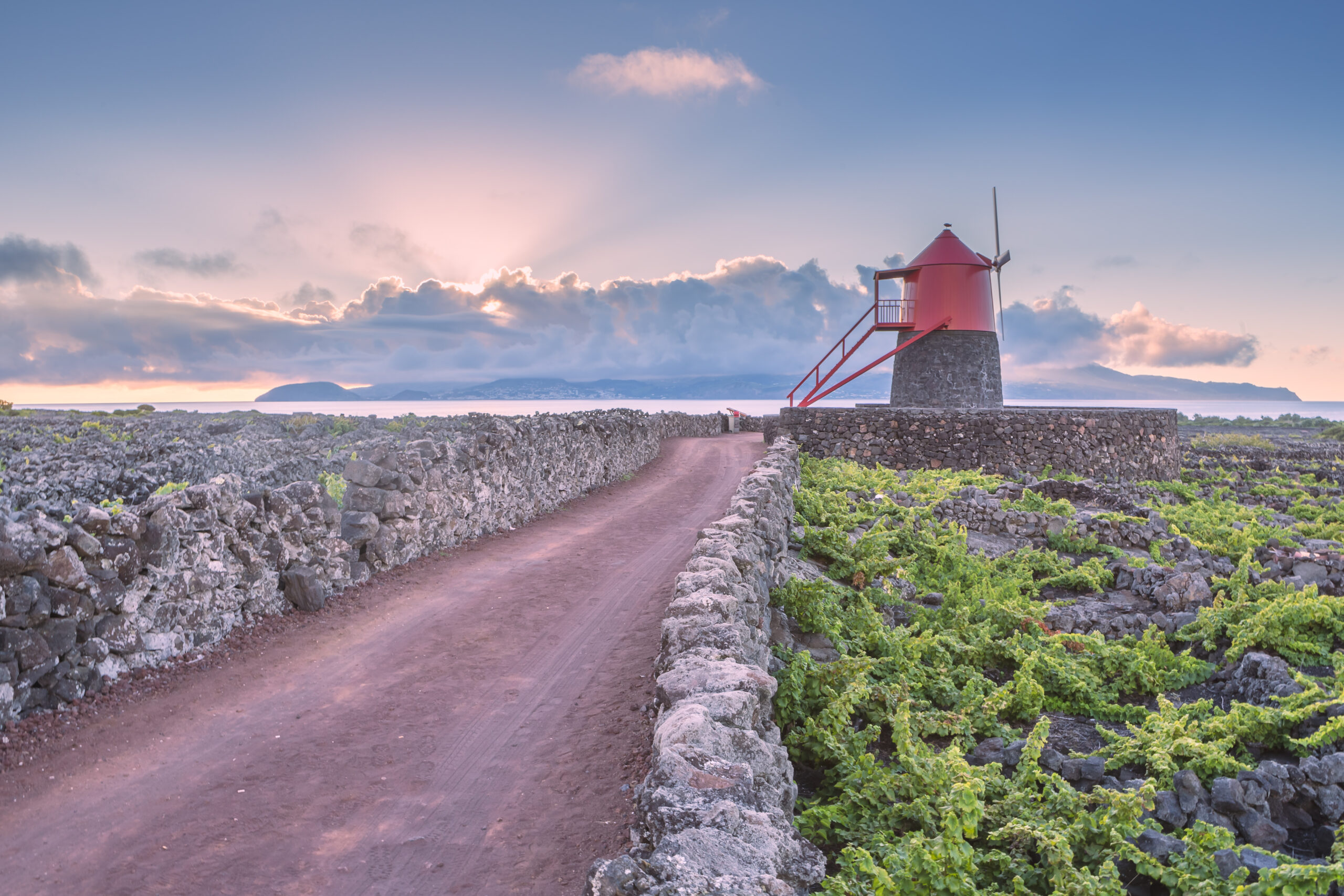
By the sixteenth century, growers had learned to shelter vines inside small basalt currais. Verdelho became a foundation of the island economy, and Pico wine traveled to England, the Americas and markets associated in tradition with the Russian imperial court. The achievement depended on generations who broke, carried and arranged stone across lava fields.
Peak production
Wine expanded across the north and west coast, leaving a network of plots, paths, wells, cellars, manor houses, churches and small ports.
Oidium
Powdery mildew devastated vineyards in the mid-nineteenth century and sharply reduced the once-prosperous Verdelho economy.
Recovery
New varieties, grafting and gradual replanting supported partial recovery, though the industry never simply returned to its earlier form.
World Heritage
UNESCO inscribed the Landscape of the Pico Island Vineyard Culture in 2004, recognizing its exceptional adaptation to a harsh volcanic environment.
Fire and lava
Volcanic Eruptions and Geographic Impact
Historic eruptions
Documented eruptions, including events in the sixteenth and eighteenth centuries, added lava fields and mysteries to the landscape remembered by island communities.
1720 eruption context
Eighteenth-century activity affected populated and cultivated ground, reinforcing religious traditions and place-names connected with escape, vows and divine protection.
Land reclaimed by labor
Residents built walls, planted vines and orchards, and used pockets of soil rather than abandoning every lava-covered area.
Cultural memory
Chapels, processions, stories and festival practices preserve community responses to volcanic threat alongside the geological record.
Whaling era
American Influence, Pico Crews and Coastal Industry
American whalers
Foreign whaling ships recruited Azorean sailors from the late eighteenth and nineteenth centuries, spreading maritime skills and connecting Pico families with New England.
Shore-based whaling
Island crews later launched narrow boats from coastal ports after lookouts spotted sperm whales. Lajes and São Roque became particularly important.
Boats and factories
Whaling supported boatbuilding, tools, processing plants and household income. São Roque’s former factory preserves the industrial phase.
Industry decline
Hunting ended as economics, regulation and conservation values changed. The last phase belongs to living memory for many families.
Museums
The Whalers Museum in Lajes and Whaling Industry Museum in São Roque preserve distinct parts of this difficult but central history.
From hunting to watching
Modern marine tourism uses lookout knowledge and seafaring experience for non-hunting cetacean observation, creating a powerful economic and ethical transition.
Resilient modern island
Economic and Cultural Evolution
Agriculture and fishing
Dairy farming, fruit, fishing and local food remained important after wine and whaling crises.
Wine revival
Protected vineyard landscapes, cooperatives and independent producers have rebuilt the reputation of Pico wine.
Migration
Economic hardship encouraged migration, especially toward North America, creating enduring family and cultural connections.
Eco-tourism
Pico Mountain, trails, vineyards, museums, whale watching and volcanic scenery now support a visitor economy rooted in natural and cultural assets.
Three municipal identities
Madalena, São Roque and Lajes retain distinct histories while sharing island institutions, transport and community life.
Living heritage
Festivals, boats, wine work, food and local speech matter as much as monuments; visitors encounter a culture still in use.
Plan well
Practical Pico History Tips
Visit all three museums
The Wine Museum, Whalers Museum and Whaling Industry Museum are complementary rather than repetitive. Check current days and hours.
Walk the vineyard landscape
A trail through Criação Velha or Santa Luzia makes the labor and scale of the walls easier to understand.
Separate explanation from endorsement
Whaling is essential island history, but museum interpretation and modern conservation place it in historical context.
Respect family sites
Churches, cemeteries, ports and festival spaces remain part of community life, not merely attractions.
Use local guides
A guide can connect lava flows, parish stories, migration and trade details that are not obvious from roadside signs.
Allow closed-day alternatives
Museums commonly close one day each week and may change hours by season; pair them with nearby outdoor sites.
Questions travelers ask
Pico History FAQ
When was Pico Island settled?
Permanent settlement developed in the second half of the fifteenth century, after cattle had been introduced around 1460.
Why was Pico wine historically important?
Verdelho grown inside basalt walls became a major export and connected the island with European, Atlantic and American markets.
What damaged Pico’s vineyards?
Powdery mildew and later vineyard diseases struck during the nineteenth century, causing a severe decline that prompted new varieties and gradual recovery.
How important was whaling on Pico?
Whaling shaped work, migration, ports, boatbuilding and community identity for generations, especially in Lajes and São Roque.
Where can I learn Pico history?
Visit the three branches of Museu do Pico, walk the UNESCO vineyard landscape and add local churches, ports and guided cultural tours.
Build a practical island stay
Plan Your Pico Vacation
Azores.com can coordinate lodging, transportation, mountain or marine activities and enough flexibility for Pico’s fast-changing Atlantic conditions.