Pico Weather by Month: Climate & Best Time to Visit
Mild Atlantic seasons, mountain extremes and fast microclimate changes
Pico Weather and Climate Guide
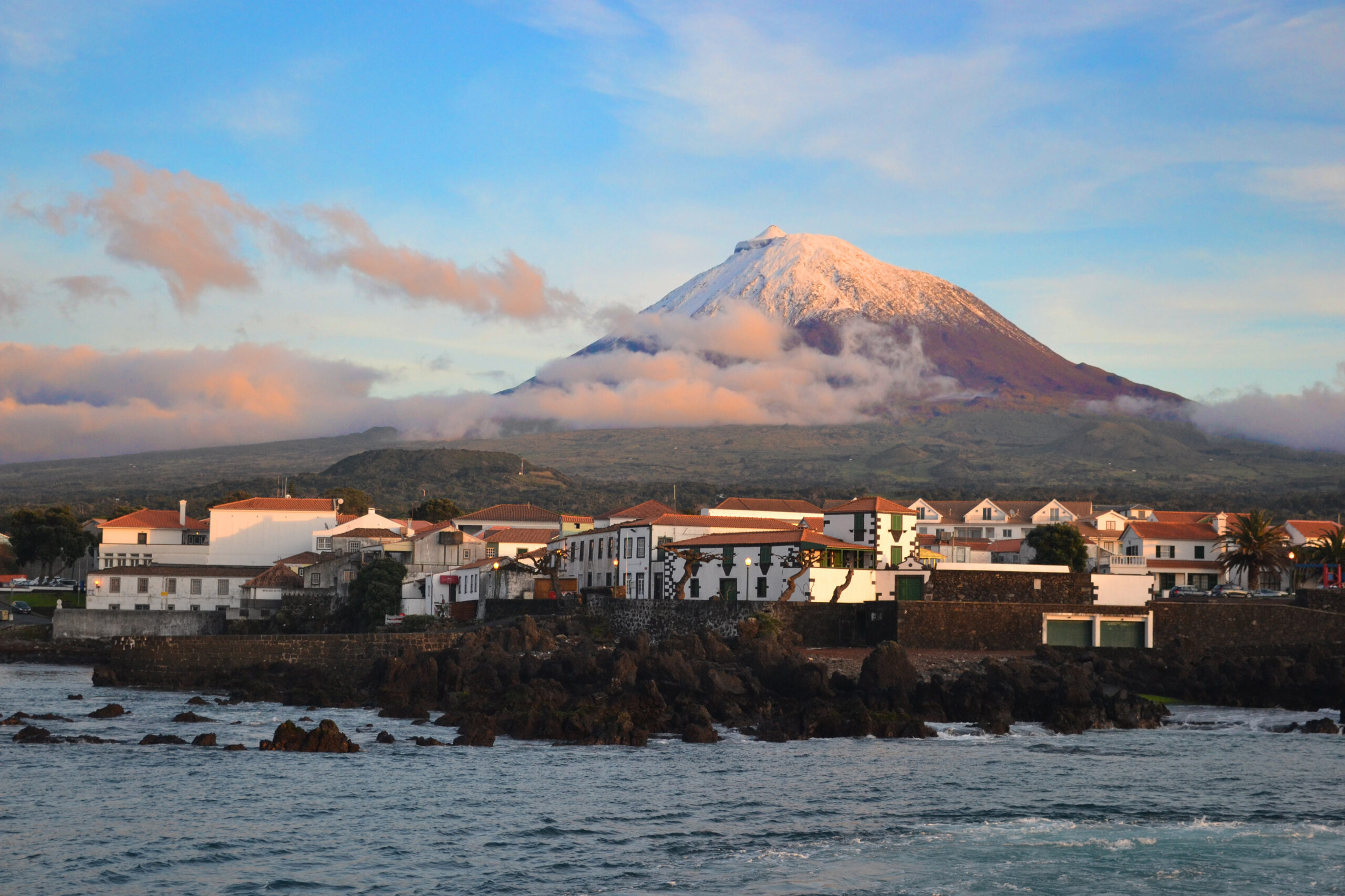
Pico has a mild oceanic climate at the coast, but its 2,351-meter mountain creates exceptional elevation differences. Sun, fog, rain and wind can occupy different parts of the island at the same time.
Climate at a glance
Pico Weather Essentials
Atlantic control
Ocean Influence and the Azores High
Moderated temperatures
The ocean limits extreme coastal heat and cold, producing relatively mild summers and winters compared with continental interiors.
Azores High
This semi-permanent pressure system influences the North Atlantic, but its position and strength vary; its name does not guarantee settled sunshine over Pico.
Rain through the year
Showers can occur in every month, with the wetter pattern generally concentrated from autumn through spring.
Fast cloud movement
Atlantic wind can bring short showers, low cloud and clear breaks within one day, sometimes within one hour.
High humidity
Moist air can make shade feel cool, slow drying and produce condensation in lodging or vehicles.
Marine conditions
Air weather and sea safety are related but not identical. Swell may remain dangerous after rain stops or wind eases.
Elevation matters
Pico Mountain Weather and Microclimates
Coastal lowlands
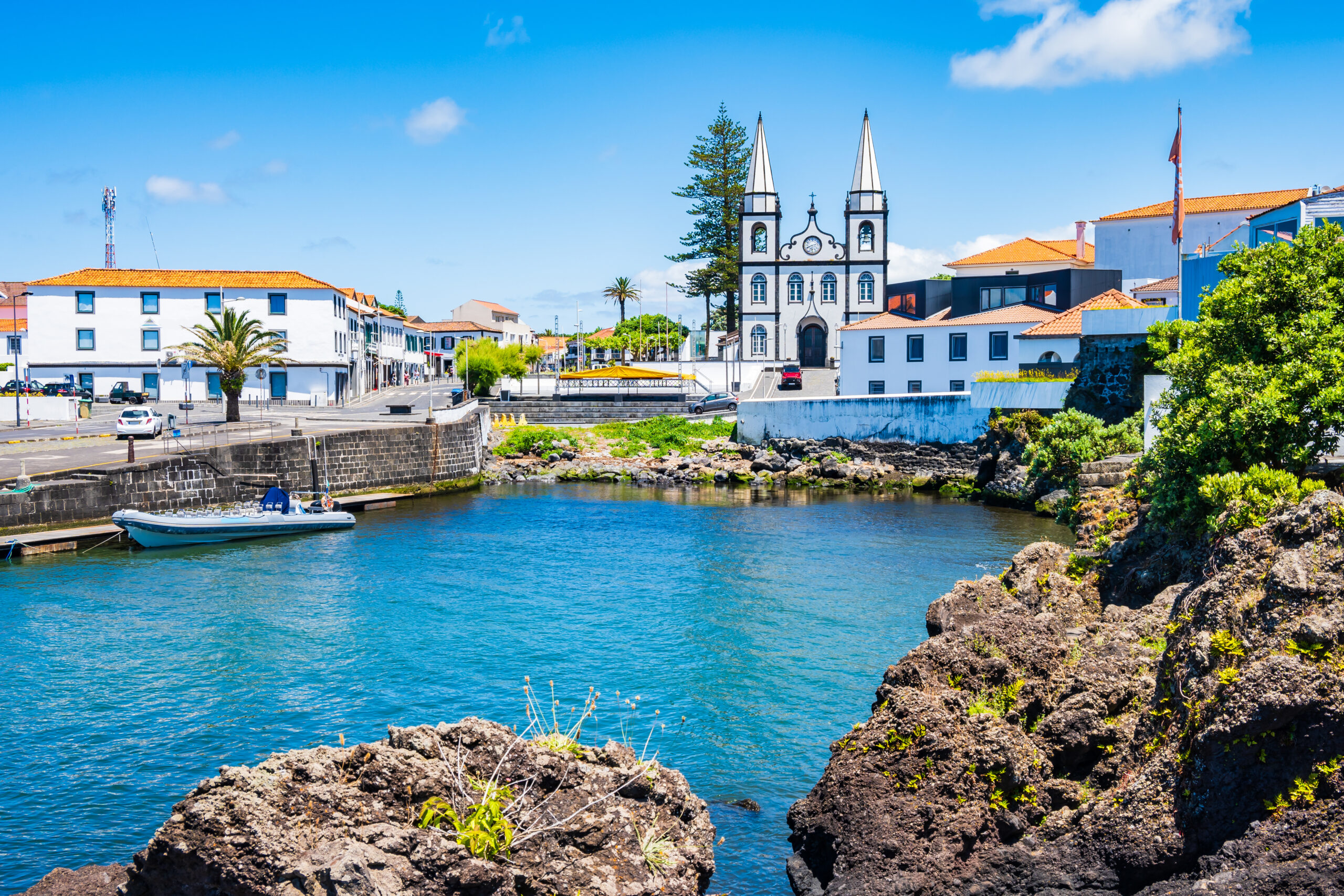
Madalena, São Roque, Lajes and smaller ports are usually warmer and may be sunny while the summit is hidden.
High plateau
The Achada ridge and lagoons are cooler, wetter, foggier and windier than sheltered coast, affecting roads and walking trails.
Casa da Montanha
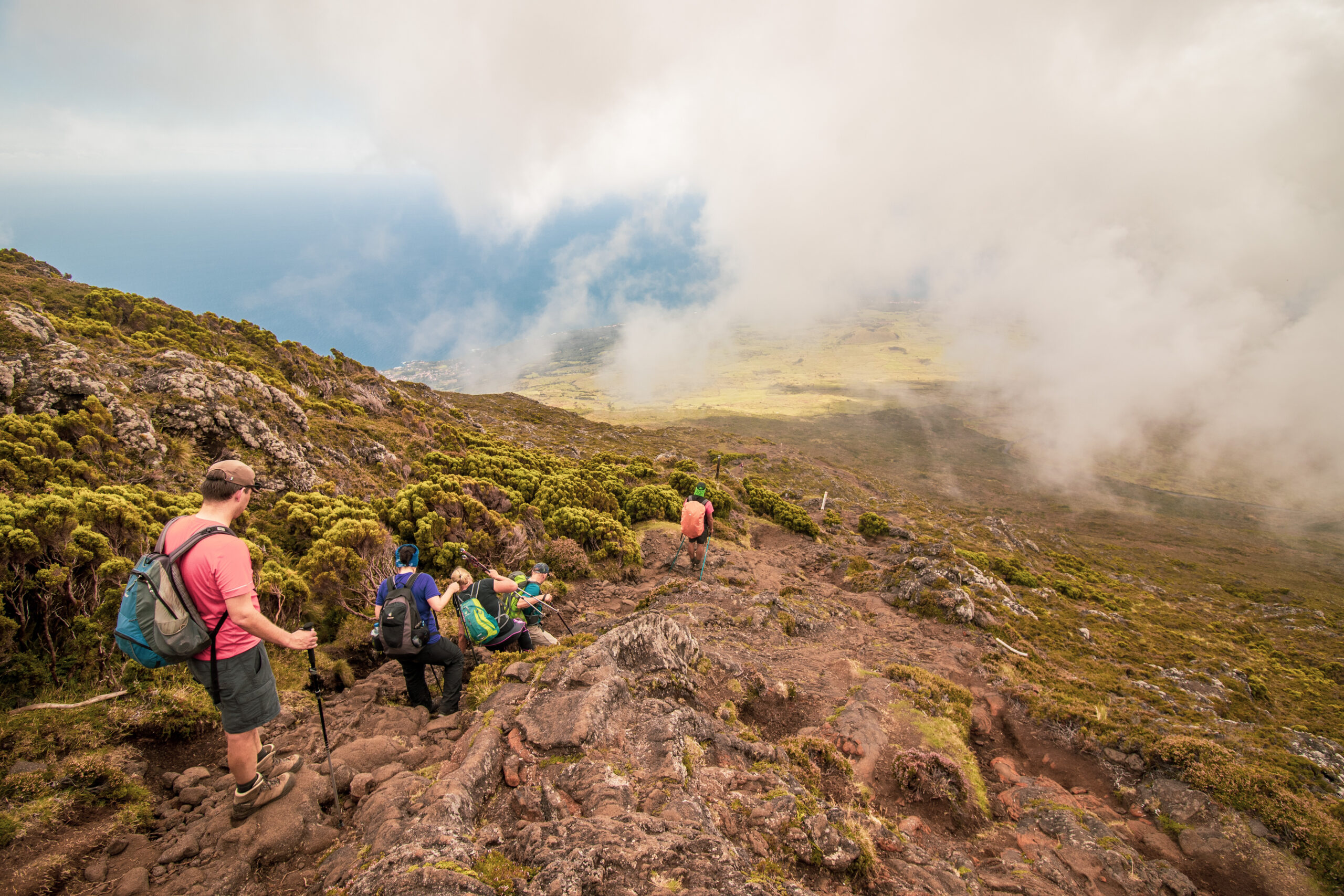
The official climb begins near 1,200 meters, already far above coastal conditions. Check the mountain-specific forecast and access guidance.
Summit difference
Official guidance notes that the top can be roughly 10°C colder than sea level. Wind, exposure and wet clothing can increase heat loss.
Cloud and navigation
Markers can disappear quickly in fog. If the next marker is not found, official guidance directs hikers to return rather than wander farther.
No shade
On hot clear days the exposed route offers little or no shade, so water, sun protection and pacing remain essential.
Season by season
Spring, Summer, Autumn and Winter
Spring: March–May
Coastal temperatures are mild, often around 14–20°C (57–68°F). Rain and wind remain common, especially earlier, while flowers, trails and vineyards can feel quieter.
Summer: June–September
This is generally the warmest and driest period, commonly around 21–25°C (70–77°F) at the coast. It best supports swimming, events and longer daylight, but mountain fog and rain remain possible.
Autumn: October–November
Temperatures often remain comfortable, roughly 18–22°C (64–72°F), while rainfall and storm risk increase. Harvest culture adds interest earlier in the season.
Winter: December–February
Coastal conditions are mild by northern-European standards, often around 14–18°C (57–64°F), but rain, wind, rough seas and short daylight reduce outdoor reliability.
Best for mountain attempts
Summer provides the broadest statistical opportunity, not a promise. Keep multiple possible climb days and accept that safety may require cancellation.
Best for fewer crowds
Late spring and early autumn can balance lower demand with useful daylight, provided travelers accept more weather uncertainty.
Match plans to conditions
Weather-Smart Pico Activities
Clear, stable mountain day
Use a confirmed reservation and official access information for the climb; do not infer summit safety from a coastal forecast alone.
Cloudy highlands
Move to vineyard sites, museums, harbor towns or lower coastal trails and reassess later.
Light showers
Wine museums, whaling museums, producer tastings and short village walks can work with rain gear.
Strong swell
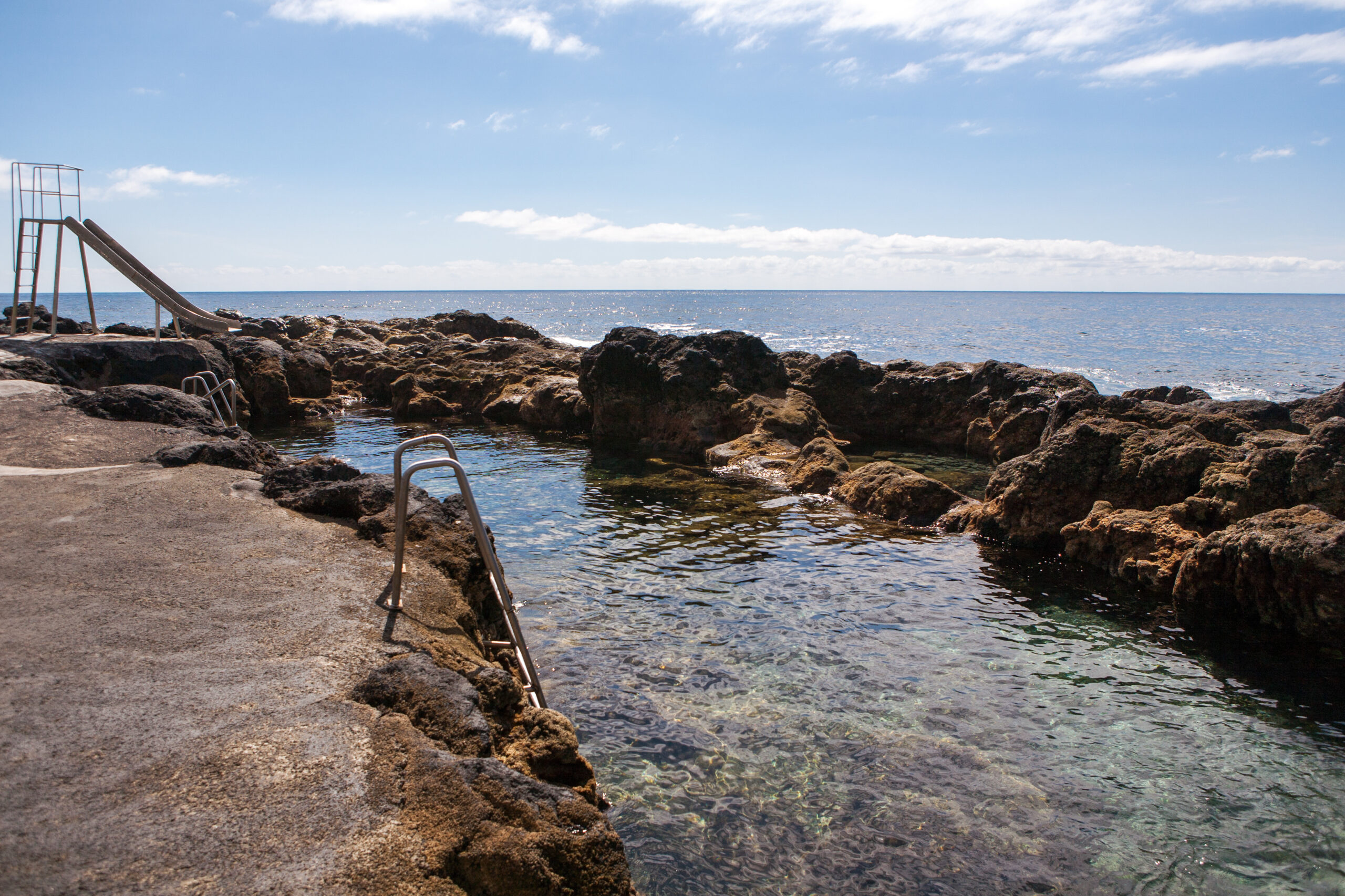
Skip exposed pools, cliffs, diving and whale trips when operators or local warnings advise against them.
Windy ferry day
Monitor the operator, protect flight connections and avoid tight same-day transfers between islands.
Hot sun
Carry water, hat and sunscreen; black lava and exposed vineyards can intensify heat even when air temperature seems moderate.
Plan well
Practical Pico Weather Tips
Pack layers
Bring a light warm layer, waterproof shell and quick-drying clothing even in summer, especially for elevation or boat trips.
Use proper footwear
Closed hiking shoes with grip are required for the mountain and helpful on wet trails, cave visits and uneven lava.
Check more than one zone
Compare coast, plateau, summit and marine conditions instead of relying on one generic island symbol.
Protect flexible days
Do not place the mountain, cave and whale trip into an itinerary with no ability to move or replace them.
Carry rain protection
A compact waterproof layer is more practical than assuming a shower will pass before the next outdoor stop.
Respect flags and closures
Official access, trail alerts, pool flags, ferry updates and operator decisions override a general forecast.
Questions travelers ask
Pico Weather FAQ
What is the best month to visit Pico?
July and August usually offer the warmest, driest coastal conditions, but June and September can also work well with slightly lower demand. No month guarantees mountain visibility.
Is Pico warm in winter?
The coast is mild rather than hot, often around 14–18°C, while wind, rain, humidity and rough seas can make conditions feel cooler.
Does it snow on Pico Mountain?
Snow can occur near the summit in winter, but it is intermittent and should not be treated as a guaranteed attraction.
How different is summit weather?
The summit can be about 10°C colder than sea level and is more exposed to wind, cloud, rain and rapid change.
Can rain ruin a Pico trip?
Not necessarily. Museums, wine experiences, towns and lower-coast touring provide alternatives, but a short visit may lose mountain or marine activities.
Build a practical island stay
Plan Your Pico Vacation
Azores.com can coordinate lodging, transportation, mountain or marine activities and enough flexibility for Pico’s fast-changing Atlantic conditions.